Home / Siskiyou News / Sacramento / Northstate Youth Protect Los Angeles Waterways from Post-Fire Contamination

Northstate Youth Protect Los Angeles Waterways from Post-Fire Contamination

The California Conservation Corps has local youth from Northstate responding as part of the stateโ€™s largest watershed protection mission.

By Chris Van Horne

Parker Robertson, from the California Conservation Corps Redding Center, places a compost sock atop a drain in the Palisades Fire burn scar. – California Conservation Corps

Parker Robertson, a young adult from the Northstate, is part of a massive response to protect the burned areas of Los Angeles from taking another hit. This time from winter storms.

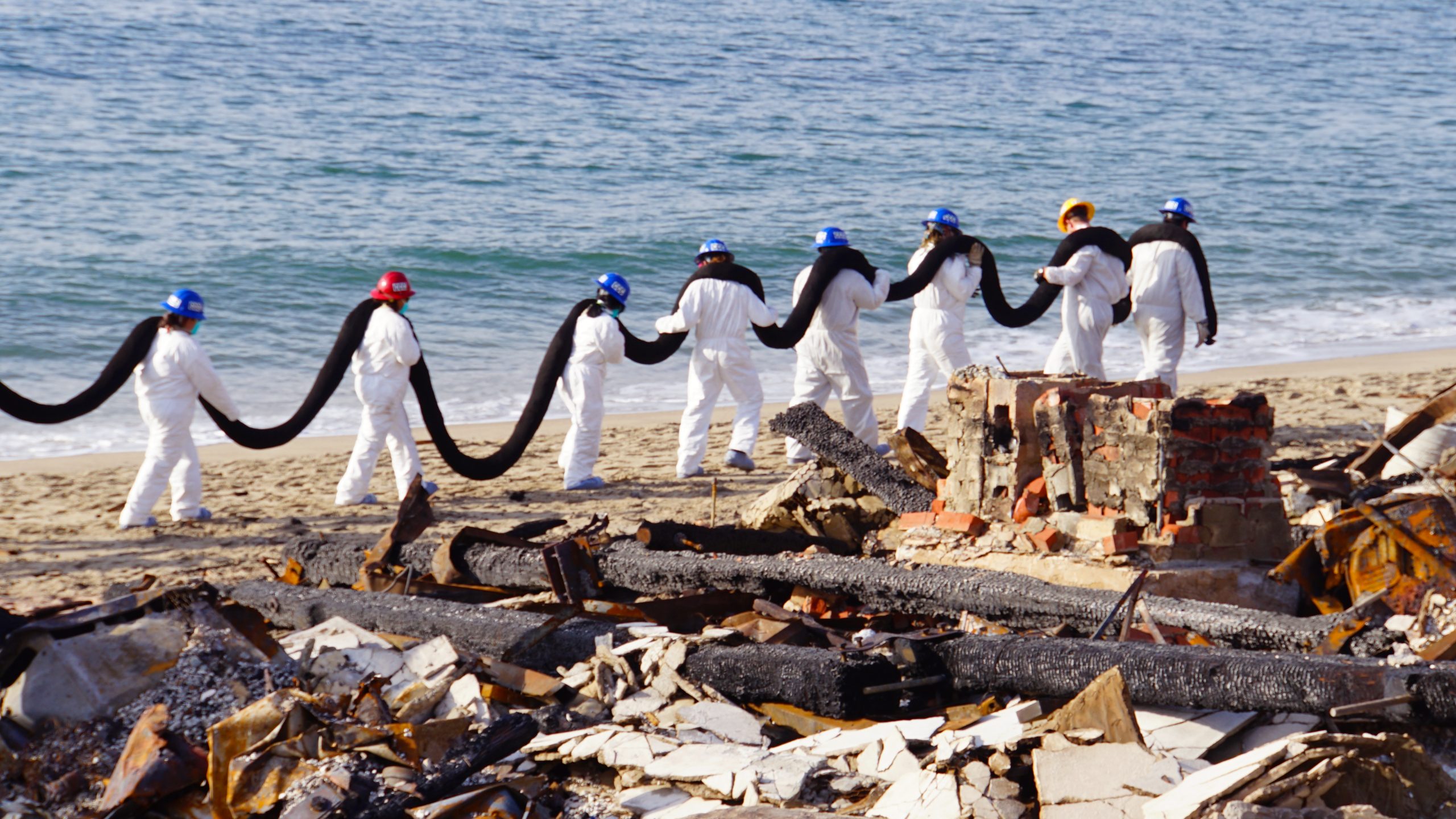
โ€œWatershed protection is our main goal,โ€ Robertson, from the California Conservation Corps (CCC) Redding Center, said. โ€œWeโ€™re laying compost socks, with the goal of filtering water runoff from the burned buildings, cars, and stuff like that. A lot of the drainages here lead straight to the ocean, so weโ€™re trying to prevent toxic runoff from getting into the drains.โ€

Robertson, a Redding resident, is one of more than 400 CCC Corpsmembers, ages 18-25, mobilized by the Governorโ€™s Office of Emergency Services (Cal OES). Theyโ€™re installing miles of barriers in the Palisades and Eaton fire burn scars to filter out contaminants from rainwater runoff.

Corpsmembers from the California Conservation Corps Inland Empire Center work together to unravel silt socks near destroyed properties in Altadena from the Eaton Fire. – California Conservation Corps

โ€œYoung adults from the California Conservation Corps and from non-profit corps programs are delivering on the Governorโ€™s commitment to fast action in keeping residents and the community safe from hazardous chemicals left in the ash and debris of the fires,โ€ said CCC Director JP Patton.

With more than 16,000 structures in need of runoff mitigation, the scale and urgency of this mission is unprecedented, requiring all hands-on deck. Through the Cal OES Watershed & Debris Flow Taskforce, the CCC joined forces with the Department of Water Resources, Caltrans, Department of Conservation, and CAL FIRE. Under the direction of engineers and environmental scientists, 32 crews are working 12-hour shifts and have placed more than 558,000 compost socks, 34,500 straw wattles, and countless gravel bags thus far.

A Corpsmember from the California Conservation Corps Chico Center prepares to place a gravel bag atop a silt sock around a destroyed property in Pacific Palisades. – California Conservation Corps

โ€œThe numbers fluctuate a bit, on some of our peak days weโ€™re doing 70 to 100 properties per day,โ€ Robertson said. โ€œAnd then weโ€™re doing dams on the street as well, running the socks around drains.โ€

California Conservation Corps Redding Center Corpsmember Parker Robertson clears debris from a k-rail before his crew installs a silt sock to filter contaminants from rainwater. – California Conservation Corps

Corpsmembers received specialized Hazardous Waste Operations & Emergency Response (HAZWOPER) training in preparation for the task. Itโ€™s one of many certifications theyโ€™re earning in the CCC to protect Californiaโ€™s communities and environment.

โ€œIโ€™ll come back home with certifications from this, as well as the work experience,โ€ Robertson said. โ€œIf I ever want to pursue a career in the disaster relief field, I now have the work experience where I can say Iโ€™ve done this.โ€

The CCC is a State of California department offering paid training in wildland firefighting, forestry, habitat restoration, fisheries, emergency response, and more. The goal is to help California prepare for, respond to, and recover from environmental challenges exacerbated by climate change. As this watershed protection mission nears completion, CCC Corpsmembers are grateful for the opportunity to help.

โ€œPeople will drive by and thank us for the work weโ€™re doing, or just inquire about what weโ€™re doing,โ€ Robertson said. โ€œWe get to explain to them a little bit about our goals. Iโ€™m glad that they can see people are actively working on trying to make some things better.โ€

For more information about the CalOES Watershed Protection & Debris Flow Taskforce, visitย news.caloes.ca.gov. To learn more about CCCโ€™s mission and opportunities to join, visitย ccc.ca.gov.

All these images were photographed by “California Conservation Corps”.


Tagged:

Leave a Reply

Your email address will not be published. Required fields are marked *