

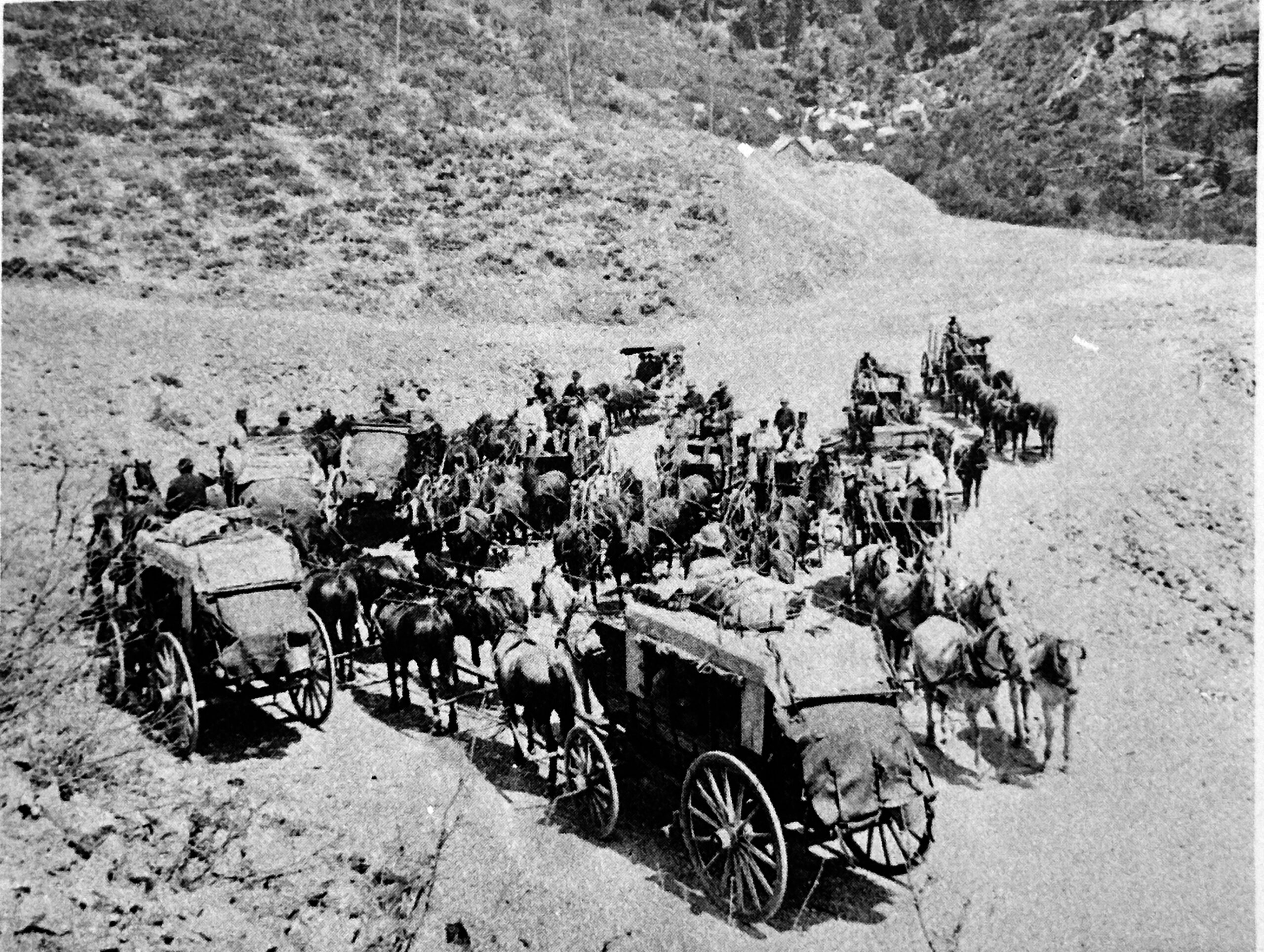
Local historians lead tour through Siskiyou County’s forgotten transportation corridors
A group of history enthusiasts recently retraced the old Oregon stage route from Yreka to Hornbrook, stopping at landmarks that tell the story of how people and goods moved through Siskiyou County before the railroad changed everything.
Until 1859, foot trails were the only way in and out of Siskiyou County, Calif. Regional tribes, including the Shasta, Karuk, Modoc, Pit, and Wintu, had forged the trails, with the exception of some opened by the Hudson’s Bay Co.
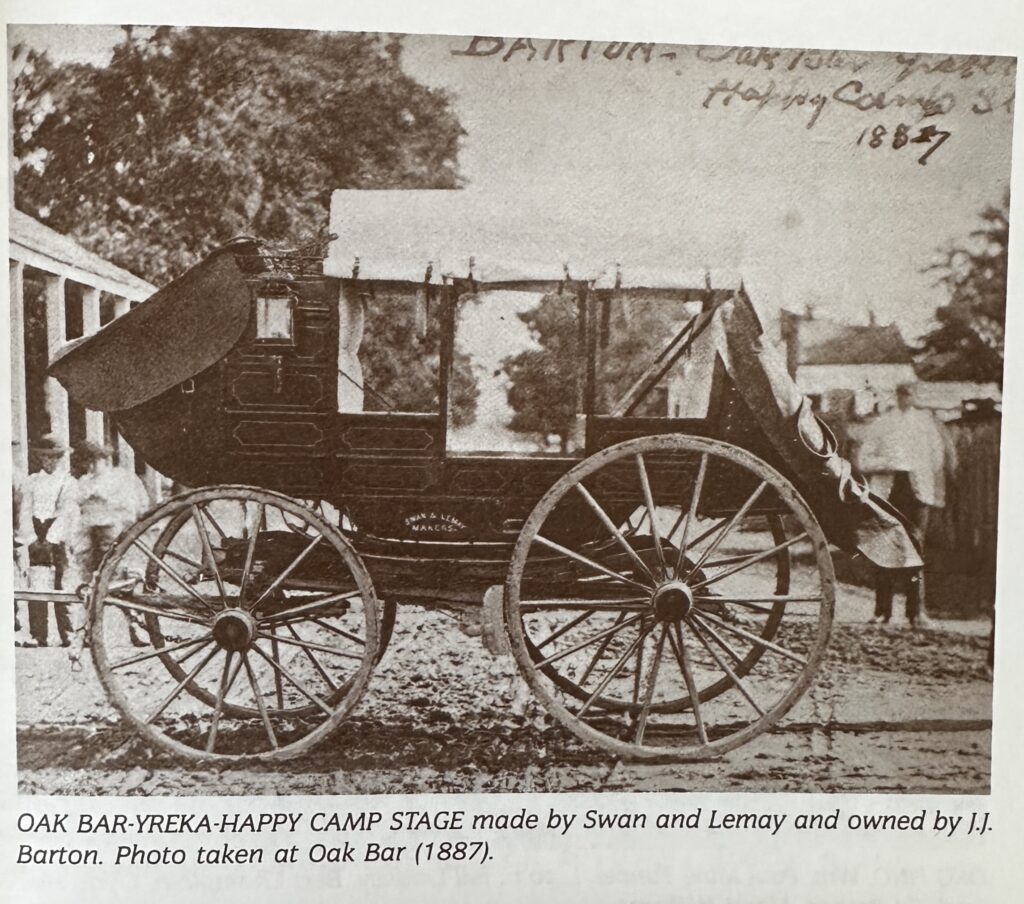
The stagecoach era in Siskiyou County spanned roughly the 1850s to the 1920s and stories still survive of drivers frozen to their seats, having to be chipped free when they finally reached the station.

Kathy Graves and Mike Grifantini hosted the tour and an accompanying PowerPoint presentation at Yreka Preservation Hall.
The tour began at the Franco-American Hotel and Wells Fargo Office in Yreka, then followed the stage route toward Ager, stopping at locations where historical photographs were once taken.

The group walked to the old Shasta River School site, where a Giant Stride still stands. The spinning playground contraption—later listed among the ten most dangerous playground toys—was removed from most schools during the 1970s. This one remains as a reminder of a time when scrapes and bruises were considered a rite of passage.
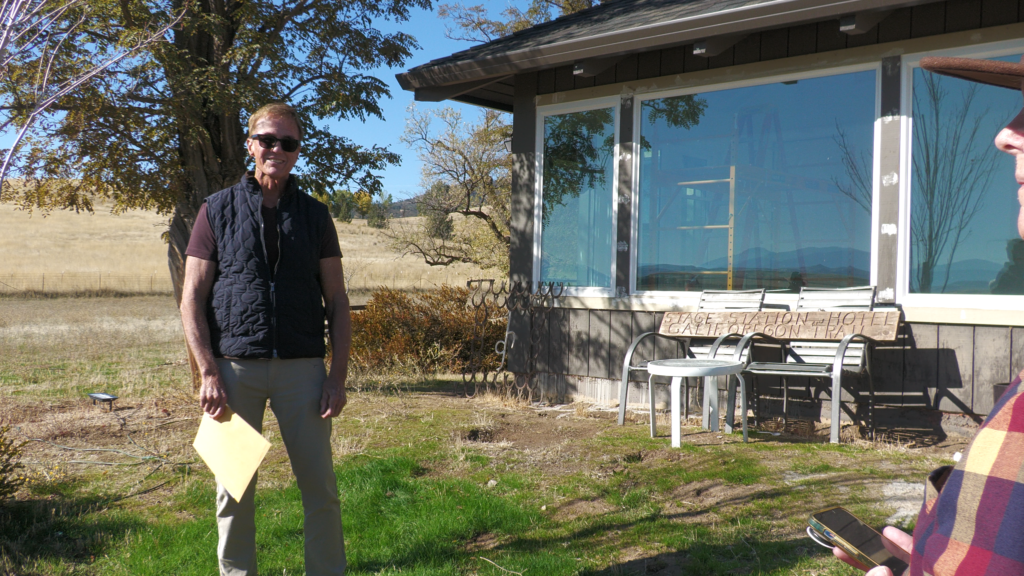
One of the tour’s more striking stops was a stone fort that had been converted into a house. Despite layers of stucco attempting to modernize the structure, the hand-hewn stones and original defensive features remain visible to those who know where to look.
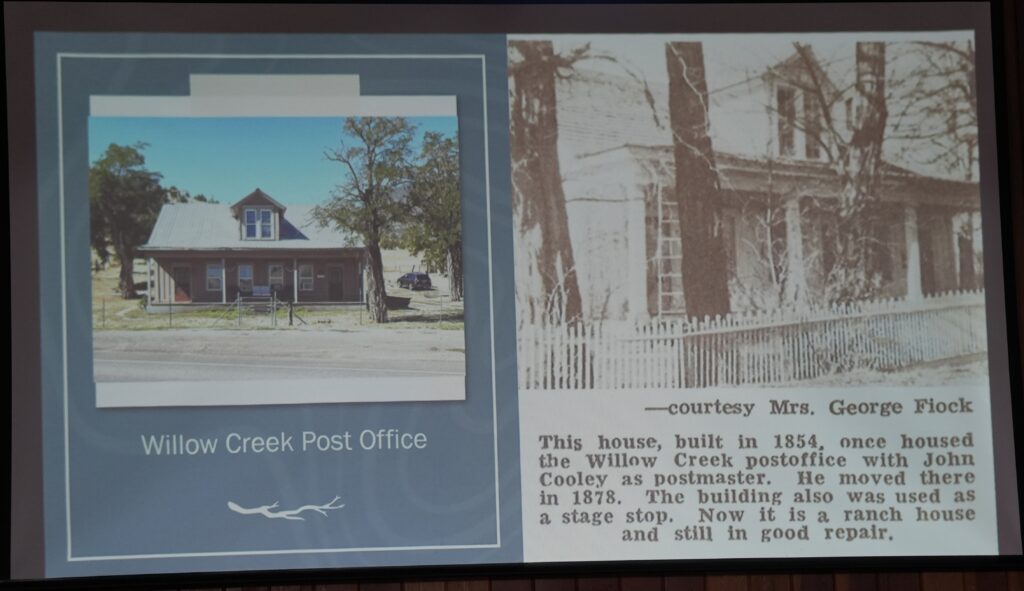
The Willow Creek School, established in 1860, and the nearby Willow Creek Post Office along the Callahan-Oregon Road marked another stop. Which came first—the Willow Creek School or the Little Shasta School—remains a matter of local debate.
Graves clarified a common confusion: a station provided lodging for travelers, while a stage stop was simply for changing horses or dropping mail. The terms are often used interchangeably, but they meant different things to those who operated them.
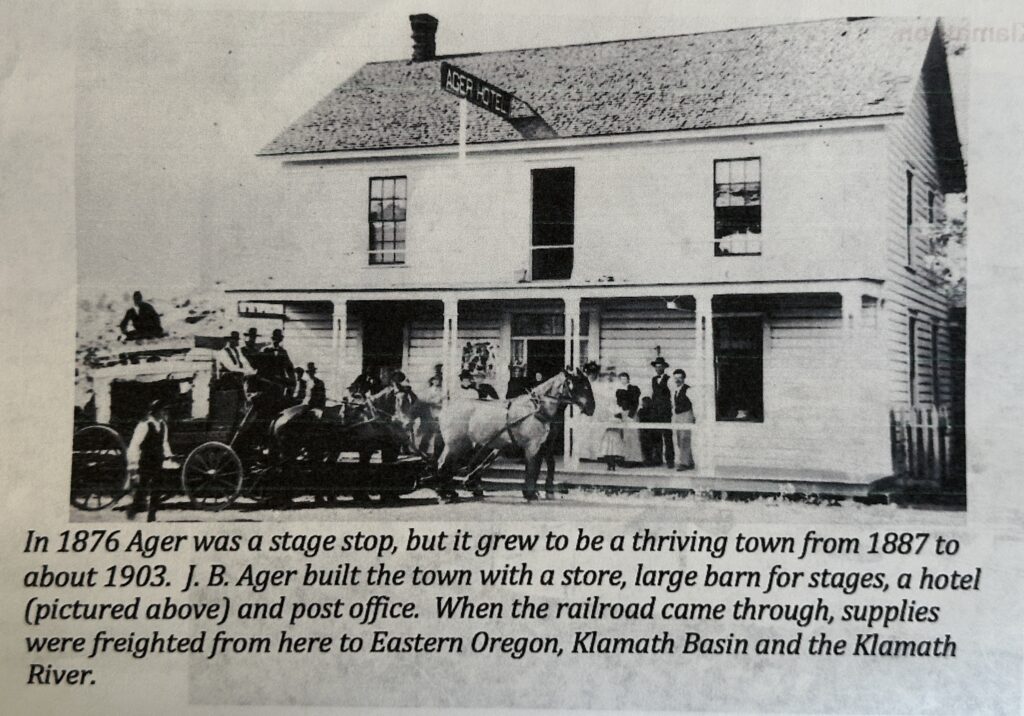
As a team driver herself, Graves noticed something in historical photographs that she hadn’t seen elsewhere in the West. Siskiyou teamsters used a ring in the headstall through which they ran the harnesses. This kept the lines aligned over mule teams during steep switchback turns, preventing the reins from cutting corners and getting tangled—a practical innovation born of local terrain.
Henley and Hornbrook: Two Towns, One Story
Henley dates to the gold rush days, situated west of Cottonwood Creek. It’s one of the little old frontier towns, likely named for a man who served as a California senator in the early days of statehood.
When the California and Oregon Railroad came through around 1887, it bypassed Henley and followed Cottonwood Creek. Hornbrook grew up along the railroad as a pusher and train maintenance depot, along with a trading post and settlement. Locomotives needed helper engines to push trains over the steep grade—the same reason Dunsmuir developed to the south.
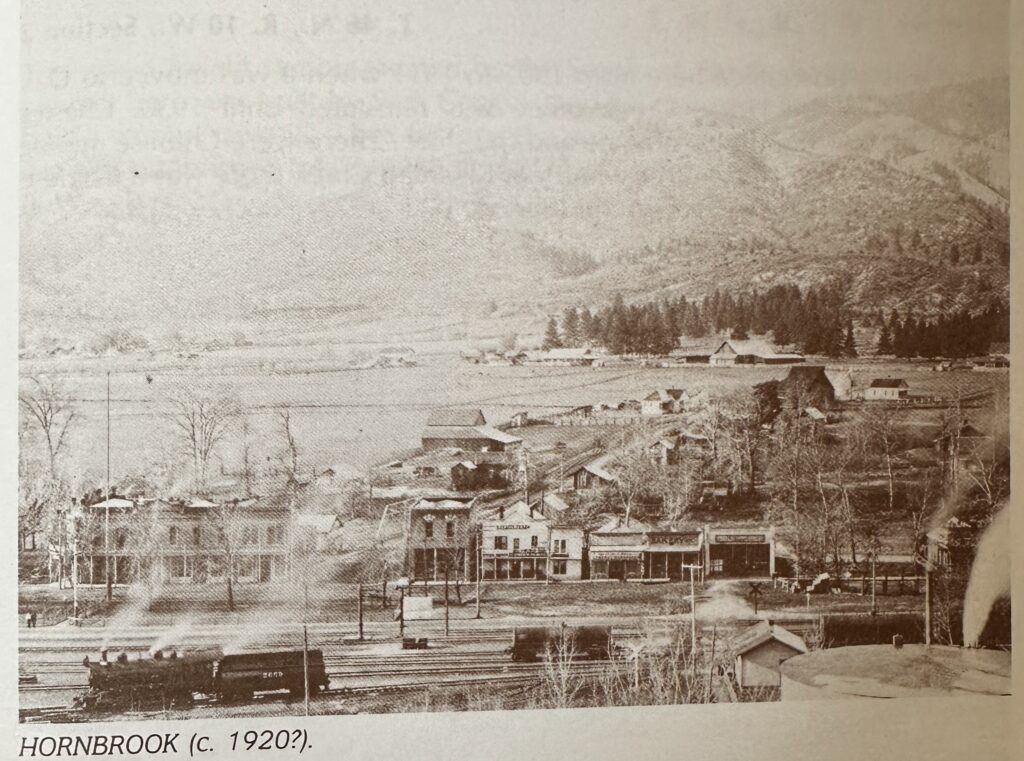
As Hornbrook built up, Henley began to fade. After a few years, little remained but a small settlement of homes and a graveyard.
When the highway came through around 1915, it was routed near Hornbrook. But around 1941, the Interstate was rebuilt to pass through Henley, giving the old pioneer town a second life. Today the two have essentially merged into one community.
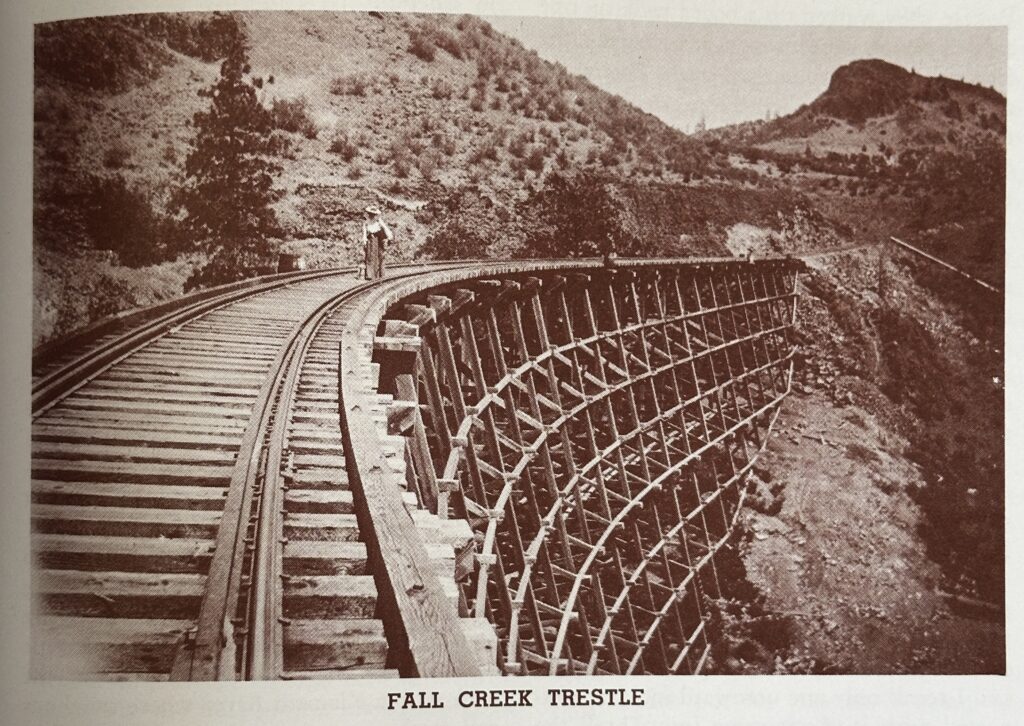
Everything changed in 1887 when the railroad reached Shasta Valley. Traffic that had once moved along native trails, then wagon roads, shifted to rail. From 1887 to 1908, all roads led to Klamath Falls. Forgotten places like Thrall (Lairds) mark where the main railroad line met logging spurs—the railroad beds still visible as testaments to a transportation network lost to time.
Looking Ahead
A 2026 tour will visit the Upper Klamath area to see original log buildings, hear family stories, and learn about the Fall Creek trestle.
For more information, contact the Siskiyou County Historical Society and for future tours.
Contact SCHS in advance directly for information on any special one-time tour being offered:
(530) 572-1099 (message) or [email protected]
Below are clips from the October Tour 2025 ⬇️





2 Comments
Were the tribes invited?
Anyone is more than welcome to attend, public history tour.