
By Rachel Becker, CalMatters
This story was originally published by CalMatters. Sign up for their newsletters.
As dozens of wildfires burn across California after a remarkable outbreak of dry lightning, a new study warns that a warming planet could bring more lightning-sparked wildfires to the West in the coming decades.
“These are the sort of events that can really allow the fire season to turn on a dime,” said John Abatzoglou, a professor of climatology at UC Merced and an author of the study.
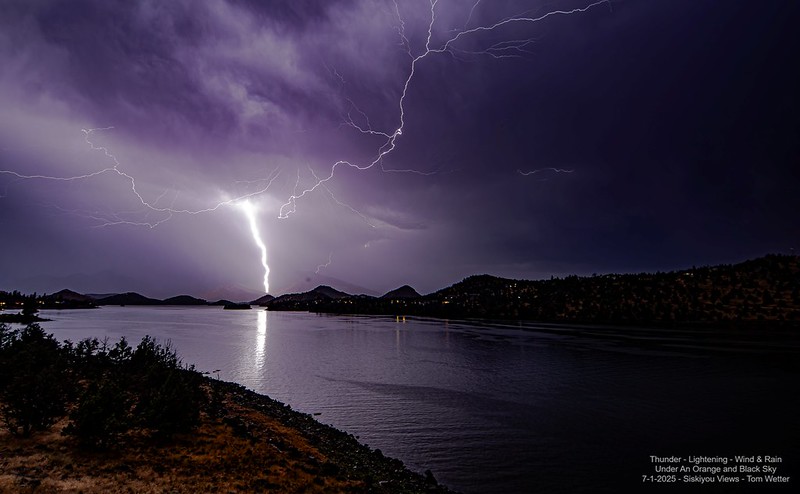
From early Tuesday into Wednesday morning, a lightning storm hurled thousands of bolts at the state, Cal Fire battalion chief David Acuña told CalMatters Wednesday. Forty-five new fires ignited within Cal Fire’s jurisdiction in that same time period, he said. Dry lightning strikes with little, if any, rainfall nearby.
“We can’t collectively say they’re all lightning fires, but we can say that there were a large number of lightning strikes and a large number of fires,” Acuña said.
Many of them are burning in the Sierra foothills, including the TCU September Lightning Complex in Tuolumne, Stanislaus and Calaveras Counties. Those fires have already torched nearly 14,000 acres, forced evacuations, destroyed buildings and devastated the historic Gold Rush town of Chinese Camp.
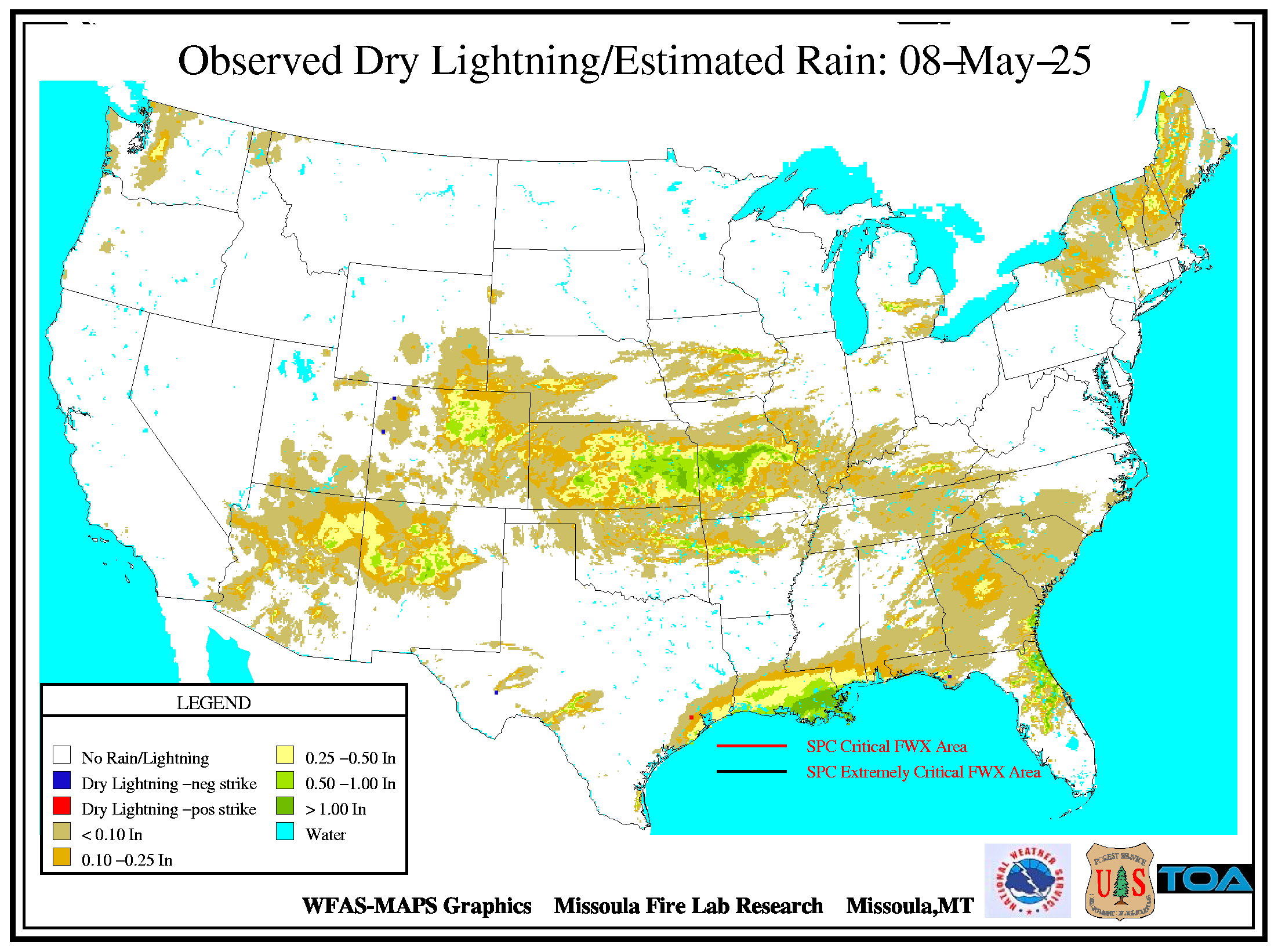
Exactly how many lightning strikes hit the ground Tuesday and Wednesday is hard to count. But Chris Vagasky, lightning data specialist with the National Lightning Safety Council, calculates nearly 11,000 bolts of electricity struck the ground in California over 31 hours. Federal maps show dry lightning up and down the center of California, from below Fresno to the Oregon border.
Though people spark the vast majority of wildfires, lightning strikes have caused some of California’s biggest and longest-lasting blazes — accounting for more than a third of the area burned in California in recent decades, according to Abatzoglou’s analysis of federal data.
Lightning started some of the biggest wildfires in California history, including 2020’s August Complex, which killed a firefighter and became the first fire on record to burn more than a million acres of the state.
These wildcard, lightning-sparked fires can be the “dominant driver” behind how much of the West burns, Abatzoglou said — which is why scientists seek to understand their patterns.
His team’s study, published last week in the journal Earth’s Future, reports that from 2030 to 2060, some western states could see up to 12 more days of lightning striking the ground per year.
Using machine learning, the researchers found that eastern Oregon and Washington, Idaho and western Montana will see some of the largest increases. But parts of northeast California and the eastern Sierra could see an increase as well.
Parts of the southwest saw more mixed results. But even there, as climate change drives hotter, drier conditions, the researchers found that lightning is increasingly likely to strike when parched lands are more vulnerable to fire.
“You get this very hazardous situation in terms of fire risk, where you have lighting that hits the dry vegetation,” postdoctoral scientist Dmitri Kalashnikov, the study’s lead author, said. “You’ll get an ignition, but then there’s no downpours to extinguish the flame — so that fire can grow.”
UC Merced’s new study bolsters earlier predictions that climate change could spur more lightning strikes.
But Vagasky, who did not participate in the research, says it improves on previous efforts by focusing on the risk for lightning-sparked fire across places with different geographies, weather patterns and vegetation.
“It’s not always the amount of lightning,” Vagasky said. “It’s the one lightning stroke that hits in the wrong place, at the wrong time, that starts the fire.”
‘We have to be ready’
Under the right conditions and in the right places, lightning fires can act like prescribed burns and clear away fuels, said Zeke Lunder, a pyrogeographer and director at The Lookout, a wildfire education blog and YouTube channel.
The challenge is when a bout of dry lightning sparks dozens of fires, all at once.
“We’re really good at putting out fires,” Lunder said. “But when we have a hundred, a few of them are going to get away.”
Five years ago, Cal Fire’s Acuña was mopping up the lightning-sparked Hills Fire near Coalinga when another lightning storm descended.
“Lightning was striking all around us, and we were just so exhausted that we were like, ‘Well, there’s nowhere to hide,’” he said. “There’s no cave. You can’t stand under a tree. We just got as flat as we could, and waited for it to pass over.”
He remembers it felt like hours, lying there waiting for the storm to pass. “There was a charge in every one of my cells from, you know, being concerned,” he said.
Such fires are also insidious, capable of smoldering in remote areas until hot, dry, windy conditions coax them into an inferno.
“They’re difficult to discover,” Acuña said. “They could be sitting inside the root of a struck oak tree for a week, week-and-a-half — and then all of a sudden, there’s a fire.”
The state is taking steps to better detect fires, Acuña added — even unpredictable and sneaky ones sparked by lightning. In 2023, Cal Fire partnered with UC San Diego’s ALERTCalifornia, which uses a network of more than 1,100 cameras and artificial intelligence to alert firefighters about potential fires.
“We have to be ready, because there was little to no notice that this lightning was coming in,” Acuña said. “If it happened once, it can happen again. And so we maintain readiness to respond anywhere within the state to protect people, property and resources.”
UC Merced’s Kalashnikov says he has not yet seen a climate-fueled increase in lightning — but that it’s not a distant threat.
“We are making these predictions for the near-term future,” Kalashnikov said. “These changes in terms of increased lightning are going to happen soon.”
This article was originally published on CalMatters and was republished under the Creative Commons Attribution-NonCommercial-NoDerivatives license.

Rachel Becker WATER REPORTER
Rachel Becker is a journalist reporting on California’s complex water challenges and water policy issues for CalMatters. Rachel has a background in biology, with master’s degrees in both immunology and… More by Rachel Becker
- Writing Classes and Contests – John Sammon
- Loose Screws: Mount Shasta Leadership Shakeup Leaves Questions Unanswered
- Protecting Your Health During A Wildfire : What Northern California Residents Should Know
- State Water Board To Consider LOW-INTEREST LOAN For Quartz Valley Tribe Land Acquisition In Scott River Headwaters
- Obituary: Minnie “Bunny” Frederick