
Home / Uncategorized / Factors Driving Microcystis aeruginosa Blooms in Natural Bodies of Water

Factors Driving Microcystis aeruginosa Blooms in Natural Bodies of Water

By: William E. Simpson II โ€“ Naturalist โ€“ Researcher –   ยฉ All Rights Reserved.

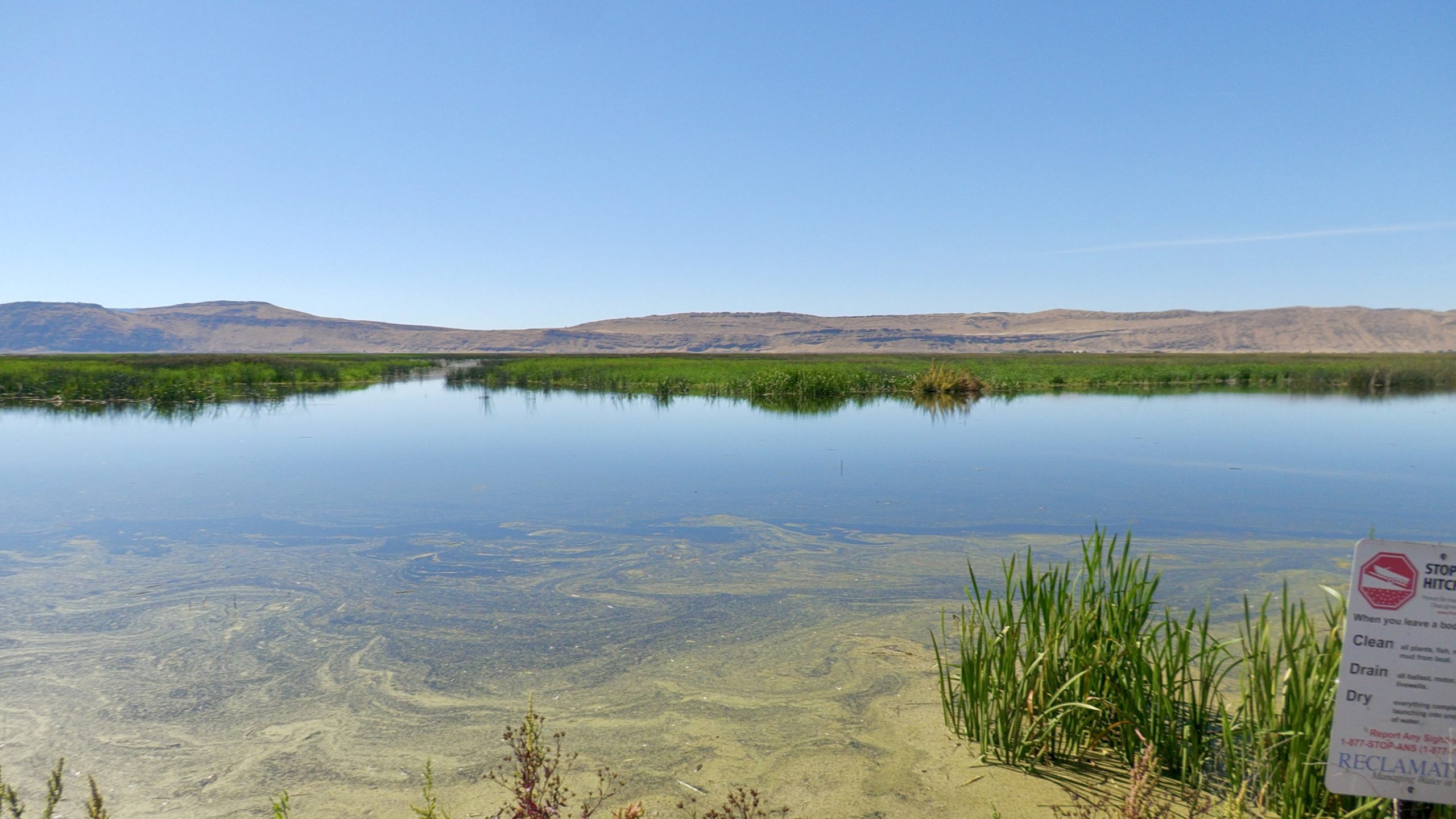
Recent discussions in Siskiyou and Klamath Counties (OR-CA) about algae blooms in the Klamath Basin prompted me to examine the factors driving these events in natural water bodies, such as Klamath Lake and other lakes and rivers across America. The blooms, primarily of the blue-green algae Microcystis aeruginosa, are a natural phenomenon, but their increased intensity and frequency result from both natural conditions and human activities. While these blooms are often labeled as potentially harmful due to possible toxin production, no medically documented cases of toxicity have been reported in the Klamath Basin, and animals like fish and wild horses have been observed consuming them without apparent harm.

Microcystis aeruginosa, a cyanobacterium, can form dense blooms that may produce microcystins, compounds potentially harmful to humans, wildlife, and ecosystems in high concentrations (Carmichael, two thousand one). Unlike supplement-grade cyanobacteria, such as Aphanizomenon flos-aquae from Klamath Lake, which are tested for safety and used as nutritional supplements, Microcystis blooms raise concerns when toxin-producing strains dominate (Gilroy et al., two thousand). Some attribute blooms to natural factors like warm water or nutrient upwelling, while others highlight human-induced nitrogen runoff from agriculture. Evidence, including Australian studies on benthic cyanobacteria, shows that both natural and anthropogenic factors contribute, with human inputs amplifying bloom severity (Paerl & Otten, two thousand ten; Gaget et al., two thousand seventeen). In the Klamath Basin, intensified agriculture over the past fifty to sixty years has likely increased bloom intensity, though the lack of documented health impacts suggests lower toxicity risks than often assumed.

Naturally, Microcystis aeruginosa thrives in warm, nutrient-rich waters. Lakes with high natural phosphorus levels, like Klamath Lake in its volcanic region, or those with seasonal nutrient upwelling, support dense blooms without human influence. Shallow lakes with stable water columns and warm summer temperatures are ideal, as Microcystis uses gas-filled vesicles to dominate surface waters (Reynolds, two thousand six). Paleoecological studies indicate intense blooms in North American lakes centuries ago, driven by natural nutrient cycles and warm climates (Taranu et al., two thousand fifteen). In rivers, nutrient pulses from flooding can trigger blooms in slow-moving sections (Bowling et al., two thousand sixteen). Australian research shows benthic Microcystis forming microcystin-producing mats in reservoirs under natural nutrient-rich conditions, suggesting similar potential in lakes like Klamath (Gaget et al., two thousand seventeen). Observations of fish and wild horses consuming Klamath blooms without harm suggest that many blooms may involve non-toxic strains or low microcystin levels (Ibelings & Havens, two thousand eight).

Human activities, particularly agriculture, escalate bloom intensity. In the Klamath Basin, nitrogen from fertilizers and livestock waste fuels Microcystis growth. Microcystis relies on external nitrogen sources, making it responsive to anthropogenic inputs like ammonium (Gobler et al., two thousand sixteen). Australian studies show benthic Microcystis blooms linked to nutrient runoff, with microcystins detected but no direct health impacts reported, mirroring the Klamath Basinโ€™s lack of documented cases (Gaget et al., two thousand seventeen). In the U.S., lakes like Lake Erie and rivers in the Mississippi Basin face similar blooms driven by agricultural runoff (Michalak et al., two thousand thirteen).

When nutrient levels surge, Microcystis outcompetes other phytoplankton. Natural nutrient pulses from upwelling or sediment release can trigger blooms, but human-induced runoff creates chronic enrichment, leading to frequent blooms (Carpenter et al., one thousand nine hundred ninety-eight). Species less adapted to nutrient spikes decline, showing evolutionary dynamics (Hutchinson, one thousand nine hundred sixty-one). The absence of reported toxicity cases in the Klamath Basin suggests that environmental conditions or strain variability may limit harm, despite nutrient-driven bloom intensity.

What drives the intensity of Microcystis blooms in natural water bodies? Unbiased studies, free from agricultural industry influence, are critical. Thirty to forty years ago, intense blooms were less common in Klamath Lake. While Microcystis was present, conditions for explosive growth were rarer, suggesting human activities have shifted the balance (Eldridge et al., two thousand twelve).

Natural Drivers:

Shallow, warm lakes like Klamath Lake, with high natural phosphorus, are prone to blooms. Seasonal warming and calm waters promote stratification, enabling Microcystis to form surface scums (Paerl et al., two thousand eleven). Sediment nutrient release, triggered by wind or currents, fuels blooms without human input (Sรธndergaard et al., two thousand three). In rivers, flooding mobilizes nutrients, supporting blooms in pooled sections (Mitrovic et al., two thousand ten). Historical data show natural blooms tied to nutrient and climate cycles (Taranu et al., two thousand fifteen).

Anthropogenic Drivers:

Agriculture amplifies blooms. In the Klamath Basin, nitrogen from fertilizers and livestock feces enters waterways via runoff, exceeding natural levels. A study confirmed elevated nitrogen in runoff from flood-irrigated pastures, contributing to Klamath Lakeโ€™s nutrient load (Ciotti, two thousand five). U.S. lakes like Lake Erie and rivers in the Mississippi Basin show similar patterns (Michalak et al., two thousand thirteen). Australian reservoirs exhibit benthic Microcystis blooms linked to runoff, with microcystins detected but no health impacts reported (Gaget et al., two thousand seventeen). Nitrogen, especially ammonium, drives larger blooms (Davis et al., two thousand nine).

Klamath Basin Agriculture:

High-density grazing (cattle, sheep) on fertilized pastures concentrates nitrogen-rich feces, which, with soil additives, enters tributaries feeding Klamath Lake. Excess nitrogen overwhelms fixation capacity, leading to runoff (Carpenter et al., one thousand nine hundred ninety-eight). Fertilizers further elevate nutrient levels, supporting blooms (Eldridge et al., two thousand twelve). Nitrogen-rich runoff settles into lake sediments, redissolving under warm conditions, sustaining blooms (Sรธndergaard et al., two thousand three).

Water Chemistry and Bloom Dynamics:

Nitrogen availability varies with temperature, pH, and currents. Bioavailable forms like ammonium fuel Microcystis growth (Paerl et al., two thousand eleven). Sediment-bound nitrogen adds complexity (Wetzel, two thousand one). Summerโ€™s warmth and thermoclines in lakes like Klamath Lake create nutrient-rich surface layers (Carmichael, two thousand one). Natural and human-induced nutrients interact, complicating causation. The lack of toxicity cases suggests that toxin production may be limited in Klamath blooms.

Historical Context:

Before the nineteen sixties, intense blooms were less frequent in Klamath Lake. Natural blooms occurred, but their scale was limited. Intensified agriculture correlates with increased bloom frequency (Anderson et al., two thousand two). In Maui, Hawaii, during the nineteen eighties, blooms were linked to agricultural runoff, with nitrogen driving growth (Laws et al., one thousand nine hundred eighty-seven).

Balancing Causes:

Microcystis blooms stem from both natural and human factors. Natural blooms are episodic, tied to warm summers or sediment nutrient release. Human-induced nitrogen runoff makes blooms more frequent and severe (Paerl & Otten, two thousand ten). Unpolluted lakes rarely show intense blooms, underscoring nutrient enrichmentโ€™s role (Davis et al., two thousand nine). Australian studies show nutrient-driven benthic and pelagic blooms, with microcystins present but no health impacts, similar to Klamath Lake (Gaget et al., two thousand seventeen). Observations of animals consuming blooms without harm suggest low toxicity risks in some contexts (Ibelings & Havens, two thousand eight). Reducing runoff could lessen bloom intensity, while recognizing natural predispositions.

In summary, Microcystis aeruginosa blooms in Klamath Lake and other U.S. water bodies arise from natural conditions like warm water and nutrient upwelling, amplified by anthropogenic nitrogen from agriculture. While some cyanobacteria are used as supplements, Microcystis blooms may be potentially harmful when toxins are produced, though no medically cited toxicity cases exist in the Klamath Basin. Australian research supports nutrient-driven bloom dynamics. Managing runoff is key, alongside understanding natural bloom triggers.

Bibliography:

Anderson, D. M., Glibert, P. M., & Burkholder, J. M. (two thousand two). Harmful algal blooms and eutrophication: Nutrient sources, composition, and consequences. Estuaries, twenty-five(four), seven hundred four to seven hundred twenty-six. https://doi.org/10.1007/BF02804901

Bowling, L. C., Blais, C., & Sinotte, M. (two thousand sixteen). Environmental controls on the distribution of cyanobacteria in a lowland river, Australia. Hydrobiologia, seven hundred seventy-six, two hundred twenty-five to two hundred forty-one. https://doi.org/10.1007/s10750-016-2753-7

Carmichael, W. W. (two thousand one). Health effects of toxin-producing cyanobacteria: โ€œThe CyanoHABsโ€. Human and Ecological Risk Assessment, seven(five), one thousand three hundred ninety-three to one thousand four hundred seven. https://doi.org/10.1080/20018091095087

Carpenter, S. R., Caraco, N. F., Correll, D. L., Howarth, R. W., Sharpley, A. N., & Smith, V. H. (one thousand nine hundred ninety-eight). Nonpoint pollution of surface waters with phosphorus and nitrogen. Ecological Applications, eight(three), five hundred fifty-nine to five hundred sixty-eight. https://doi.org/10.1890/1051-0761(1998)008[0559:NPOSWW]2.0.CO;2

Ciotti, D. C. (two thousand five). Nutrient and bacteria dynamics in flood-irrigated pastures of the Klamath Basin. Oregon State University. https://ir.library.oregonstate.edu/xmlui/bitstream/handle/1957/20575/CiottiDamionC2005.pdf?sequence=1

Davis, T. W., Berry, D. L., Boyer, G. L., & Gobler, C. J. (two thousand nine). The effects of temperature and nutrients on the growth and dynamics of toxic and non-toxic strains of Microcystis during cyanobacteria blooms. Harmful Algae, eight(five), seven hundred fifteen to seven hundred twenty-five. https://doi.org/10.1016/j.hal.2009.02.004

Eldridge, S. L. C., Wood, T. M., Echols, K. R., & Topping, B. R. (two thousand twelve). Microcystins, nutrient dynamics, and other environmental factors during blooms of Microcystis in Upper Klamath Lake, Oregon, two thousand eight to two thousand nine. U.S. Geological Survey Scientific Investigations Report, five thousand one hundred twenty-six. https://pubs.usgs.gov/sir/2012/5126/

Gaget, V., Humpage, A. R., Huang, Q., Monis, P., & Brookes, J. D. (two thousand seventeen). Benthic cyanobacteria: A source of cylindrospermopsin and microcystin in Australian drinking water reservoirs. Water Research, one hundred twenty-four, one hundred twenty to one hundred thirty. https://doi.org/10.1016/j.watres.2017.07.047

Gilroy, D. J., Kauffman, C. A., Hall, R. A., Huang, X., & Chu, F. S. (two thousand). Assessing potential health risks from microcystin toxins in blue-green algae dietary supplements. Environmental Health Perspectives, one hundred eight(five), four hundred thirty-five to four hundred thirty-nine. https://doi.org/10.1289/ehp.00108435

Gobler, C. J., Burkholder, J. M., Davis, T. W., Harke, M. J., Johengen, T., Stow, C. A., & Van de Waal, D. B. (two thousand sixteen). The dual role of nitrogen supply in controlling the growth and toxicity of cyanobacterial blooms. Harmful Algae, fifty-four, eighty-seven to ninety-seven. https://doi.org/10.1016/j.hal.2016.01.010

Harke, M. J., Steffen, M. M., Gobler, C. J., Otten, T. G., Wilhelm, S. W., Wood, S. A., & Paerl, H. W. (two thousand sixteen). A review of the global ecology, genomics, and biogeography of the toxic cyanobacterium, Microcystis spp. Harmful Algae, fifty-four, four to twenty. https://doi.org/10.1016/j.hal.2015.12.007

Hutchinson, G. E. (one thousand nine hundred sixty-one). The paradox of the plankton. The American Naturalist, ninety-five(eight hundred eighty-two), one hundred thirty-seven to one hundred forty-five. https://doi.org/10.1086/282171

Ibelings, B. W., & Havens, K. E. (two thousand eight). Cyanobacterial toxins: A qualitative meta-analysis of concentrations, persistence, and effects on aquatic organisms. Harmful Algae, seven(two), one hundred sixty-six to one hundred seventy-five. https://doi.org/10.1016/j.hal.2007.07.001

Laws, E. A., Redalje, D. G., Haas, L. W., & Bienfang, P. K. (one thousand nine hundred eighty-seven). High phytoplankton growth and production rates in the North Pacific subtropical gyre. Limnology and Oceanography, thirty-two(five), nine hundred five to nine hundred eighteen. https://doi.org/10.4319/lo.1987.32.5.0905

Michalak, A. M., Anderson, E. J., Beletsky, D., Boland, S., Bosch, N. S., Bridgeman, T. B., & Zagorski, M. A. (two thousand thirteen). Record-setting algal bloom in Lake Erie caused by agricultural and meteorological trends consistent with expected future conditions. Proceedings of the National Academy of Sciences, one hundred ten(sixteen), six thousand four hundred sixty-one to six thousand four hundred sixty-six. https://doi.org/10.1073/pnas.1216006110

Mitrovic, S. M., Hardwick, L., & Dorani, F. (two thousand ten). Use of flow management to mitigate cyanobacterial blooms in the Lower Darling River, Australia. Journal of Plankton Research, thirty-three(five), six hundred thirty-one to six hundred thirty-nine. https://doi.org/10.1093/plankt/fbq145

Paerl, H. W., & Otten, T. G. (two thousand ten). Harmful cyanobacterial blooms: Causes, consequences, and controls. Microbial Ecology, sixty-five(four), nine hundred ninety-five to one thousand ten. https://doi.org/10.1007/s00248-012-0159-y

Paerl, H. W., Hall, N. S., & Calandrino, E. S. (two thousand eleven). Controlling harmful cyanobacterial blooms in a world experiencing anthropogenic and climatic-induced change. Science of the Total Environment, four hundred nine(nine), one thousand seven hundred thirty-nine to one thousand seven hundred forty-five. https://doi.org/10.1016/j.scitotenv.2011.02.001

Reynolds, C. S. (two thousand six). The ecology of phytoplankton. Cambridge University Press. https://doi.org/10.1017/CBO9780511542145

Sรธndergaard, M., Jensen, J. P., & Jeppesen, E. (two thousand three). Role of sediment and internal loading of phosphorus in shallow lakes. Hydrobiologia, five hundred six to five hundred nine, one hundred thirty-five to one hundred forty-five. https://doi.org/10.1023/B:HYDR.0000008611.12704.dd

Taranu, Z. E., Gregory-Eaves, I., Leavitt, P. R., Bunting, L., Buchaca, T., Catalan, J., & Smol, J. P. (two thousand fifteen). Acceleration of cyanobacterial dominance in north temperate-subarctic lakes during the Anthropocene. Ecology Letters, eighteen(four), three hundred seventy-five to three hundred eighty-four. https://doi.org/10.1111/ele.12420

Watson, S. B., Miller, C., Arhonditsis, G., Boyer, G. L., Carmichael, W., Charlton, M. N., & Wilhelm, S. W. (two thousand eighteen). The re-eutrophication of Lake Erie: Harmful algal blooms and hypoxia. Harmful Algae, seventy-seven, one to twelve. https://doi.org/10.1016/j.hal.2018.04.010

Wetzel, R. G. (two thousand one). Limnology: Lake and river ecosystems (third edition). Academic Press.


Tagged:

Leave a Reply

Your email address will not be published. Required fields are marked *