
Do you have family or friends living in large, metropolitan areas? Are their lifestyles similar to yours? Have you had a chance to talk with them about “rural” issues that you might be familiar with or are important to you? Do they seem to understand these issues and have similar perspectives as yours?
I have relatives in New York City and Philadelphia. They do not have vehicles but are experts at mass transit. If they take a trip where a train does not go, they rent a car. They love to shop at in-town farmer’s markets and do not complain about the prices. (After all, they have very good incomes.) They are pleased that the Klamath’s dams have been removed; don’t understand why there are so many fires burning out West (but wish that we could stop them); and are confused by our continual fighting over water. After all, with summer rain and high humidity in the East, irrigation is not a common need.
I love my relatives. They are nice and compassionate folks. But, a haunting feeling comes over me–that we are of a different breed. I worked my entire life in the forest, doing my part in managing them so they could productively provide wood products. My relatives wonder why trees need to be cut. I consider my relatives to be well-meaning but naïve and ignorant. They consider me to be old-fashioned and un-hip.
A growing portion of the population of our country live in metropolitan areas. These people vote at the ballot box but also with their daily purchasing choices. The odds are very good that they do not know a farmer, rancher or logger. Their lives are so far removed from growing food or fiber that they have few reasons to think about those rural workers. Where does their food come from? They are vaguely aware that there are farms and ranches but may not know where they might go to find one. Where does their plywood come from? They are not sure, but sure wish that it would be cheaper.
In reality, about 80 percent of the meat currently raised in the U.S. comes from commercial feedlot operations. A small and shrinking portion comes from rangelands and pastures like we have here in Siskiyou County. Some urban people may wonder why we should allow livestock to encroach on rangeland or pastures, rather than have those areas “go back to nature”.
Conversations with my urban family connections make me wonder about the fate of rural folks (like me and most people I know). When I describe our rural lifestyles, heavily dependent upon fuel and personal vehicles, they are confused. To them, our lifestyles and grip on old-style traditions are difficult to rationalize in the modern world. “Perhaps you folks should move to a metropolitan area . . .,” they might think, “. . . so that they are not so wasteful of resources.”
Obviously, our urban population is disjointed from the mentality and life-style of the rural minority. And vice versa! Increasingly, urban views regarding environmental issues, as shown by their voting patterns and purchasing choices, diverge from our traditional rural lifestyles. Let me give a few examples: first, the gradual re-establishment of the gray wolf in California.
The wolf is an efficient pack hunting predator of small or middle-sized prey. They are smart and excel at long-distance pursuits. The wolf was extirpated from much of the West due to its perceived or actual impact on livestock. Certainly, wolves are not dumb and learned that livestock, whether grazing in the wildlands or in fenced pastures, were much easier to catch than wild prey. There are examples of wolves attacking humans, but I suspect that their impact on livestock was the main reason for their elimination.
However, not all American wolves were wiped out. Some populations still existed in the North and Northeast. These populations were studied for decades and considered for re-introduction back into their original range–sometime in the future. But, a stumbling block existed– the political importance of the ranching and farming communities and the volume of rangeland meat production being grown in rural areas. Gradually, those stumbling blocks have eroded away.
As meat production has changed over the past decades it is another example of the decline in rural economic and political strength. While wolf re-introduction would have been very difficult to justify 100- or 50-years ago, most of the U.S.’s population now considers it quite reasonable and logical.
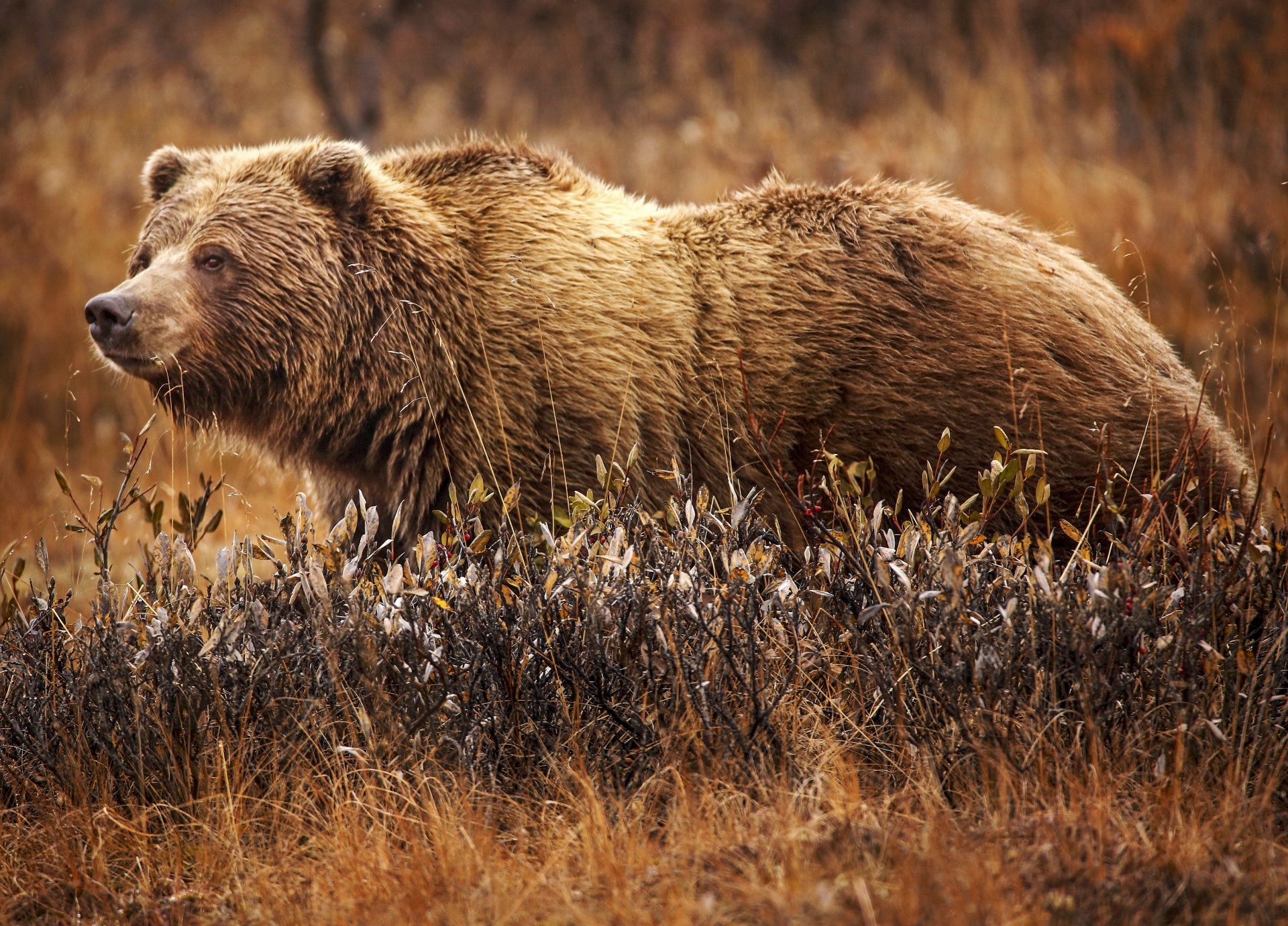
Here’s another example of how rural and urban sentiments differ: Senate Bill 1305 is making its way through the legislative process, which, if passed, would require that the California Department of Fish and Wildlife produce a “roadmap” of how to re-introduce the grizzly to our state.
Let me ask you, do you know anything about the grizzly other than what you have seen on nature shows? On a recent trip to southwestern Montana I had a glimpse into the realities of human-grizzly dynamics. The small town we stayed in had a Facebook page that updated people on where grizzlies were last seen—so that people could avoid those areas to reduce the risk of interaction. During a walk I started a conversation with a person working in their yard about life in “grizzly country”. He said it had taken him some time to get used to. He was a bird-watcher but did not put up feeders in his yard due to the risk of attracting these predators. He always carefully scanned his yard through his living room window before opening the front door.
We took several walks with friends we were staying with, on trails near their small Montana town. They had lived in the greater Yellowstone area their entire lives and took the risk of running into a grizzly seriously. We all grabbed a canister of bear spray and us newcomers were given training about their use. I wondered, during my training, how far the spray would reach? And, if a bear was running at me at full speed, and I was calm enough to hit it in the eyes (very unlikely), would it stop before bowling me over?? These were all thoughts I had never pondered before while at a California trailhead!
Reading the journals of the Lewis and Clark Expedition give insight into the grizzly. Back then, in the very early 1800s, only a few of the adventurers had had encounters with the bear while most had only heard stories about them. The travelers considered themself to be tough mountain men and were very curious about the animal. After getting into grizzly country and having a variety of hair-raising interactions their curiosity was satisfied! The men concluded that they were dangerous when provoked and had a tremendous ability to withstand the gunfire. Some bears absorbed 5-10 bullets and traveled considerable distances before dying.
My hope is that we think very hard before we bring grizzlies back to the populated West. Try to imagine some of the unintended consequences: grizzlies inhabiting streamside areas near our towns—the same place that unhoused people sometimes sleep? Or, that our parents or grandparents, when leaving their house each day, would have to peek around the garage’s corner to make sure not to run into one! Regardless, powerful environmental groups are pushing for their re-introduction and downplay the risks. The urban population increasingly view the rural West is an area that provides them quality recreation and nature experiences. For them, wolves and grizzly bears are not risks but enhancements to their rural vacations.
Urban societies may be powerful political and economic forces but know little about nature or environmental issues. Because of that, they are easily swayed by slick and well-funded advocacy groups. As one person mentioned to me during a discussion about grizzly re-introduction: “If it ever goes to a vote, it is certain that most people would choose to bring them back. Every environmental issue passes the popular vote in California because people want to ‘do what is good for nature’, without understanding nature at all.”
The future, I predict, is that more and more rural environmental issues will be decided by the urban population. I do not see any way to stop this trend, but I feel that it is important to understand why these changes are happening. We might feel bewildered by what we see occurring around us or on the news, but the changes might make sense if we consider how political power and money work and how rural and urban societies have diverged. If I am correct, all of us rural folks should put on our seat belts because–“we ain’t seen nothing yet”!