

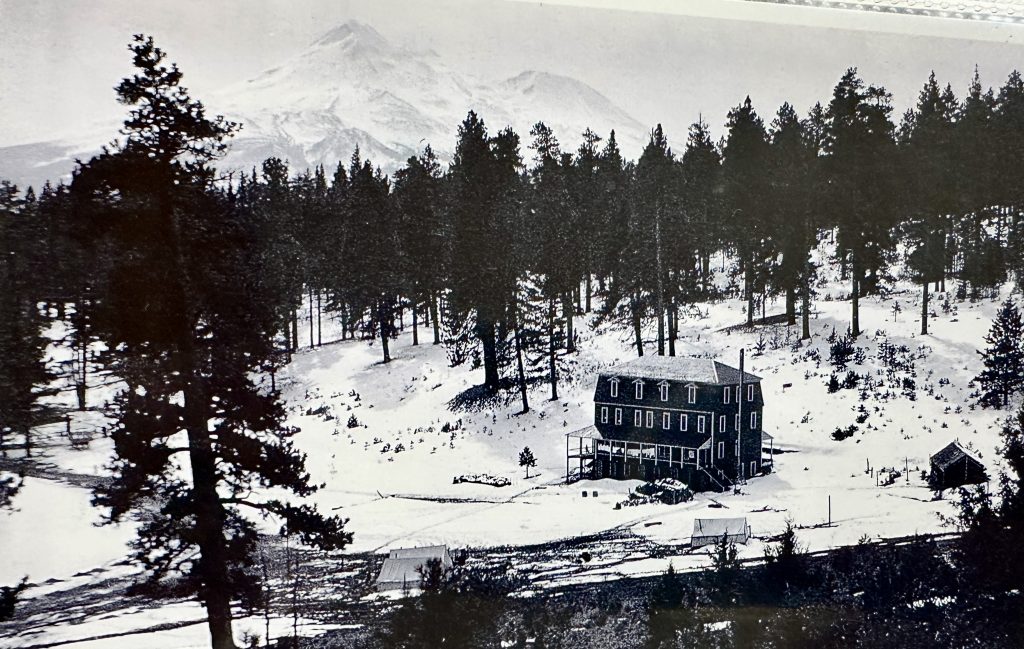
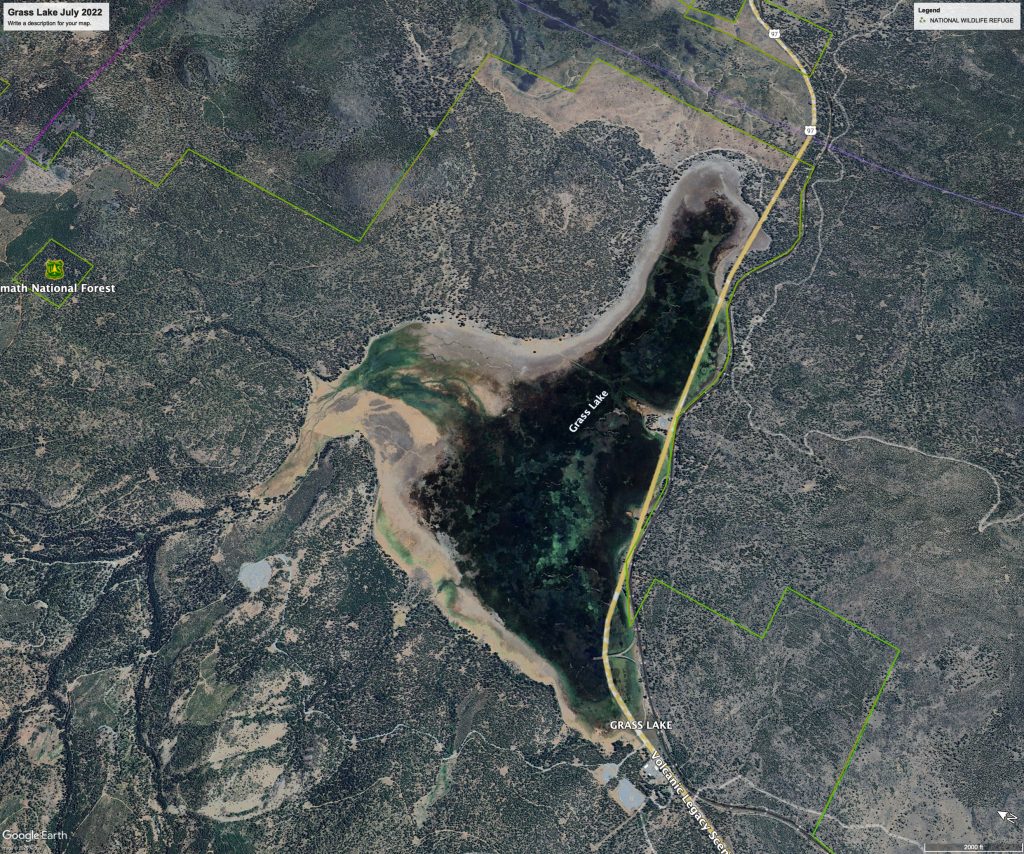
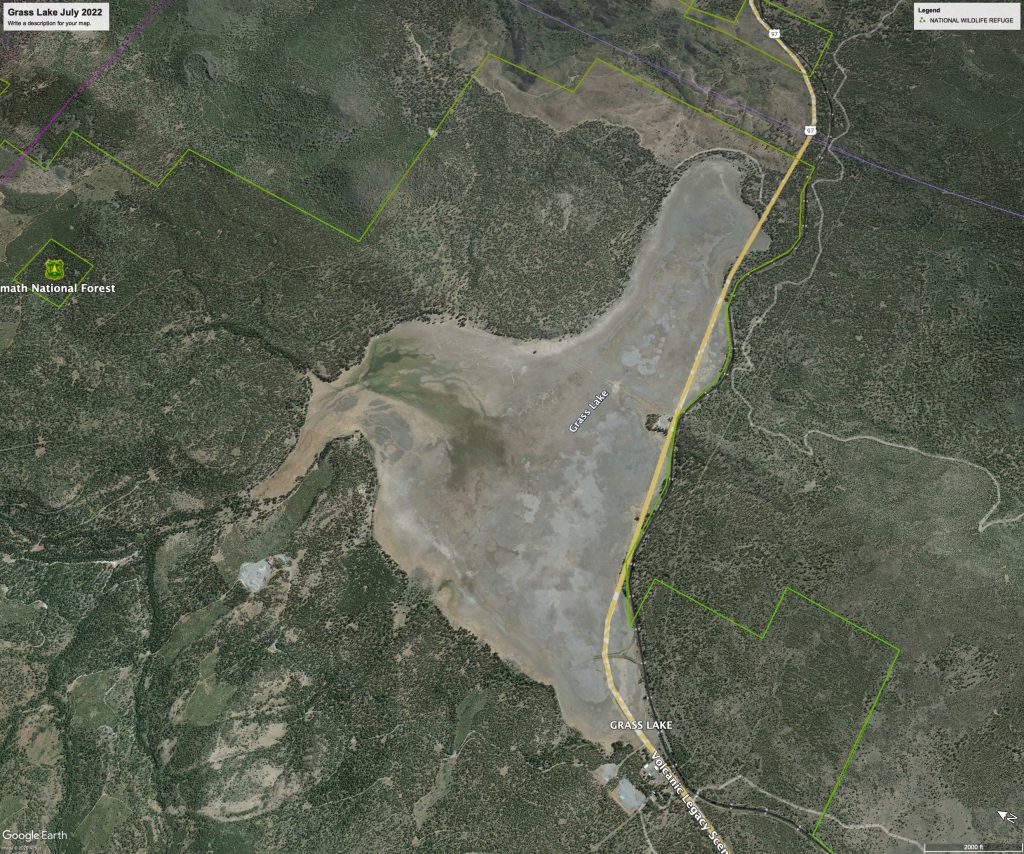
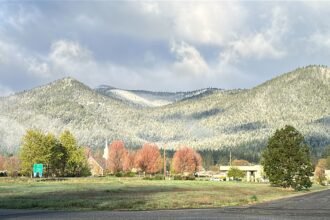
In the early 1900s, what is now a 200-acre grass-covered flat along Highway 97 near Weed, California, was once a pristine lake that attracted world-famous celebrities and promised to become a major tourist destination.
The Golden Era
Lumber baron Abner Weed constructed a railroad line in 1902 to the impressive Grass Lake Hotel, featuring 84 rooms built with such quality lumber that, as former employee Fred Stratton recalled, there wasn’t “a knot in the building.” Weed envisioned the hotel as a tourist center, capitalizing on the lake’s natural beauty that could “match any in the state.”
The resort achieved its intended glamour, drawing notable guests including Irene Castle, the internationally renowned dancer who visited multiple times. The combination of the pristine lake and surrounding scenery created an idyllic retreat that briefly put this remote Northern California location on the map.
The lake’s downfall came through human intervention rather than natural causes. A man named James Murphy conducted an experiment that would permanently alter the landscape. He inserted dynamite into the lake bottom and detonated it, creating a hole through what was described as “false bedrock.” This explosive breach caused the lake’s water to drain away, leaving behind the grass-choked flat visible today.
The Engineering Mystery
(Excerpts Taken from Article in REDDING RECORD-SEARCHLIGHT, Feb. 10, 1959)
The lake’s drainage system reveals fascinating engineering. James Sullivan, a longtime employee of the Weed Lumber Company (later International Paper Company), constructed a sophisticated drainage mechanism. The system includes a semi-circular dyke whose ends connect to wooded shoreline areas. When the dyke is cut, water rushes into the enclosed area and disappears down a drainage hole, much like emptying a bathtub.
This drainage capability means the lake can be emptied “at will,” despite the surrounding land being higher than the lake’s water level. The destination of these “hundreds of acre feet of escaping water” remained a mystery that intrigued locals, with one Mount Shasta resident proposing to trace the water’s path using barrel of dye – though concerns about livestock and human water safety prevented this experiment.
Legacy of a Lost Resort and unintended consequences
What began as a lumber baron’s dream of creating a world-class resort ended with Murphy’s ill-fated experiment, transforming a scenic lake into grassland and leaving behind only memories of celebrity visits and engineering curiosities.
Today, travelers along Highway 97 pass by this unremarkable flat without knowing they’re crossing the site of a once-glamorous resort that briefly brought international attention to this remote corner of Northern California.
- Traffic Stop in Siskiyou County Leads to $1.9 Million Cocaine Seizure, Driver Arrested
- F-35A Lightning II Jets from Luke AFB Arrive for Two-Week Training at Kingsley Field
- Mountain Lion F29 to Be Relocated Again — Residents Question Whether It Will Stick
- Fake Virus Alerts, Phishing, and Online Scams: How to Protect Yourself From Today’s Most Common Digital Threats
- Election Summary Report #2 – June 02,2026 General Election Siskiyou County CA


2 Comments
Fascinating article
What was the goal of the experiment that Murphy had conducted?