

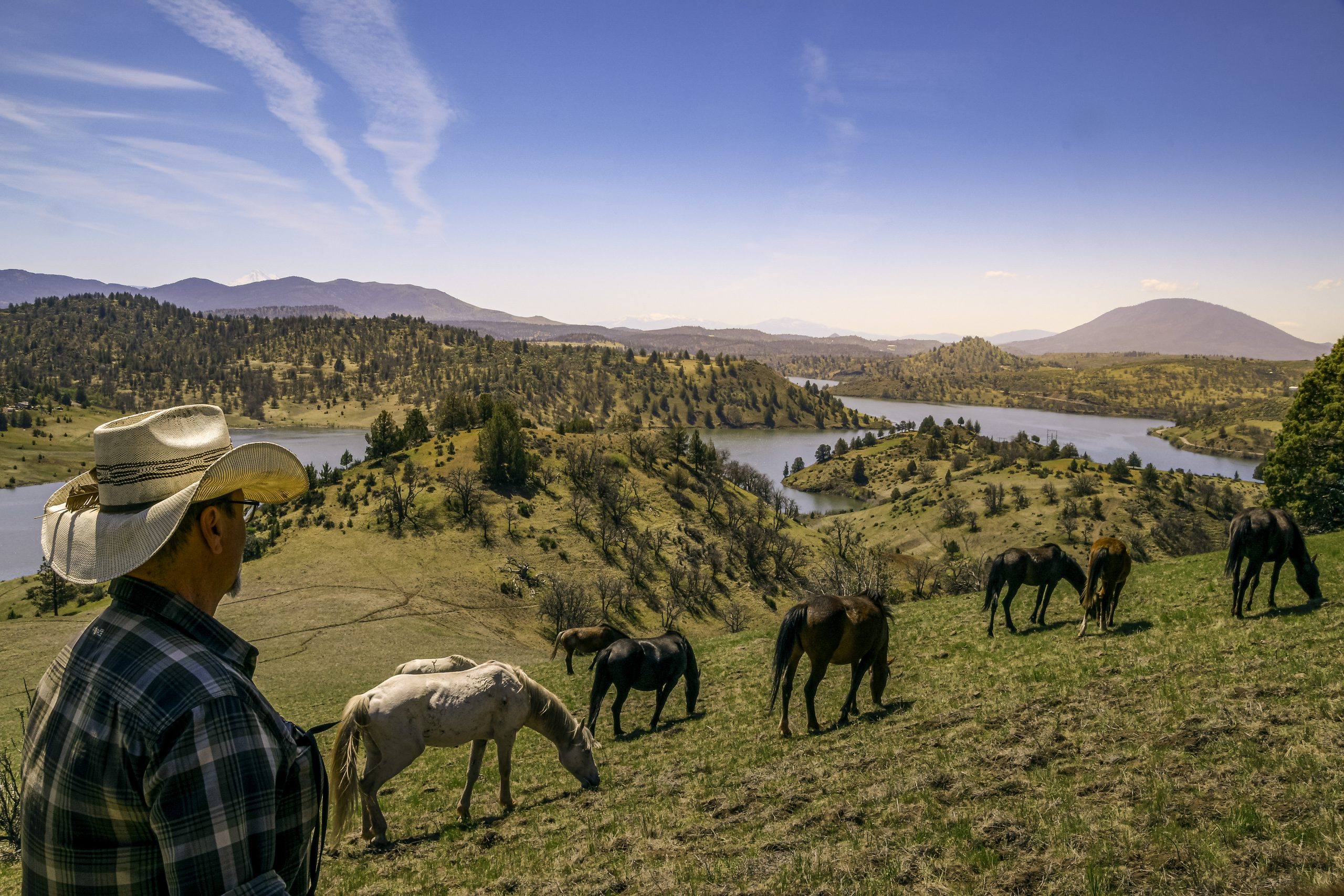
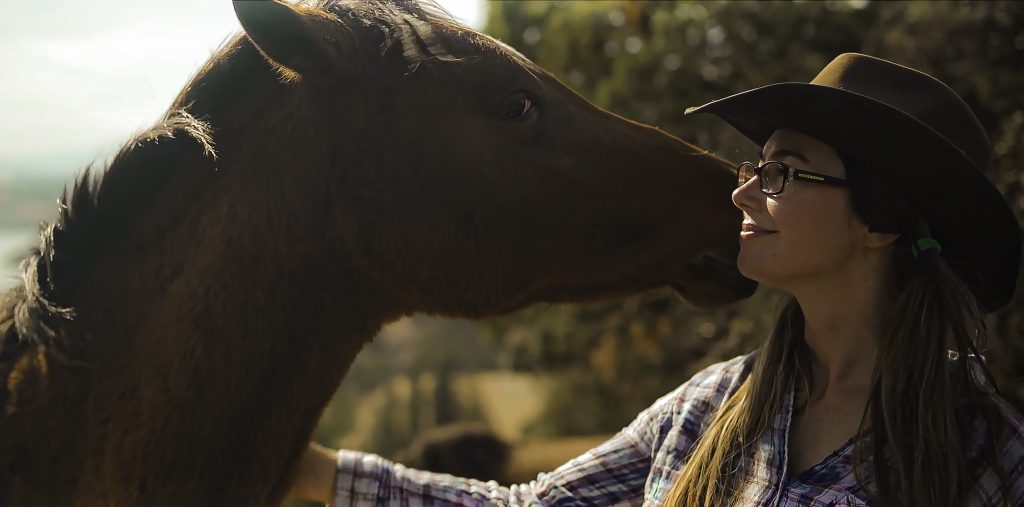
Horses don’t tear out the roots of plants while grazing, unlike cattle and sheep, says Simpson.
By Brad Jones – the EPOCH TIMES
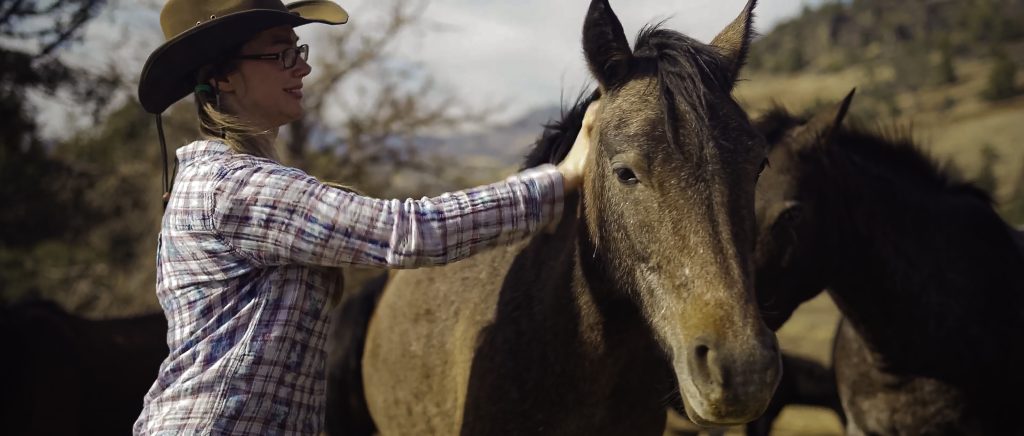
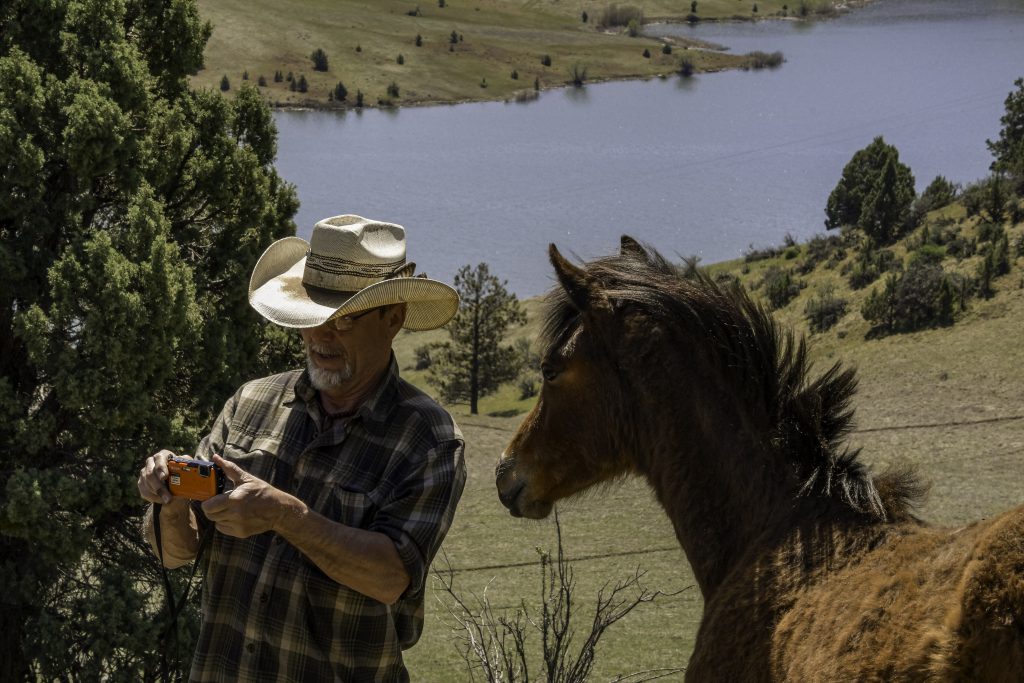
At his ranch along the Klamath River in Siskiyou County in Northern California, near the Oregon border, William Simpson lives among free-roaming native American wild horses in what he calls an “immersion study.”
When he bought the ranch in 2014, Simpson discovered wild horses roaming his land. He noticed that they would eat dry grass and brush—the kind that fuels wildfires and the stuff that cattle and sheep won’t eat. He has since advocated wild horse grazing to mitigate wildfires, and the idea has gained support from Elko County in Nevada and groups such as the Nevada Lands Council.
Local governments in California such as Placer and Marin counties already use goats to reduce wildfire risk. Simpson says his plan would not only mitigate the fires but also clear up more areas for cattle grazing, make wild horse herds stronger and healthier, keep them from potentially being sold for slaughter, and save U.S. taxpayers billions of dollars—but most importantly save thousands of people’s lives and livelihoods lost to wildfires and smoke.
The producer of a short film called “Wild Horses” and author of a preliminary 2019 study on the behavioral ecology of these animals, Simpson said he believes that they could have a major effect on reducing fire damage because of how they graze.
He is also a wild horse ethologist who teaches University of California students about horse grazing patterns and how they help prevent wildfires at his ranch, which consists primarily of grass and brush with scattered pine trees.
Simpson’s wife, Laura, died in June 2019 as a result of complications from smoke inhalation after a massive fire in 2018.
“She got sick right after the Klamathon fire,” he said. “The toxins in the wildfire smoke killed her.”
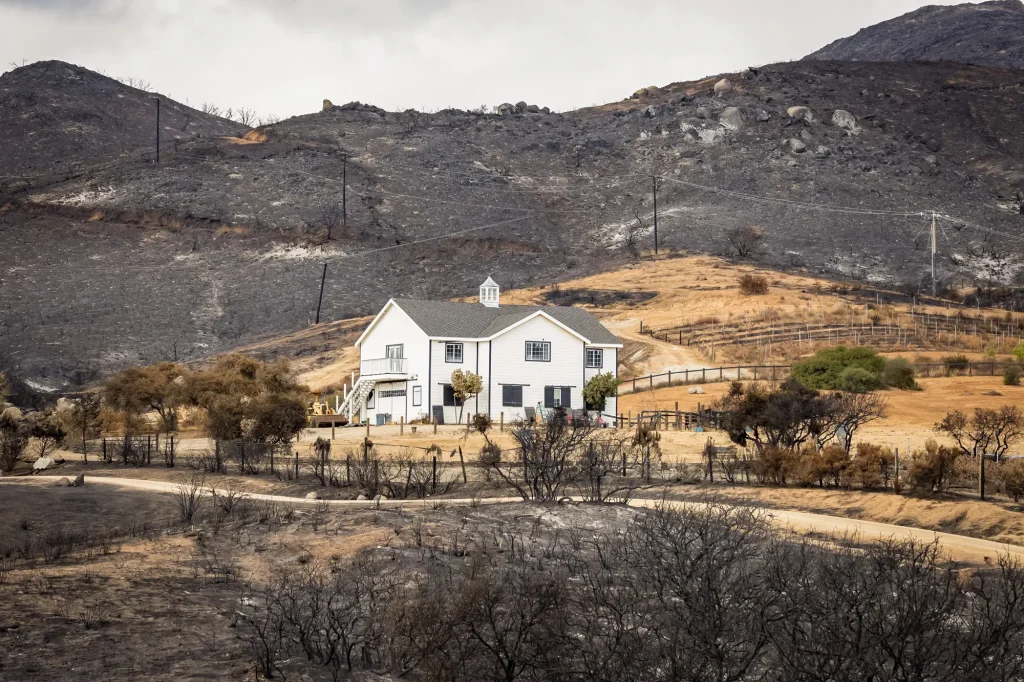
During that fire, wild horses grazed Agate Flat, which straddles the California–Oregon border, and played an important role by reducing fuel and creating a fire break that helped suppress the speed and heat intensity of the blaze to keep it from spreading to an old-growth forest wilderness area about two miles north in the Cascade-Siskiyou National Monument, Simpson said.
“That was a critical point in the battle … that helped Cal Fire win the war,” he said. “Thanks to the horses, we won.”
Everyone near his ranch was evacuated, but Simpson stayed—suffering lung damage himself—to help battle the blaze and keep watch over the horses.
“I stayed back because I wanted to see what these horses were going to do,” he said.
And by doing so, Simpson said, he discovered something quite interesting: “Wild horses are not afraid of fire.”
He watched and photographed the wild horses “grazing calmly” near the fire, which he attributes to the instincts of wild horses, whose ancestors have seen thousands of wildfires.
“The ancestors of these horses saw Mount Shasta erupting, and they’ve seen lava. They’ve seen erupting volcanos,” he said. “They’ve seen it all.”
Simpson has written two books and more than 500 articles about wild horses, wildlife, wildfire, and public land and forest management, and he has appeared on several TV and radio shows.
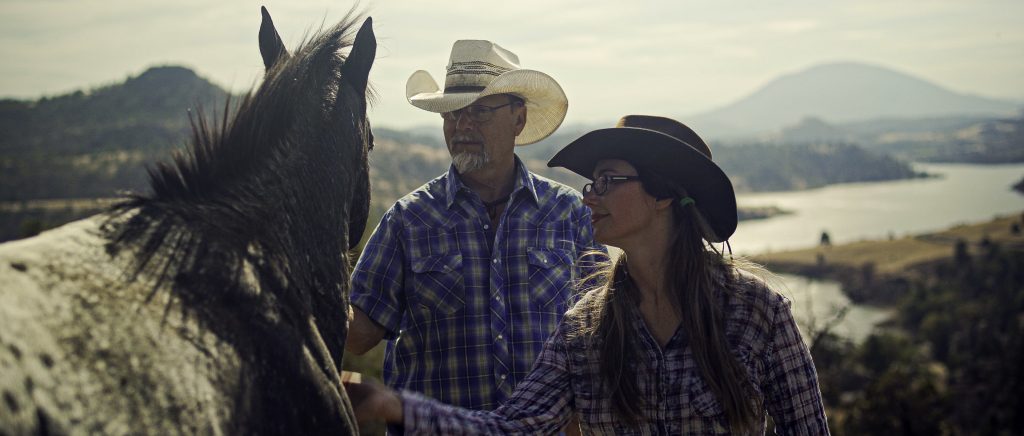
Native Species?
Recent research from the University of California–Santa Cruz (UCSC) shows compelling evidence that wild horses are native to North America, challenging the long-held belief that these animals are invasive species.
Alisa Vershinina and Beth Shapiro at the UCSC Paleogenomics Lab, and others, traced the DNA of modern horses to ancient ancestors in North America by analyzing well-preserved horse remains from across the Bering Land Bridge, a landmass that connected Eurasia and North America during ice ages of the past. Their research maps the historical journey of wild horses from North America to Eurasia and back.
The digestive systems of horses and cattle, although both are herbivores, are also vastly different. Cattle have stomachs with four distinct compartments and are often said to have four stomachs. They are also “foregut” fermenters, while horses are “hindgut.”
Unlike ruminants such as deer, cattle, sheep, and goats, which have complex and more efficient digestive systems, wild horses and burros have single-stomach digestive systems and don’t fully digest most of the seeds they eat, making them nature’s “re-seeding experts,” Simpson said.
Horses also graze differently and don’t tear out the roots of plants in the way that cattle and sheep do, he said.
A study published in the British Ecological Society’s Journal of Applied Ecology in 2002 on comparative foraging of horses and cattle in Europe found that horses ate 63 percent more than cattle, and consumed more dry grasses.
A herd of 200 wild horses consists of about 20 family bands, each made up of a stallion with a lead mare, usually a harem, and foals.
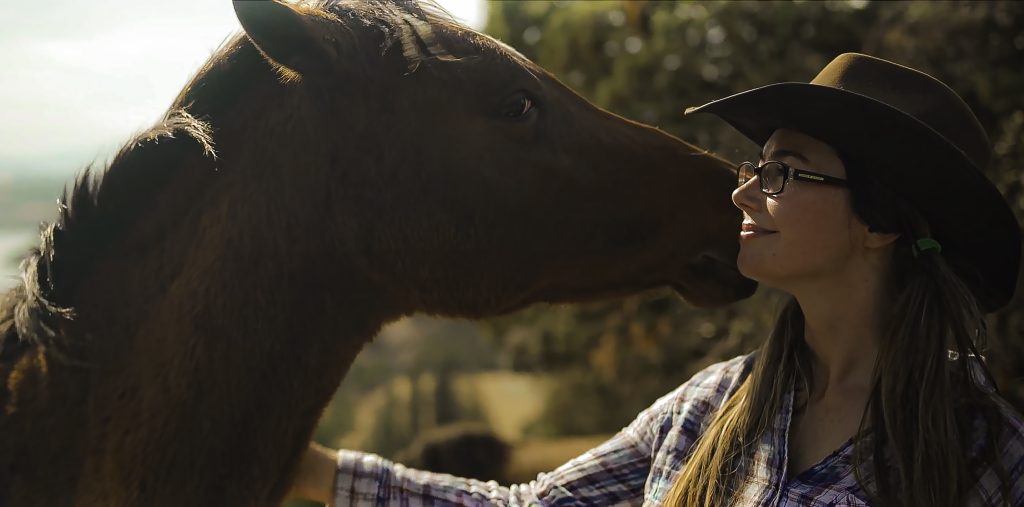
“They all know each other. They’re very social. They have their own society,” Simpson said. “They actually have rituals, which I’ve documented, when one of their own that they really love dies, they actually pay respects. It’s pretty amazing to see. I filmed it.”.
Simpson, who is currently listed on Robert F. Kennedy Jr.’s “Nominees for the People” website as a nominee to head the Wild Horse and Burro Program at the Bureau of Land Management (BLM), told The Epoch Times that the incoming Trump administration’s plan to “make America great again” should include “making American wild horses great again.”
“I want to save our heritage horses … of course, because we love them, but mostly I want to save taxpayers’ money and save people’s lives,” he said.
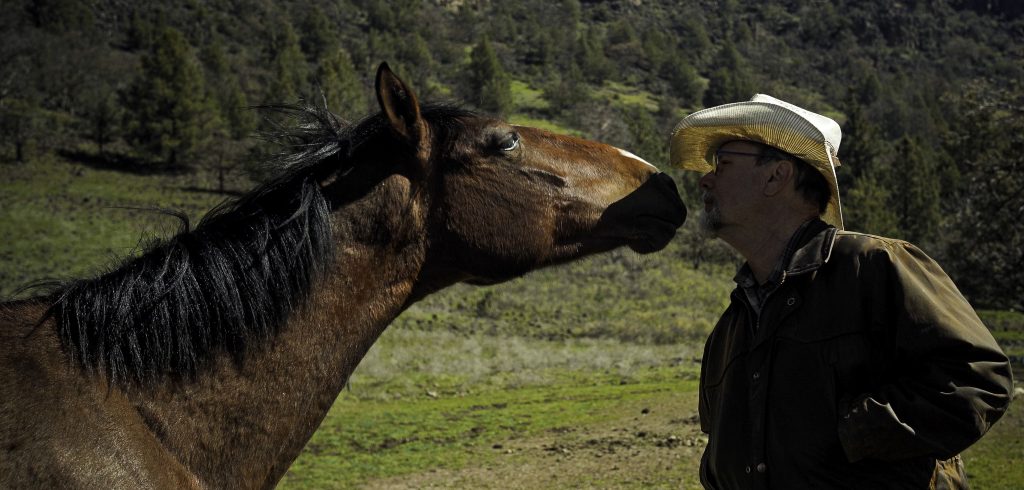
Wildfire Mitigation
The founder of a nonprofit organization called the Wild Horse Fire Brigade, Simpson seeks to save wild horses from being rounded up by the BLM to be penned, or potentially sold for slaughter.
“That’s a waste of tax dollars and our resources,” he said. “What I want to do is have them reallocated into wildfire mitigation.”
Wild horses are a protected species under the Wild Free-Roaming Horse and Burro Act of 1971, which made it a federal crime for anyone to harass or kill wild horses or burros on public land. The law also opened the door for studies of habitats and behavior and allowed federally managed lands to be set aside for herd management areas.
But the law also allows for “excess animals” to be removed to “maintain a thriving natural ecological balance among wild horse populations, wildlife, livestock, and vegetation and to protect the range from the deterioration associated with overpopulation.”
Although the BLM denies that it sends wild horses to slaughter, Simpson and others claim that the agency has indirectly enabled it.
Amelia Perrin, a spokeswoman for the American Wild Horse Conservation (AWHC), which says it represents 600,000 supporters who believe that wild horses and burros deserve to roam free as symbols of “freedom, heritage, and the untamed spirit of the American West,” told The Epoch Times that the BLM doesn’t directly send horses to slaughter but that the animals have been sent to Mexico and Canada to be butchered through the agency’s adoption incentive program.
Those who adopt the wild horses must sign under penalty of prosecution adoption agreements stating that they will not give away or sell the horses or burros to any person or organization that intends to give away or resell that animal for commercial processing, Perrin said.
The program allows people to adopt up to four horses per year and be paid $1,000 per horse after successfully caring for the animals for one year. But, after the year is up, they are given ownership of these animals and are free to sell them, she said.
“When the program was announced in 2019, we knew that it would end in disaster for wild horses,” Perrin said. “Unfortunately, we were right, and—as our investigations has shown, people are adopting the maximum number of horses and burros that they can. They’re pocketing that adoption incentive money, and then they’re sending the horses and burros into the slaughter pipeline in direct contravention of a congressional ban on wild horse slaughter.”
She pointed out that public opinion is heavily in favor of protecting wild horses.
The American Society for the Prevention of Cruelty to Animals released a 2022 poll showing that 83 percent of Americans oppose the slaughter of U.S. horses for human consumption, and a 2017 Public Policy Polling survey found that 80 percent of respondents wanted Congress to continue to protect wild horses from slaughter.
Wild horses symbolize freedom and the spirit of the West, and horses, in general, are “so deeply entwined in our culture” that most Americans don’t want to see them slaughtered, Perrin said.
The AWHC supports any alternative, including grazing to mitigate wildfires, that could keep wild horses from being killed, she said.
“Wild horses do reduce fire risk by eating grasses like cheatgrass after they’ve dried up, whereas cattle only eat that cheatgrass when it’s green and not really as much of a fire risk,” Perrin said.
Adoption and Sales Programs
A 2015 U.S. Interior Department Office of Inspector General report showed that the BLM sold 1,794 federally protected wild horses to a Colorado rancher who allegedly sent them to slaughter in Mexico. The report revealed that the rancher, who also allegedly had connections with former Interior Secretary Ken Salazar, bought the horses through the BLM adoption program for several years ending in 2012 and later sent nearly all of them to Mexico.
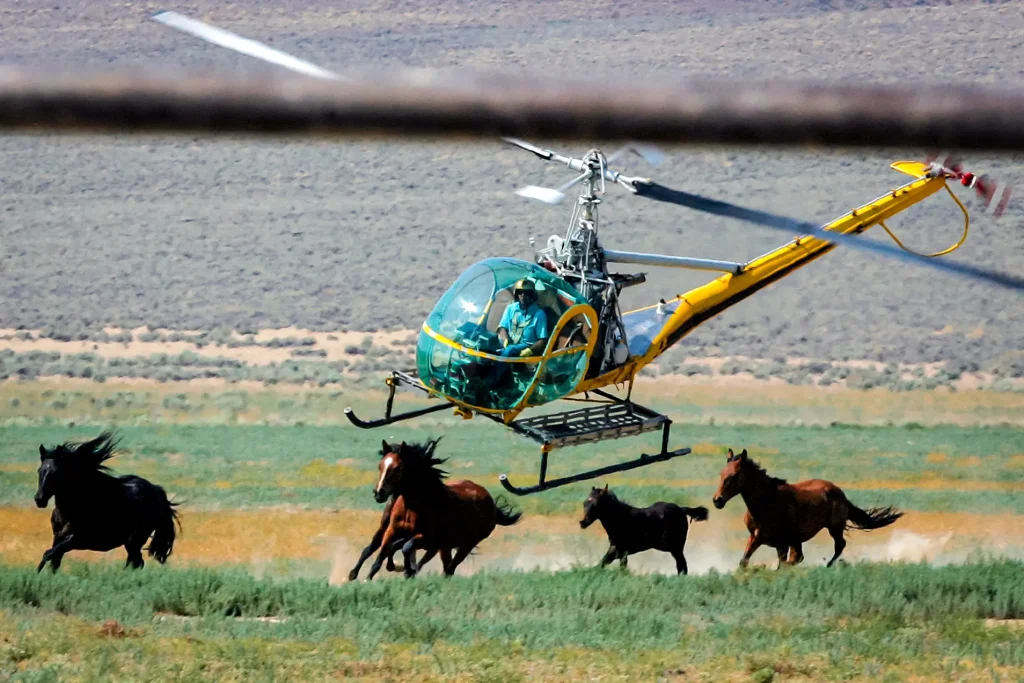
Periodically, the BLM, which manages about 245 million acres (about 383,000 square miles) of public lands—one-tenth of the nation’s land—rounds up excess wild horses and burros and places them in its adoption and sales programs.
In November, the BLM announced five new public-private partnership agreements to place 11,000 of these animals, in addition to its existing adoption program. These partnerships could receive up to nearly $25 million in funding over five years and save taxpayers roughly $160 million by reducing the costs of caring for unadopted wild horses and burros.
“Based on 2023 prices, the average cost is approximately $15,000 to care for a wild horse in BLM facilities over its lifetime if it is not placed into private care, leaving taxpayers on the hook for more than $1 billion for the 67,000 wild horses and burros currently in short- and long-term holding,” the federal agency said in a Nov. 12 statement.
“The BLM is committed to ensuring the health and long-term sustainability of America’s wild horse and burro herds and the public lands they roam,” BLM Director Tracy Stone-Manning said in the statement. “By working with partners, we can reduce the number of animals in off-range facilities and ensure a healthy balance on public lands. These efforts are crucial for the well-being of the animals while also a savings for taxpayers.”
Too Many Horses?
According to the BLM, wild horses and burros have “virtually no natural predators that can control population size” and can double their numbers every four years, straining ecosystems, degrading forage and soil, damaging riparian areas, and competing with other wildlife, including endangered species.
But both Simpson and the AWHC disagree, citing a 2021 study of mountain lions published in the Journal of Wildlife Management that found the diets of cougars in the Great Basin—including parts of California, Nevada, Oregon, and several other states—“were composed predominantly of horses,” at 59.6 percent, and said “cougars may be an effective predator of feral horses.”
In the agency’s 2020 report to Congress, the BLM estimated that there were at least 88,000 wild horses and burros within the 177 herd management areas on public lands—more than three times higher than the “appropriate management level” of less than 27,000 animals.
“If nothing were done to reduce the annual growth rate of these herds, by 2040, the BLM estimates the on-range populations of wild horses and burros could increase to over 2.8 million,” the report stated.
The agency published a 2023 infographic indicating that wild horse populations had decreased to fewer than 83,000, but remained at unsustainable levels across the Western states, and that herds were at risk of death by starvation or thirst. In March 2024, the agency pegged the wild horse population at about 73,520—a 9,363 decrease from the previous year.
The wild horses held in off-range pastures and facilities cost taxpayers $108.5 million in 2023, the Property and Environment Research Center, a nonpartisan public policy think tank that advocates free-market environmentalism, said in its May 2024 “From Range to Ranch” report.
Although the AWHC supports the agency’s adoption programs as a way to get horses out of holding, Perrin said the only way that the BLM can alleviate the burden on taxpayers is to stop rounding up wild horses and instead invest in humane fertility control programs.
The cost to treat one mare over her lifetime is about $2,500 and doesn’t affect her behavior or ability to nurse or nurture babies, Perrin said.
The BLM roundups and the agency’s practice of using low-flying helicopters to move thousands of wild horses from the open range to confinement in holding pens can be traumatic and result in animal injuries, she said.
BLM Response
Jason Lutterman, a BLM spokesman, told The Epoch Times in an email that the agency does not have the legal authority to place wild horses in protected wilderness areas and that the Wild Free-Roaming Horses and Burros Act of 1971 prohibits the agency from placing wild horses on public lands where they were not found when the law was enacted.
“Using wild horses to reduce fuels could also cause ecological problems. If targeted in the right season, high numbers of any grazer can reduce annual invasive grasses, like cheatgrass, that feed wildfires,” Lutterman said.
But intense, year-round grazing by unmanaged horses can reduce native plant and animal diversity and disturb soils in a way that “actually favors” these invasive grasses and “could even increase fire frequency and spread,” he said.
Introducing horses without fertility control would lead to uncontrolled herd growth in wilderness areas, Lutterman said.
“Predation doesn’t typically limit herd growth on BLM’s herd management areas, or on other western lands where there have been credible ecological studies,” he said.
The BLM website answers common questions about the Wild Horse and Burro Program, as well as sharing facts and addressing myths related to the program, according to Lutterman.
Cattle and Sheep Grazing
Meanwhile, Reps. Doug LaMalfa (R-Calif.) and Gabe Vasquez (D-N.M.) have proposed legislation, H.R. 7666, which would require the U.S. secretary of agriculture to work with the U.S. Forest Service and livestock grazing permit holders on federally managed public lands to increase livestock grazing opportunities that would mitigate wildfire risks.
If passed, it would allow permitted grazing on vacant land during instances of drought, wildfire, or other natural disasters.
Although the bill doesn’t specifically exclude wild horses, LaMalfa told The Epoch Times that it’s more intended for cattle and sheep because domestic livestock are more easily managed and moved to different sites to target specific areas for responsible grazing.
Wild horses, LaMalfa said, wouldn’t be as effective as cattle and sheep because they’re harder to manage than domestic livestock.
“They don’t herd as well,” he said. “They’re not manageable in the same way.”
And besides, LaMalfa said, the wild horse population is already unsustainable.
“Those horse numbers need to be brought down dramatically,” LaMalfa said. “Many of them need to be removed.”
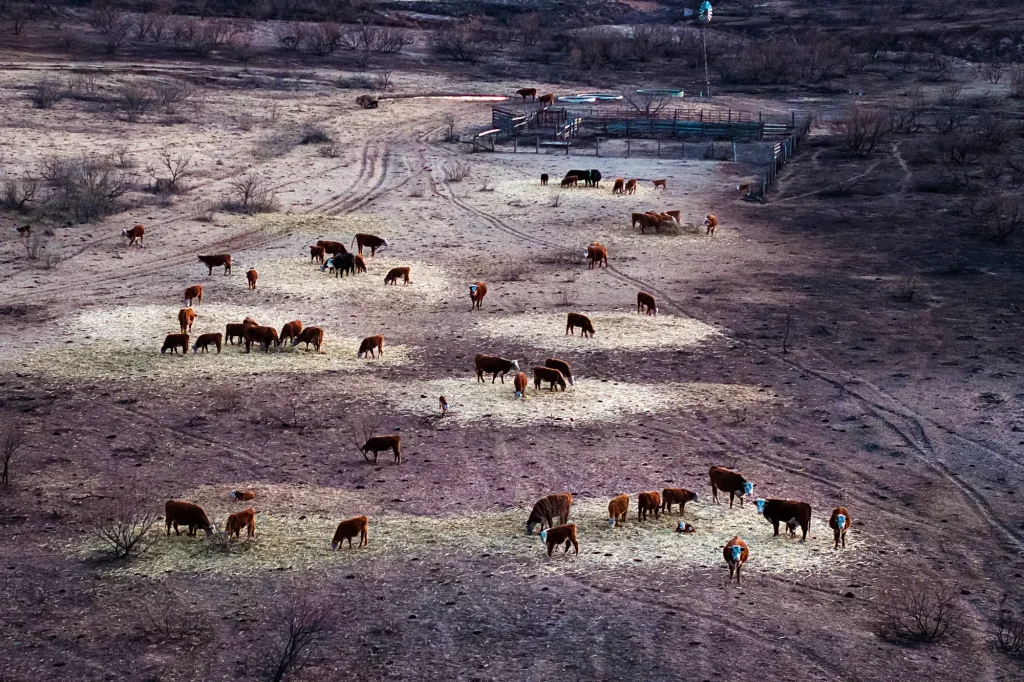
Also, LaMalfa said he couldn’t imagine that many ranchers would support the idea of having to compete with horses for grazing land.
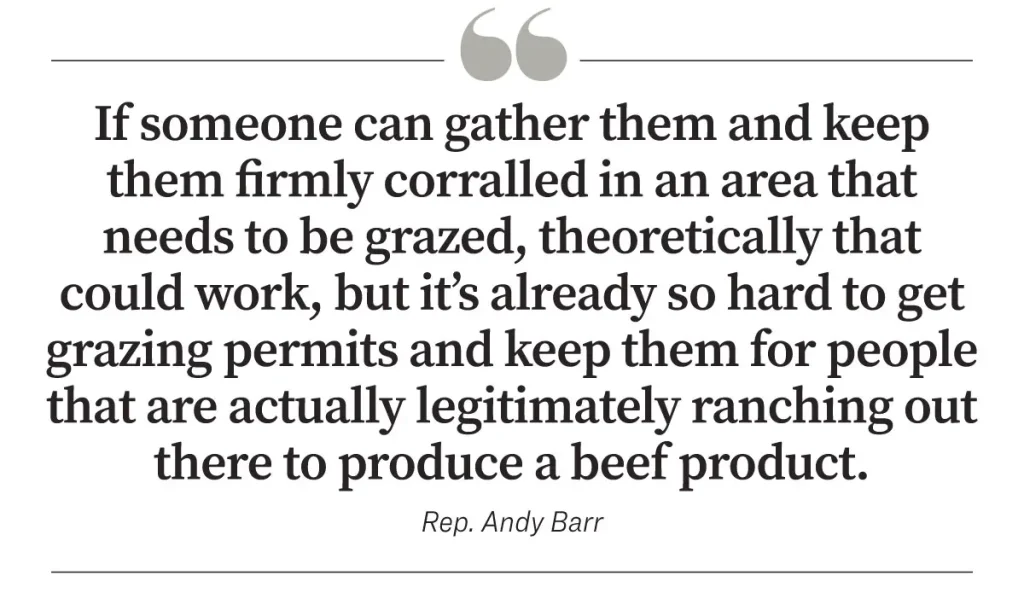
“If someone can gather them and keep them firmly corralled in an area that needs to be grazed, theoretically that could work, but it’s already so hard to get grazing permits and keep them for people that are actually legitimately ranching out there to produce a beef product,” he said.
Vacant Wildlands
According to Simpson, LaMalfa and the BLM are missing the point: Under his plan, wild horses wouldn’t compete for the same grazing land as cattle and sheep and would not be placed in protected wilderness areas but would instead be deployed to “vacant wildlands” typically at higher elevations in more remote areas near forests where they would graze to create fire breaks, thus freeing up—in his estimation—about 15 percent more prime grazing areas for cattle and sheep.
Those vacant wildlands, he said, are vacant for a reason: Ranchers don’t want to put cattle and sheep in there because “they’re too dangerous and too remote,” with predators such as mountain lions, bears, and wolves, and are harder to access, often by single-track roads.
Simpson said he isn’t suggesting that wild horses be placed in established grazing areas and agrees with LaMalfa that it would cause needless tension and “economic conflict” with cattle and sheep ranchers.
‘Genetic Vigor’
Putting wild horses in established grazing lands would also be a bad idea because those areas are usually protected from predators that are needed to thin the herds through survival-of-the-fittest “natural selection” and maintain “genetic vigor,” Simpson said.
In his opinion, the proposed bill, H.R. 7666, doesn’t go far enough to specifically include wild horses, which are more resilient to withstand harsher conditions and more rugged diets such as drier grasses and brush, which cattle and sheep won’t eat.
Wild horses “eat every kind of grass out there,” including cheatgrass and shrubs such as poison oak, and will even eat oak branches and leaves, cleaning up the forest floor around trees, which they use for shade and shelter, Simpson said.
“They graze under the trees, clean all that fire fuel out, which makes the trees more fire resilient,” he said.
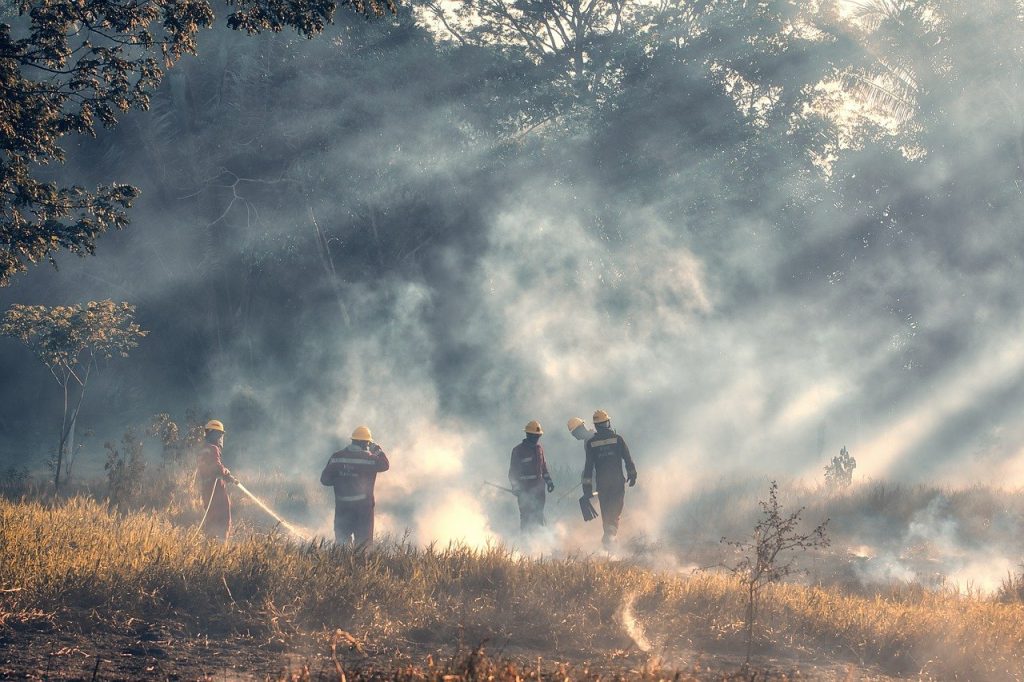
Dry grasses and shrubs burn rapidly and “catastrophically hot,” while areas that have been grazed burn lower and slower and reduce the risk of massive forest fires, Simpson said.
The Klamath fire started as a grass-and-brush fire near Interstate 5 and burned all of the dry grass and brush in the area that was not grazed, he said.
Prescribed Burns and Wildfire Smoke
With hundreds of millions of acres of vacant wildlands in the United States, the push for more “prescribed burns” to reduce wildfire risks is not only “unscalable,” but also unhealthy, considering how smoky Western skies have been during wildfire season over the past several years, Simpson said.
“We don’t need to have all this fire, and we certainly don’t need more smoke with prescribed burning, which doesn’t scale,” he said. “Prescribed fire? Oh, really, so you’re going to burn those 300 million acres of vacant wildlands? Is that what you’re telling us?”
According to the Environmental Protection Agency and U.S. Centers for Disease Control and Prevention, smoke from wildfires presents significant health risks, and a University of California–Los Angeles (UCLA) study released in June found that “thousands more people than previously counted die each year in California due to the health impacts of wildfire smoke.”
The research, published in the journal Science Advances, found that “inhaling the fine particulate matter known as PM2.5 from wildland fires led to 52,500 to 55,700 deaths in the 11 years from 2008–2018, with an associated economic impact of $432 billion to $456 billion,” according to UCLA.
So if wild horses can mitigate fires, Simpson said, his plan could save the lives of thousands of Californians who die prematurely from wildfire smoke.
“That’s got to be the highest priority,” he said. “And that’s why I push as hard as I do.”
Grazing Grievances
Siskiyou County Supervisor Ray Haupt told The Epoch Times that many historic grazing allotments on public lands aren’t being used, mainly because of state regulations for sediment in streams.
As the owner of a forest and natural resources consulting business and member of the California Professional Foresters Association, with a degree in natural resources management and forestry, Haupt said he supports “anything that reduces fuel” to help suppress the rapid spread of wildfires.
But, he said, the ecological systems involved in grazing are complex, with no “one size fits all” solution.
Grazing is effective in dry areas with grasses underneath the tree layer, but not in heavily forested areas with high tree density where “horrendous fires” are occurring, he said.
“Horses and cows don’t eat trees,” he said.
Looking at the big picture of forest fire prevention, Haupt said, livestock grazing by itself is “not going to do much.”
‘Too Many Trees’
Haupt suggested that one of the biggest problems in forest management policy may literally be not seeing the forest for the trees.
There are “too many trees,” he said.
Haupt, a member of the Sustainable Forest Action Coalition, a grassroots coalition that seeks to restore an economically sustainable ecosystem on public lands through the “proper” management of watersheds, forests, and logging, has worked with Congress on natural resources legislation and on a research study with the University of California–Merced and University of California–Berkeley, published in 2014, that focused on changes in vegetation in a portion of the Scott watershed since 1935.
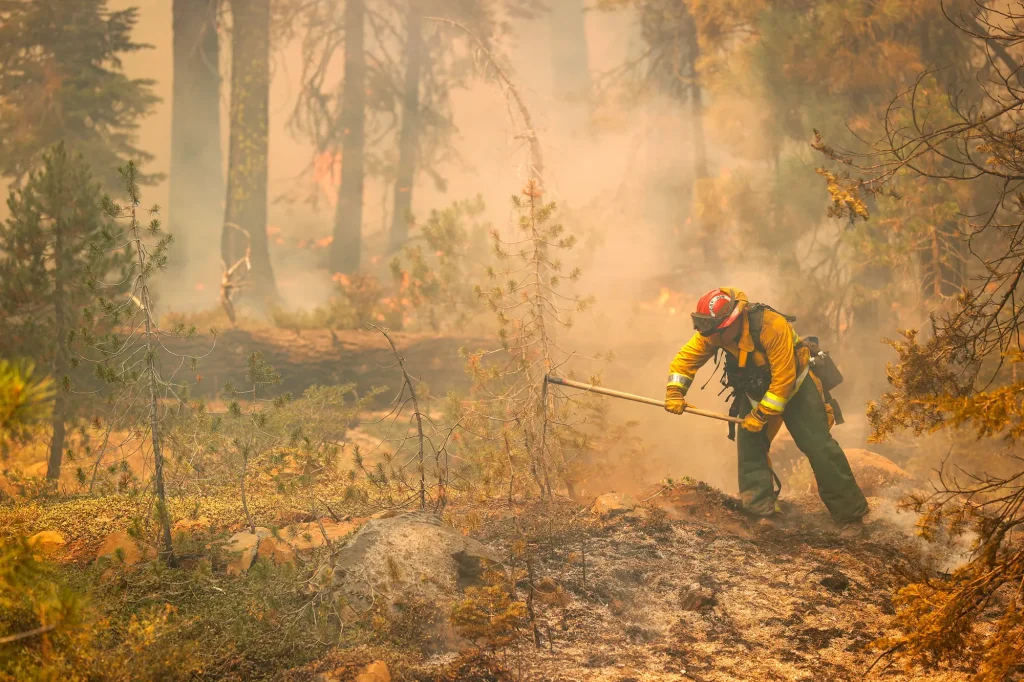
The study found that between 1977 and 1985, the region went through a wet spell that allowed more trees to grow on lands with thinner soils, increasing the forest density to four times as many trees per acre than there were in 1935, according to Haupt.
This shows a need to reduce fuel sources to prevent fires from spreading, he said, and policies “put in place as a reaction to politics” and litigation from environmental groups over the past few decades have hampered efforts to clear the dry underbrush and thin the forests.
During his first term, President Donald Trump voiced support for clearing the forest floors of overgrowth and conducting prescribed burns.
In September 2020, Haupt said, he met with Trump, California Gov. Gavin Newsom, and state officials in Sacramento to discuss wildfires, but with the meeting so close to the 2020 election and the end of Trump’s first term imminent, no significant follow-up effort was made to clean the forest floors.
LaMalfa said he expects the next Trump administration to make necessary changes within government agencies to take a more “aggressive” approach to forestry and wildfire mitigation.
Brad Jones
Author
Brad Jones is an award-winning journalist based in Southern California.
- Shasta River Flows Plummet Below Minimum — State Water Board Reinstates Conditional Curtailments on Junior Rights
- Siskiyou County Jail Bookings- June 8 – 15, 2026
- Pick a Genre – John Sammon
- Researchers Recommend No More Than One Alcoholic Drink a Day
- Obituary: Adrian Russel DeRose
Arrest Arrested arrest report bookings California chinook CHP CHSRA Copco Dam Removal Dunsmuir Dunsmuir Elementary Etna EtnaCa FERC Irongate Klamath National Forest klamath river Klamath River Dams KNF McCloud Montague Mount Shasta Mt Shasta Northern California obituary police blotter Rodeo Salmon Scott River Scott Valley SCSO Siskiyou Siskiyou County Siskiyou County Board of Supervisors Siskiyou News Unitedhealthcare USDA USDA KNF weedca Whaleback Pack wildfire wolves YPD Yreka