
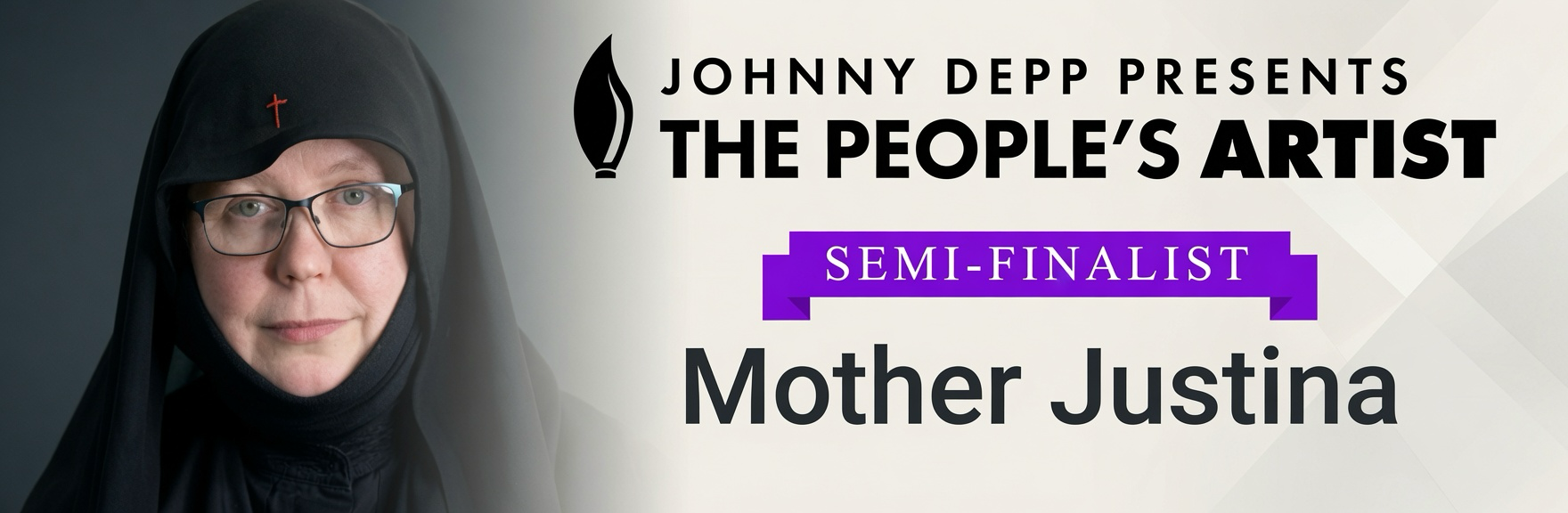
In the quiet beauty of Scott Valley, where daily chores blend seamlessly with prayer, a Swedish-born nun is making waves in a high-profile national art competition presented by Johnny Depp. Mother Justina, semi-finalist in The People’s Artist, brings a lifetime of faith, resilience, and creative passion to canvases that illuminate both the divine and the deeply human.
Born in Stockholm, Mother Justina grew up immersed in art. Her father, an Orthodox priest and iconographer, supported the family through his sacred work. Her mother worked at the College of Fine Arts. “I kind of started very early, especially with iconography,” she recalls. “I had a special love even when I was little.” Schools nurtured her talent, surrounding her with originals rather than posters—a cultural richness that shaped her deeply.
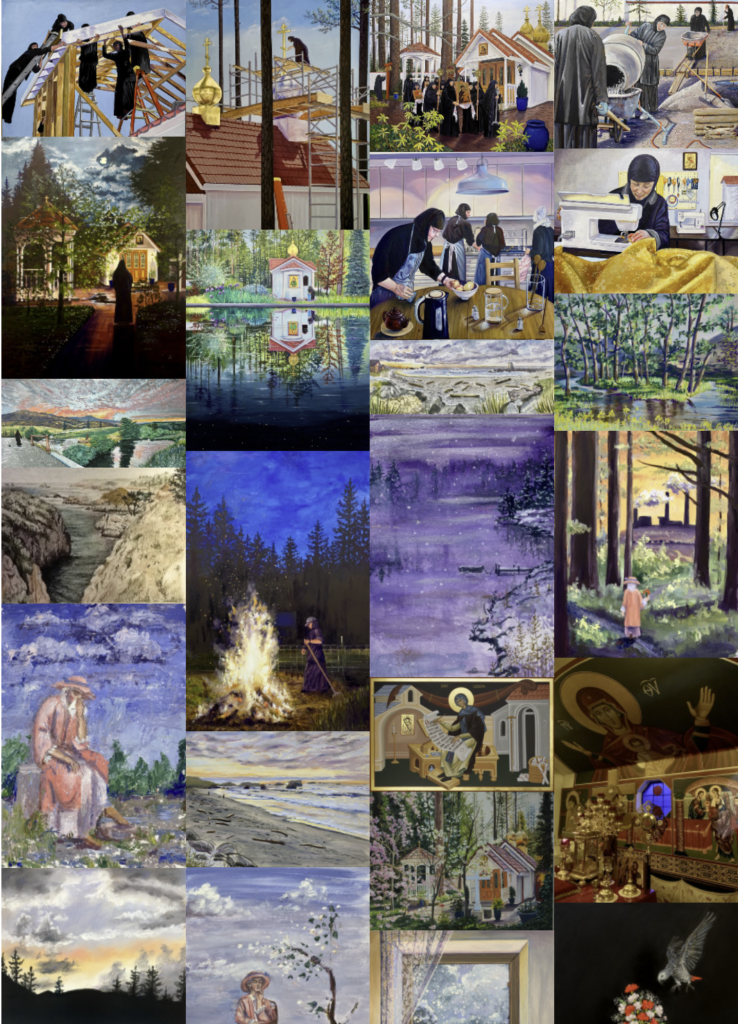
In 1989, she arrived in the United States as a visitor intending a short stay. Instead, she found her calling at the Convent of Saint Elizabeth in Etna, California. “I love it,” she says simply. “This is heaven. This is my hope. This is where I belong.” Here in Siskiyou County, her art has flourished amid the rhythms of monastic life—painting the valley’s landscapes, capturing its people, and portraying nuns in everyday labors like pouring concrete and carpentry alongside sacred duties.
Her paintings burst with rich color, bridging faith and the practical realities of daily life. She hopes to create more landscapes to preserve the rural charm of Scott Valley. Local audiences have embraced her work: multiple Best in Show and People’s Choice awards at the Siskiyou Fair, the exhibition Prayer, Work, Place, and teaching popular iconography workshops and certificate programs at the local Saint Photios Orthodox Theological Seminary. “The fact that I have had the opportunity to paint for so many churches is wonderful,” she notes. “Something from Etna and Siskiyou County… all over the world. And it’s making a mark.”
An unexpected invitation led her to enter The People’s Artist. Nervous about the jury vetting process, she left it “in God’s hands” and submitted a well-rounded portfolio. “I wanted to show that I do much more than just iconography.” She included icons alongside other works to highlight her range, aiming for pieces that are peaceful, spiritual, and uplifting. “I like to find something that is peaceful and spiritual… If it’s going to be about a hard subject, I want you to find a light in it.” Her approach echoes a Holocaust survivor’s wisdom she once heard: amid darkness, seek grace, love, and forgiveness.
Advancing to the semi-finals has been a journey of mixed emotions. “It’s almost getting torturous,” she admits with a laugh, feeling reluctant to ask for votes repeatedly. Yet she sees the bigger picture: “I saw in for a penny, in for a pound… if you go to start it, you must end it.” The recognition spotlights talented artists from unexpected places and opens doors for others. She hopes it helps expand the Seminary’s Fine Arts programs, including support for a future Bachelor of Fine Arts (BFA) program.
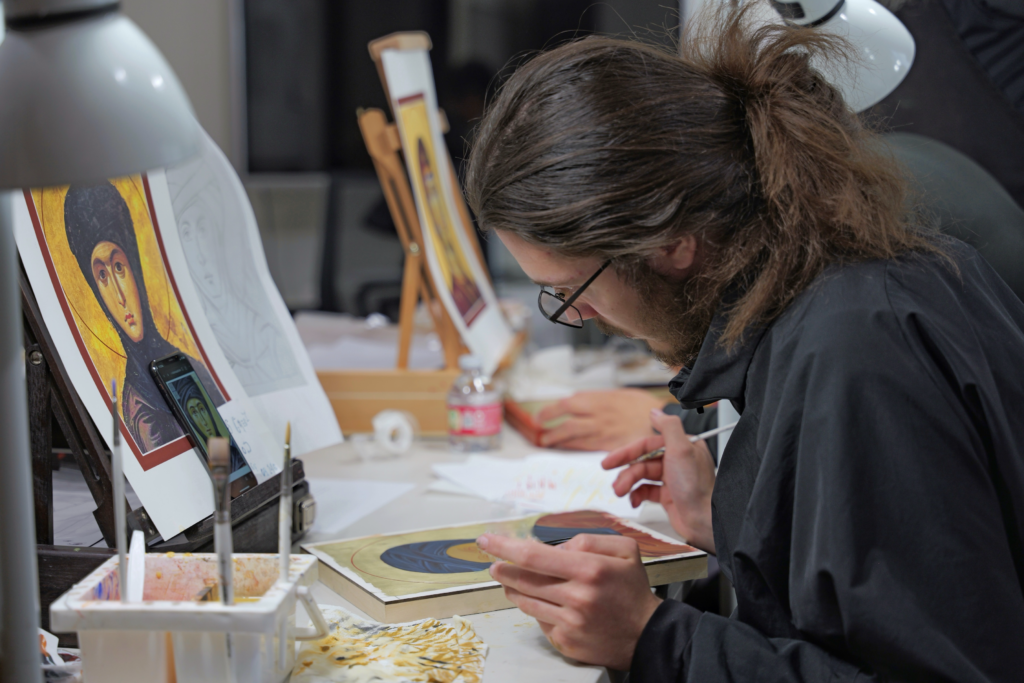
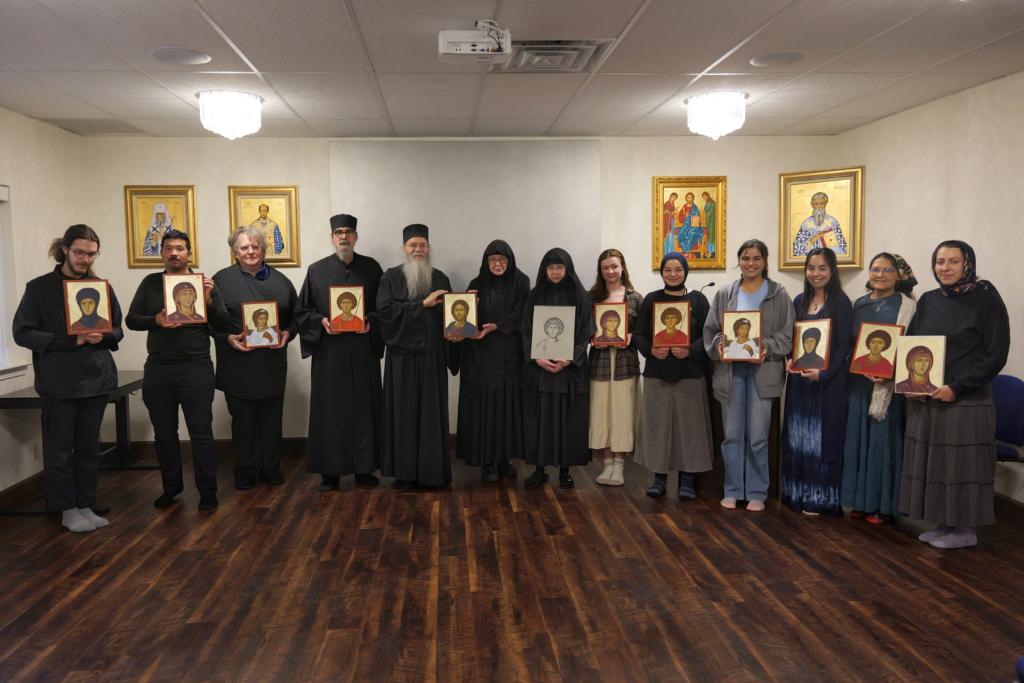
(photos courtesy of SPOTS)
Her creative process is rooted in prayer: “It always starts with prayer… I never paint an icon without prayer.” Research follows, then a deliberate effort to balance the divine and material worlds. Icons use a specific theological “language”—not primitive, as some Western views once claimed, but a transfigured perspective that transcends earthly rules. Landscapes and daily scenes capture fleeting moments, colors, and the striving of nature and people toward the divine. She draws parallels to everyday veneration, like cherishing a photo of a loved one, to explain the respectful spirit behind icons.
For Mother Justina, faith and art are inseparable. Her paintings show “how people work and how people live,” revealing the functional, active reality of convent and rural life while pointing to something higher. She rejects materialism but honors the thin veil between worlds—the Church Militant here and the Church Triumphant beyond.
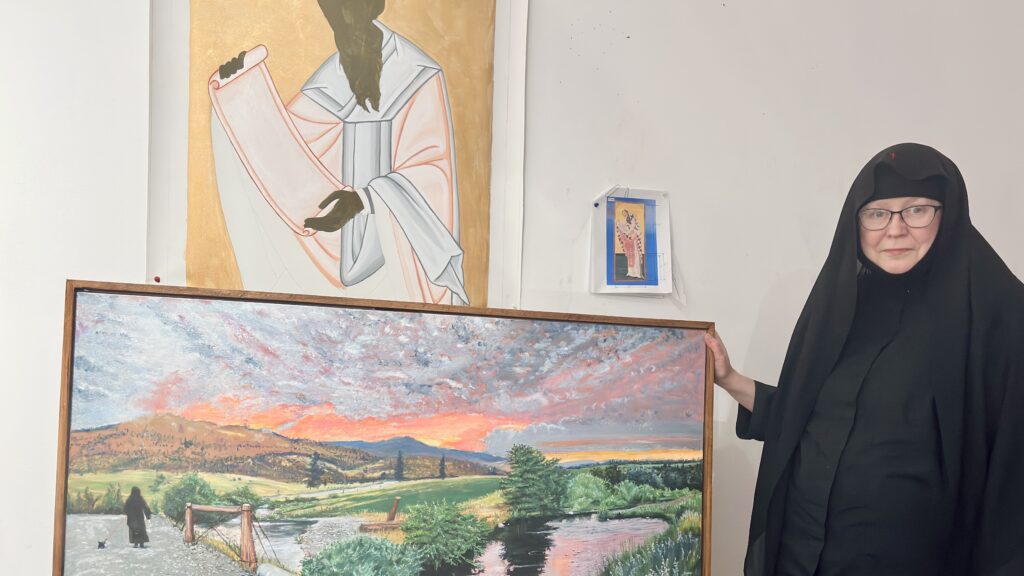
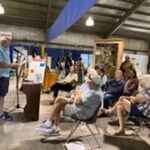
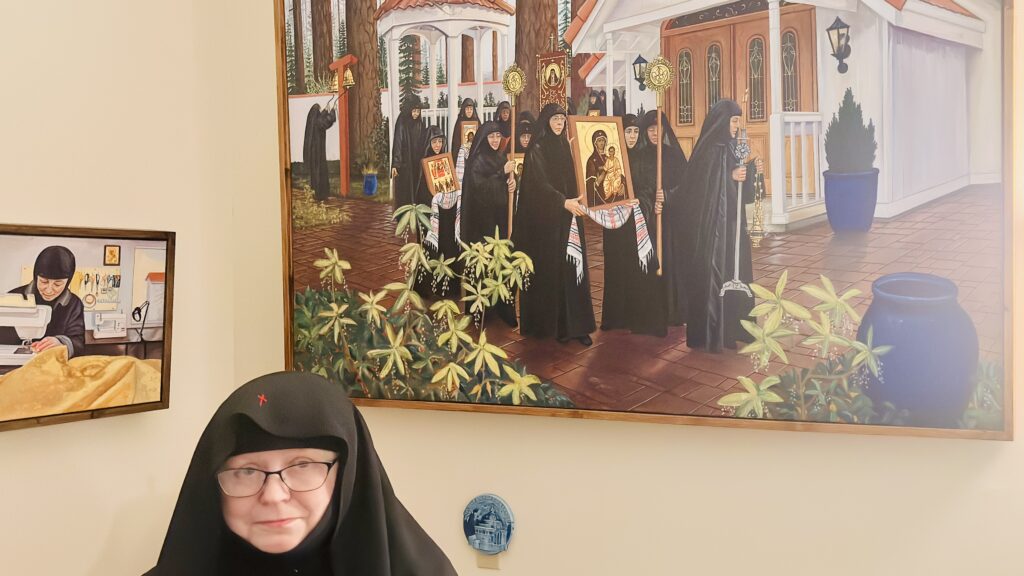
The painting in the background is an icon painting destined for Massachusetts. (j.a.m.)
Looking ahead, she has work in the American Exhibition at Liberty Arts in Yreka and anticipates a major gala in Napa Valley next year to promote the Seminary’s future BFA program. She encourages local supporters to vote on the competition platform, acknowledging it’s essential yet humbling to ask.
To emerging artists, her advice is straightforward and passionate: “Go for it… If you desire to be a full-time artist, it takes consistency—constantly work at it. Network with other artists. Attend their shows. You have to live and breathe your passion. With consistency you will become successful.”
In a world often drawn to darkness, Mother Justina’s art offers light, rooted in the soil of Scott Valley and the traditions of her faith. Whether portraying saints, pouring concrete, or the golden hills of home, she reminds us that beauty, prayer, and hard work belong together—and that even a rural nun’s brush can reach a national stage.

(The Art of Elysium)