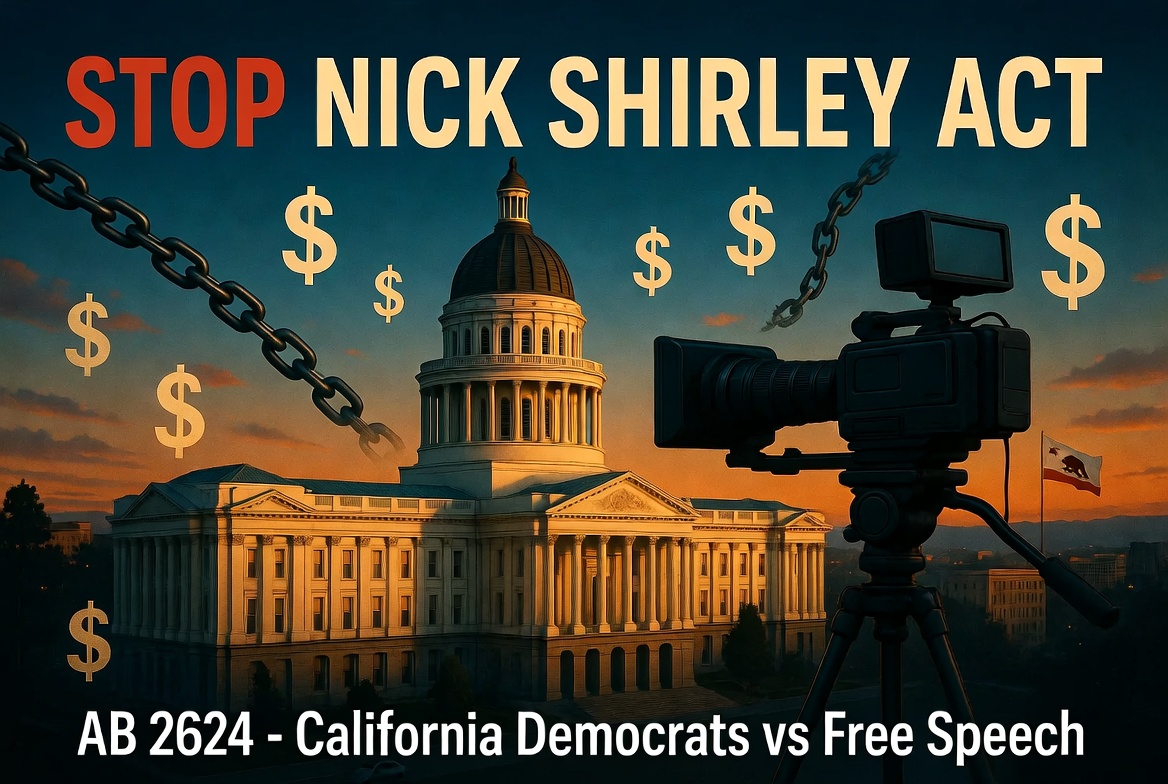
Sacramento, CA – California Democrats have pushed forward Assembly Bill 2624, dubbed the “Stop Nick Shirley Act” by critics, sparking intense debate over free speech, government transparency, and alleged widespread fraud in immigrant support services and healthcare facilities.
The bill, authored by Assemblymember Mia Bonta (D-Oakland), wife of California Attorney General Rob Bonta, extends California’s existing “Safe at Home” address confidentiality program to immigration support services providers, employees, and volunteers who can demonstrate threats of violence or harassment. It also prohibits the public posting or display of images or personal information of these individuals if done with intent to cause harm, allowing for civil remedies including injunctions, attorney fees, and minimum damages of $4,000.
Critics’ Perspective: A Direct Attack on Investigative Journalism
Republican lawmakers and independent journalist Nick Shirley argue the legislation is a targeted response to Shirley’s viral investigations exposing what he claims is hundreds of millions in fraud. Shirley, known for on-the-ground reporting, previously highlighted alleged issues in Minnesota Somali-run daycare centers and has since released extensive footage from California, alleging over $170 million in suspicious billings involving empty facilities, fake hospices, and misused taxpayer funds in programs like Medi-Cal.
During floor debate, Assemblyman Carl DeMaio (R) strongly opposed the bill, calling it the “Stop Nick Shirley Act.” He quoted provisions restricting the posting of images after a written request from providers and warned it would protect fraudulent operations.
DeMaio described hypothetical scenarios mirroring Shirley’s work: “Nick Shirley shows up with his camera crew to the Somali Learning Center or maybe one of the 90 fake hospices… records empty beds… no patients, no medical supplies… posts this on the internet… All the fraudsters would have to do is hand a business card… and [he] will be violating this law.”
Shirley himself stated on X that the bill “puts journalists at civil risk for investigating fraud” in NGOs, nonprofits, and health facilities receiving massive state funding. He argued it creates a chilling effect by allowing demands to remove videos and impose penalties.
The controversy has spread widely on X, with users and conservative commentators accusing Democrats of prioritizing protection of “the grift machine” over taxpayer accountability. Many posts reference Shirley’s exposés and claim the bill undermines the First Amendment.
Supporters’ Defense: Protecting Workers from Harassment and Doxxing
Bonta and Democratic supporters maintain the bill does not criminalize journalism or investigative reporting. They describe it as an extension of protections already in place for healthcare workers, abortion providers, and others facing documented threats. Bonta has emphasized that it targets doxxing and harassment, not legitimate public-interest reporting, and includes requirements for evidence of threats.
In public statements, Bonta pushed back against what she called misinformation from “right-wing agitators,” noting the bill builds on the Safe at Home program and does not create new penalties beyond existing frameworks. Proponents point to reports of threats against immigrant service organizations, including incidents involving groups like CHIRLA, which has received significant taxpayer funding.
Fact-checks and analyses note the bill’s narrow focus on intent to harm, though groups like the Foundation for Individual Rights and Expression (FIRE) have raised concerns about potential overbreadth and its impact on citizen journalists.
Broader Context
The bill advanced through committees and was amended as recently as May 22, 2026. With Democratic supermajorities in the California Legislature, it has a strong chance of passage, though legal challenges on First Amendment grounds are anticipated.
Nick Shirley’s investigations have gained national attention, appearing on shows like those hosted by Sean Hannity and Patrick Bet-David, and drawing scrutiny to programs receiving billions in public funds. Critics argue that in an era of high taxes and strained budgets, transparency in how taxpayer dollars are spent should be paramount.
Supporters counter that vulnerable service providers deserve protection from harassment, especially amid heated national debates over immigration.
The legislation highlights deep partisan divides in California over accountability, free speech, and the role of citizen journalists in holding government-funded entities responsible. As the bill moves forward, expect continued fierce debate both in the Capitol and across social media platforms.
Sources and Individuals Who Contributed Additional Information to the Article
- Donald Trump — Original X post that served as the foundation for the article.
- Nick Shirley — Independent journalist and citizen investigator. His X posts, videos exposing alleged fraud in California hospices, daycares, and NGOs, and direct comments on AB 2624 were heavily used.
- Assemblyman Carl DeMaio (R) — Provided floor debate quotes and strong criticism, including dubbing the bill the “Stop Nick Shirley Act.” His statements on transparency and First Amendment concerns were central.
- Assemblymember Mia Bonta (D-Oakland) — Author of AB 2624. Her role, sponsorship, and defense of the bill (as an extension of Safe at Home protections) were included.
Additional Supporting Sources:
- California Legislative Records & Official Bill Text — Details on AB 2624 provisions, amendments (as recent as May 22, 2026), and legal language regarding image posting restrictions and civil penalties.
- X (Twitter) Discussions — Multiple posts and threads from users reacting to Nick Shirley’s content, including widespread sharing of the bill’s passage and fraud allegations.
- News Outlets — Reporting from Fox News, KCRA, CalMatters, Desert Sun, and others for balanced context on both critics’ and supporters’ arguments.
- Facebook Posts — Public discussions and shares referencing Nick Shirley’s investigations and reactions to the bill.