Home / South County / Keeping It Clean: One Woman’s War on Roadside Trash

Keeping It Clean: One Woman’s War on Roadside Trash

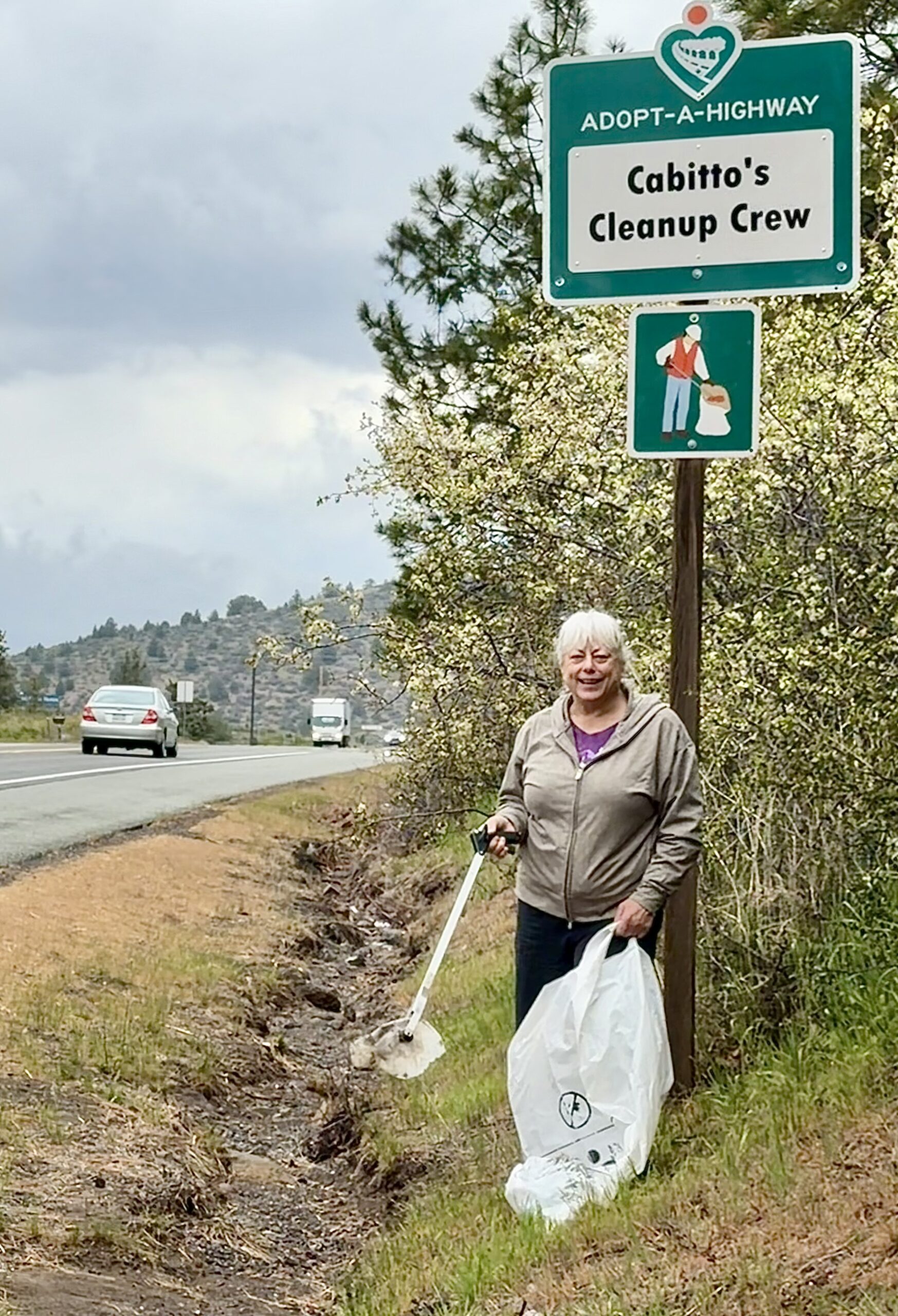
Driving along Highways 89 and 97 in South Siskiyou County, one will see the “Adopt a Highway” signs. Caltrans started this program in 1989. These signs list who is volunteering to pick up trash on that stretch of highway.
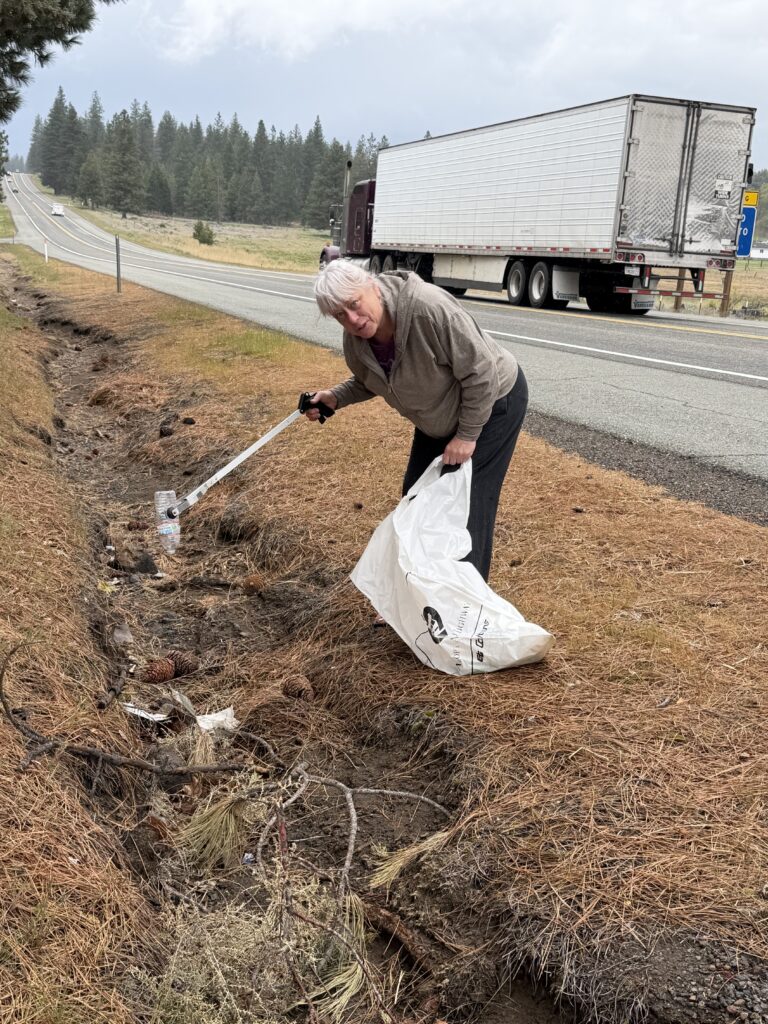
The most common Adopt a Highway sign seen along these roads is “Cabitto’s Cleanup Crew.” There are 12 of these particular signs covering 20 miles of Highway 89 and a few miles on Highway 97. Linda Cabitto is the sole crew member, and she can be seen in a bright yellow vest using grabbers to pick up trash along the highways. Her passion for this work started in April 2016 when she began volunteering in the “Clean and Safe” program. She joined the Adopt a Highway program about six years ago. She completed a safety class to obtain a permit for the work, and the money she earns โ€” from recycling what she finds โ€” goes toward buying gas. She typically covers her stretches of highway four times a year, every three months, though she also takes part in special cleanup projects in specific areas, such as the Park and Ride.

Cabitto’s motivation comes from her love for the area where she lives. “I want it to be nice for the wildlife and especially for the children to see,” she said. “I take pride in doing good where I live, and it is also good exercise.”

She wears gloves and uses a grabber. Her most common finds are bottles, cans, and diapers, along with a variety of paper products. When she comes across usable items, she gives them away or donates them to thrift stores. Among her more notable finds are tools, clothing, and paraphernalia such as vape pens, empty pre-roll cannabis containers, and nitrous oxide canisters known as Whip-Its. More random discoveries include car parts, children’s toys, tents, household items, and occasionally money or a credit card. She reports the number of trash bags she collects and documents what she finds.

She frequently comes across homeless encampments, which she must report so they can be formally tagged and residents notified to leave. She can then enter to clean those areas. For larger encampments, she sometimes goes in with a group due to the volume of trash and debris involved. Mount Shasta City covers the dump fees.

“It is really nice when people thank me for what I do,” Cabitto said. “But I would love for people to join me and help clean up our highways โ€” that would mean so much to me. I know that I am obsessed with cleaning up the highways. People are blinded by the trash along the roadways, or they make up excuses to step over it, often being afraid of germs. I have never gotten sick doing this. What is sad is that sometimes I will see cans on the highway the day after I just cleaned up that section.”

Off to the Landfill.

Leave a Reply

Your email address will not be published. Required fields are marked *