
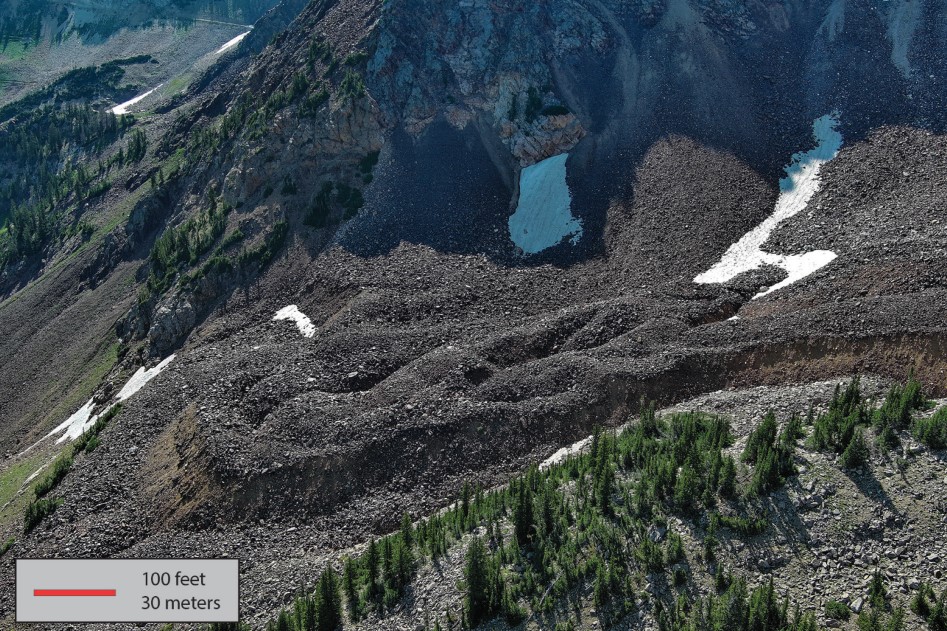
From my home in the Shasta Valley I can look to the east and count off the major Cascade peaks from left to right: Willow Creek Mountain, Ball Mountain, Goosenest, Herd Peak, Whaleback, and finally Mt. Shasta. Whoops, I missed a sharp point barely sticking up between Whaleback and Mt. Shasta—Ash Creek Butte. It lies further east and away from the straight line the other mountains form, so seems to be almost trying to hide from view. That is the mountain this article focuses on.
We are still in the dying end of the Pleistocene, or Ice Age. Glaciers persist on Mt. Shasta, the Cascades and High Sierra. It is even possible that a few hang on in the highest elevations of the Trinity Alps. Global climate change, so far, has not eliminated all these chunks of ice.
So, now, let’s bring Ash Creek Butte into the story. The mountain top is relatively high for our area, at about 8,400 feet elevation. It also lies in a heavy precipitation zone, where storms laden with moisture are pushed up from the south and west, dropping impressive amounts of rain in the lowlands and snow at higher elevations. The heavy snow zone includes Mt. Shasta, of course, as well as the peaks surrounding the upper Sacramento River and McCloud River drainages. Mt. Shasta’s bulk and location must be a major factor in wringing out frozen precipitation throughout this zone.