The first time I walked this trail was back in the Fall of 1969. I was attending College of the Siskiyous and my biology class went there on a field trip. Our instructor, a serious biologist, informed us that we would be going to a place that had recently been found to hold a record of sorts. Our destination was Sugar Creek, a drainage flowing from the eastern flanks of the Russian Mountains. I was excited to be going there, as being a fanatic fisherman when a teen, that mountain range and its lakes had been one of my favorite destinations.
The reason we were going there was because a recent โdiscoveryโ had put the spot on natureโs map. There, professors from Humboldt State University (a name that I will stick with doggedly, regardless of its recent change) had found a huge diversity of conifers (the group of trees that produces cones). In fact, there were more species of conifers in one small part of Sugar Creek than any other place of like size in the entire world!
Our professor drove us to the trailhead and the half-dozen of us aspiring scientists headed up the trail. We began to see trees that most of us were very familiar with: sugar pine, ponderosa pine, incense cedar, white fir, and as we climbed to higher elevations, red fir and mountain hemlock. They were all commonly found in our local โmixed coniferโ forests. Many of us had cut them for firewood or Christmas trees. Some of our dads had worked in mills that turned them into lumber.
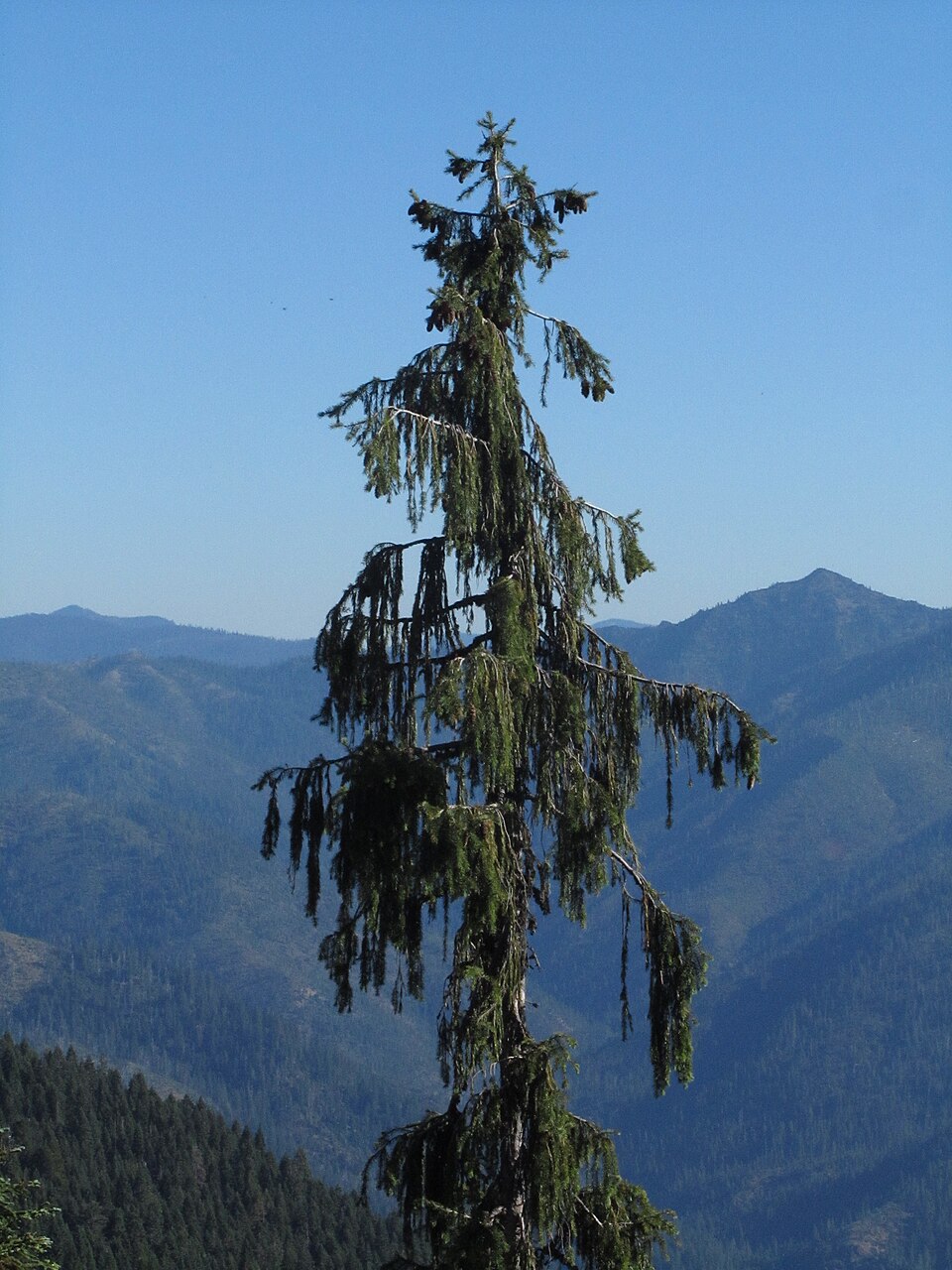
Gradually our guide began to point out trees that we had never seen before. The bark and droopy branches of Brewer (weeping) spruce and Englemann spruce drew our attention. The professor encouraged us youngsters to pick sprigs off branches and collect cones under the trees to compare with the common species. He would occasionally give us bits of additional information to help us understand what the presence of these unusual species, right here in Siskiyou County, might indicate.
The professor asked us to think about why the Russian Mountains and a few other nearby areas might be so special, by containing so many different types of conifers. In most regions of the world having forests of cone-producing trees there might only be half-dozen or so species that make up the forest. Here, there were 17 species in one area no larger than one square mile! Our teacher suggested that the key to why there were so many species here and why some of them were very rare in California might be understood by considering that many were much more common further north. โWhyโ, he asked, โdo you think they live in only in a few scattered locations in our area?โ
After pondering this question we gradually learned that the first discoverers of the Sugar Creek โenriched conifer forestโ theorized that during a past time, likely when glaciers existed in the Westโs higher mountains, these rare species were likely scattered throughout the Pacific Northwest and California. Gradually, as the Ice Age ended and temperatures warmed, those species preferring cooler and perhaps moister conditions died out in our part of the worldโexcept for a few special placesโsuch as where we were walking. We learned that these were โglacial relictsโ, reflecting the nature and composition of local forests during a much cooler era.
Along the trail we discussed what was so special about Sugar Creek that it would retain these rare species while other nearby mountains had lost them? Is the weather different here? Does the area get more snow? Is the soil the key? Our discussions veered many different directions and, as generally happens with โwhyโ questions about nature, we agreed that exact answers might not exist.
Looking back, our professor used โold schoolโ teaching techniques to encourage us to think. He did not tell us the โfactsโ and expect us to accept and regurgitate them later on a test, but gave us enough information so we could try to piece together the puzzle presented at Sugar Creek. (I had many good teachers in my past.)
Our total conifer count for the day was less than the 17 species that existed, with the last one being a small bushy alpine juniper. We found a patch in a rocky hillside high above the trail. Later, we were amazed to learn that this species is much more common in Greenland and northern Canada than California!
I do not like to tell people where I fish or explore. Isnโt it better for us to find our own special places?? But in this case I am making an exception. Find Sugar Creek and its trailhead on a map and put together a lunch. Tote a Western tree field guide to help identify what you will see. The trail is relatively gentle and scenic, with intriguing house-sized boulders scattered here and there, no doubt pushed to their current locations long ago by glaciers.
Now, when I revisit this area I mentally drift back to that first trip with the professor and classmates. I keep a mental tab of the species I see but I am often distracted by the memories of learning why Sugar Creek is so sweet.


2 Comments
The Moores, of Moore’s Gravel pit, at Callahan, โ Richard and his father, Stanley, โ discovered the largest Bristlecone Pine in that area. It made it to the record books.
Very interesting! But, are you sure it was bristlecones? Anyway, I knew Tim Moore after he got back from Viet Nam. We attended college at Weed together. Can he be reached now?