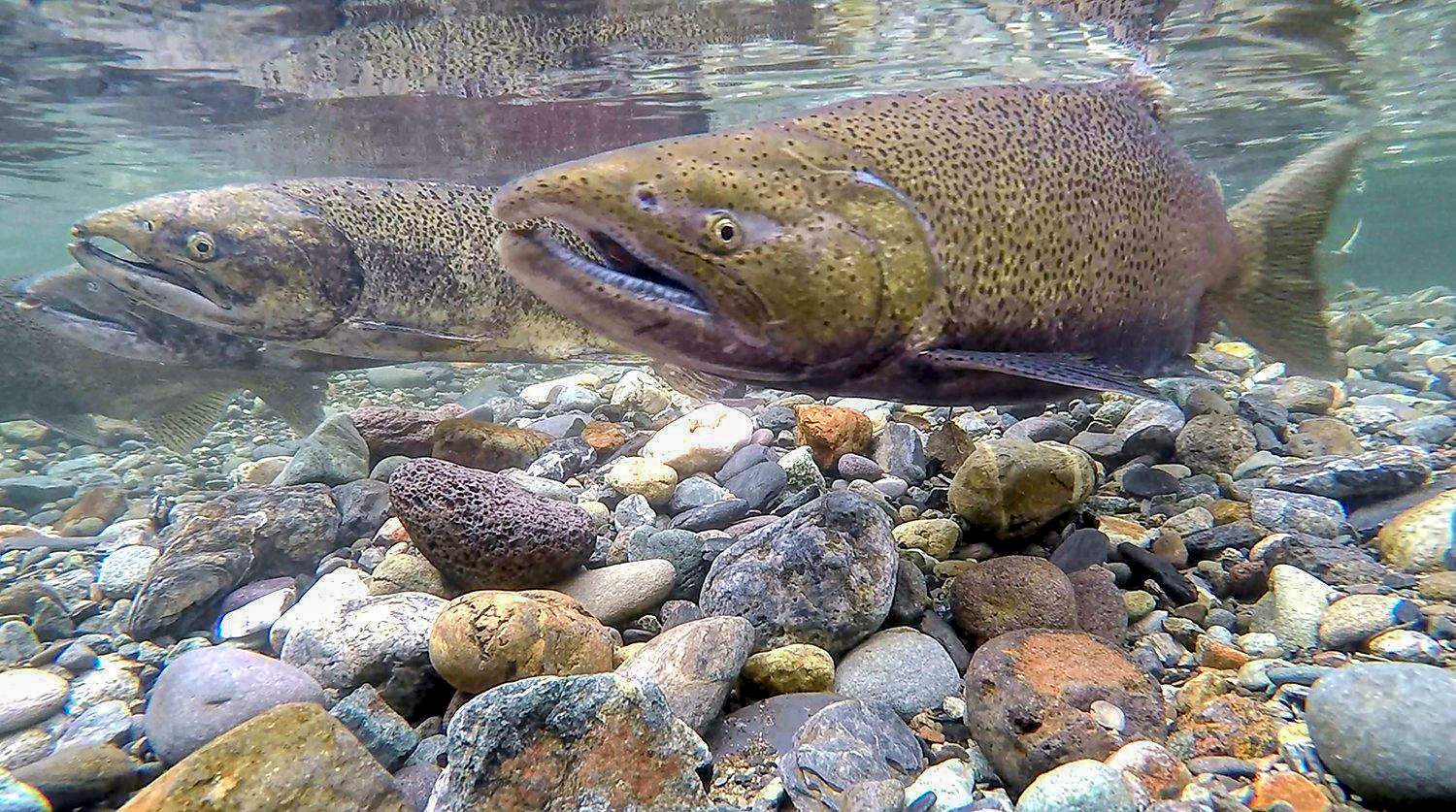
The Klamathโs dams have been removed, at least some of them.ย Articles have popped up describing the spectacle of fish being seen many miles above the dam sites, stating that the fishery has started to recover.ย I think these articles express bits of naivety and wishful thinking.ย The fact that anadromous fish (fish born in fresh water, mature in the ocean, then return to fresh water to spawn) are moving above the demolished dam sites shouldnโt really surprise anyoneโthey excel at navigating swift water and finding appropriate habitat.ย Whether anadromous fish populations are rebounding cannot be determined in a year or two.ย The news states that this yearโs run is larger than in recent years but we need to keep in mind that all of the returning fish were born in the drainage while dams still existedโtheir numbers have nothing to do with dam removal.ย ย
Years ago, when dam removal was being considered, I had several thoughts: First, dam removal MIGHT improve anadromous fish populations.ย Second, dams have very nice electricity generation characteristics that would be tragic to lose.ย Third, what comes AFTER the damโs removal?ย Here are my views:
Dam removal isnโt a guaranteed solution to anadromous fishery problems. Many streams in the Pacific Northwest have no dams and their anadromous fish are not thriving. In other words, there are other factors impacting the fish besides just dam presence. A huge factor is ocean conditions. Because anadromous fish spend most of their lives in the ocean, the oceanโs conditions are extremely important. There are large variations in ocean productivity from year to year, as shown by the percentage of young fish entering the ocean that are able to grow to maturity. In other words, when comparing various periods of time, survival of these fish while in the ocean is highly variable. Mankind might not have the ability to understand the oceanโs variability or improve upon its condition.
I wonder about the future of power generation. Each power source has its own generation idiosyncrasies and environmental impacts. Solar has drawbacksโthere is reduced power generation on cloudy days and none during nighttime. The impacts from mineral production that go into solar panels are considerable. Coal- and oil-fired generation facilities take a long time to get powered up, so need to be kept running constantly, regardless of demand. Of course, coal and oil burning produce greenhouse gases. Wind generation produces power only when there is wind (which is not very predictable or dependable) and also kills birds. Dams block fish passage and affect water quality but have unique generation characteristics. Reservoirs act as giant storage batteries. Water stored in reservoirs, within limits, can be released to generate power when we wish. In some cases, when there are pronounced peak demands for electricity such as during hot or cold spells, more water can be released from dams, resulting in more power generation. This flexibility is not possible with other means of power generation. Can we afford to lose this flexibility?
My next thoughts pertain to what comes NEXT?โAs I mentioned, fish blockage is not the only factor affecting the Klamathโs fish. How about agricultural water diversions, or livestock impacts to streamside zones and water quality? Will more restrictions be placed on irrigation or livestock management? Will ranching and farming be impacted? What about the other dams in the drainage that still exist? Dwinell Dam is a total barrier. Will it also be proposed for removal? Potentially, these next steps could be catastrophic for farming and ranching in the Klamath Basin, Shasta Valley and Scott Valley.
Finally, with regard to the Klamathโs fish, we always need to consider the possibility of uncertainty or โunintended consequences.โ As an example, in the case of the spotted owl, the governmentโs original notion of how to save the species was by protecting its habitat. Later, an unexpected factor popped upโthe invasion of the spotted owlโs cousin the barred owl. The ante has been raised–many invading owls will be euthanized in addition to the original plan of habitat preservation. It is very possible that unexpected eventualities might occur regarding the Klamathโs fish, prompting a different or more complex strategy.
Before I sign off, I need to bring up an uncomfortable aspect of environmental issues that will also apply to the Klamathโs fishery restoration efforts. Each environmental issue creates an โindustryโ with abundant funding and many workers. Government employees, tribes, consultants, environmental groups, engineers, and contractors are utilized and make money. (Full disclosure: I have been the beneficiary of such funding much of my life.) Nobody working on these projects wants their job to end. The pull of job survival is difficult to halt. (The spotted owl โindustryโ has existed for going on a half century, with no end in sight.) With that in mind, you can be sure that we will be hearing about the damโs removal and Klamathโs anadromous fish recovery work for many many years.


One Comment
Mr. Grifantini makes several excellent points regarding the benifits of hydroelectric power and the many variables affecting the populations of andramous fishes in our region. One such variable is sea lion predation (particularly near the mouths of rivers) by animals whose populations have substantialy increased since the passage of the Marine Mammal Protection Act (1972). This is a reality in Oregon and Washington as well. As with the spotted owl versus barred owl, we are picking winners and losers by forcing Nature (and people) to bend to our concept of a “balanced ecosystem”.
I have been enjoying Mr. Grifantini’s articles, and look forward to more of his thoughful insights.