Home / Siskiyou News / The Other Side of Siskiyou County’s Cannabis Crackdown

The Other Side of Siskiyou County’s Cannabis Crackdown

Litigation Losses, Racial Bias, and Overstated Environmental Risks
just the tip of the Sisq’s iceberg

Siskiyou County– Has long been a flashpoint in the state’s evolving cannabis landscape. While local officials, including the Board of Supervisors (BOS) and Sheriff Jeremiah LaRue, portray their aggressive enforcement as a heroic stand against environmental degradation and crime, criticsโ€”including impacted residents, civil rights groups, and independent researchersโ€”argue it masks deeper issues of racial discrimination, fiscal irresponsibility, and selective outrage. A recent report from UC Berkeley’s Cannabis Research Center highlights how county bans and raids have exacerbated harms rather than resolved them, while court records reveal millions spent on losing legal battles. This article explores the “other side” of the story, drawing on public records, lawsuits, and expert analyses to challenge the dominant narrative fed to locals and voters.

Shasta Vista view of Mt. Shasta (Aug 13th, 2025 j.a.martin)

A Brief History of Shasta Vista: From Rural Dream to Cannabis Battleground

Shasta Vista- a rural subdivision in Shasta Valley, Siskiyou County, was developed in the early 1960s as a lure for Southern Californians seeking affordable land for small farms and homes. Zoned for rural residential use, it allowed agricultural activities and related businesses. However, its remote location and lava-rock terrain made traditional farming challenging, with wells often deep (up to 265 feet in some areas) and low-producing.

The area’s cannabis history intensified after California’s 2016 legalization of recreational marijuana via Proposition 64, though medical use had been permitted since 1996. Early growers, many with medical cards, planted outdoorsโ€”up to 99 plants under state law at the time. Locals and the BOS reacted with alarm, passing ordinances in 2015 banning outdoor cultivation and limiting plants to indoor grows. This backfired: Growers shifted to greenhouses, enabling multiple harvests and higher yields.

By the mid-2010s, Shasta Vista had become a hub for Hmong American and other Asian American cultivators, drawn by cheap lots. Yet, this period also saw the county using the area for controversial purposes, such as housing released sex offenders (funded by the state) and reports of drug addicts in 2015. These uses sparked less uproar than cannabis, raising questions about selective enforcement.

Water Issues: Drought Myths and Policy Failures

A drought in the early 2020s amplified tensions, with locals blaming cannabis growers for drying shallow domestic wells (some as little as 40 feet deep) in areas like Big Springs. Water trucks hauling to grows became a symbol of excess, but evidence suggests misconceptions drove the narrative. Many shallow wells historically relied on leaky irrigation ditches, which dried up during the droughtโ€”not groundwater depletion from trucking.

The BOS responded with ordinances: In 2020, Ordinance 20-13 banned groundwater extraction for cannabis; in 2021, Ordinances 21-07 and 21-08 required permits for water transport and banned large hauls on certain roads. These were framed as environmental protections, but critics called them targeted harassment. Federal courts struck them down, ruling they discriminated against Asian Americans and violated rights.

Data from the Berkeley report shows cannabis water use pales compared to other agriculture: Alfalfa farming alone consumes over 400 million gallons daily county-wide, while cannabis trucking accounted for just 5% of sales from a few wells. Trucking costs soared from under $200 to over $1,000 per load post-ordinances, pushing growers underground and worsening environmental risks.

Weathered phone lines in Shasta Vista (j.a.martin)

Racial Discrimination: From Stops to Liens

Enforcement has disproportionately targeted Asian Americans, who make up only 1.8% of the county’s population but received 88% of 2021 property liens for unpaid fines, 68% of 2020 ordinance citations, and 70% of 2021 water truck stops. Traffic data obtained by the ACLU showed staggering bias: Asian Americans faced skewed policing, with anti-Asian rhetoric in public forums labeling growers as “cartels” or “outsiders.”

This led to multiple federal lawsuits. In 2022, the ACLU, Asian Law Caucus, and others filed Chang v. County of Siskiyou, alleging racial animus in enforcement. A 2024 ruling allowed it to proceed, noting ordinances like 21-07 and 21-08 were repealed in 2023 after losses. Another suit, Lo v. County of Siskiyou, claimed Fourth Amendment violations in seizures. Earlier Hmong-led cases, supported by the ACLU, challenged similar biases under former Sheriff Jon Lopey.

Emails from officials, including one comparing growers to “Sharia Law,” fueled claims of racism. The county settled one undisclosed federal suit, but ongoing discovery in ACLU cases suggests more revelations.

The Financial Toll: Millions Spent, Bankruptcy Looming?

With a modest $117 million budget (43rd smallest in California), Siskiyou has poured millions into defending these suits and enforcement. The Berkeley report notes resource drains from raids and collaborations with state agencies, despite state policy denying aid to ban counties. Critics whisper of potential bankruptcy if settlements include attorney fees from powerhouse teams like the ACLU and Asian Law Caucus.

The BOS and sheriff maintain a heroic image, but public records show exponential growth in operations despite bansโ€”suggesting policies fail while costing taxpayers dearly. One grand jury report estimated impacts but overlooked racial and fiscal angles.

Environmental Concerns: Hypocrisy in the Rhetoric

Officials frequently cite water contamination, wildlife harm, and pollution from cannabis. However, the Berkeley report counters: Shasta Vista’s deep wells and lack of nearby streams make contamination “virtually impossible.” Bans push grows to remote, erosion-prone sites, increasing risks, while raids leave unremediated debris like shredded plastics and chemicals.

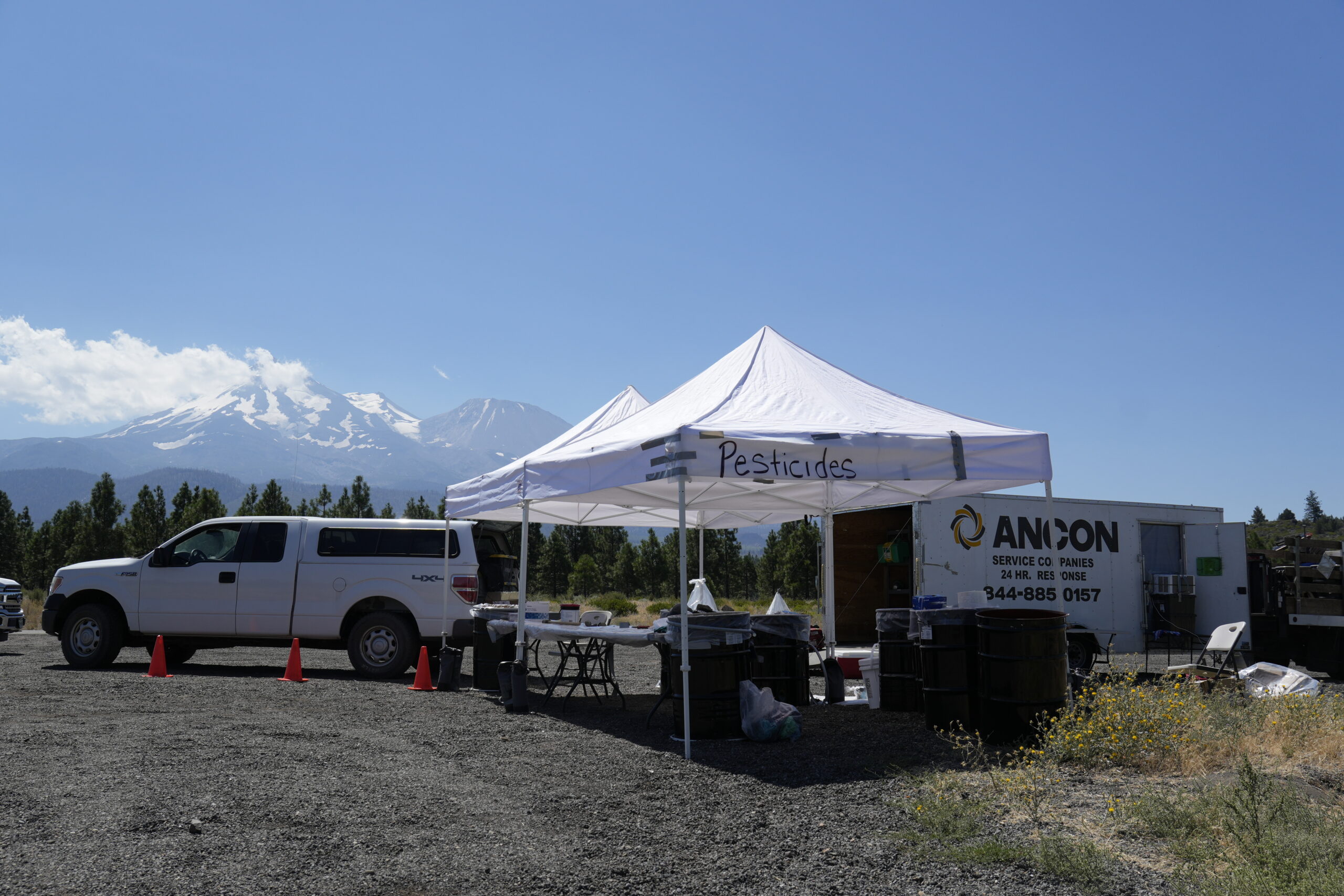
In July 2025, the BOS declared a local emergency over illegal foreign pesticides linked to illicit grows, prompting an EPA investigation into importation, distribution, and burning that creates “thick, poisonous smoke.” A free amnesty event in August collected less than 50 pounds, raising questions about the scale amid ongoing racial profiling claims. Critics argue such declarations perpetuate bias, as evidenced in federal suits, while bans exacerbate the very problems they claim to solve.

Environmental Impacts Comparison in Siskiyou County

Activity: Cannabis Cultivation
Water Use (Daily, County-Wide): ~3-9.6 million gallons (contested; mostly trucking)
Other Impacts: Potential pesticides, but less land disruption; raids worsen pollution
Regulatory Scrutiny: High; bans and fines despite legalization

Activity: Cattle Ranching
Water Use (Daily, County-Wide): Hundreds of millions (via alfalfa irrigation)
Other Impacts: Soil erosion, methane emissions, waterway pollution from runoff
Regulatory Scrutiny: Low; protected under ag norms

Activity: Logging
Water Use (Daily, County-Wide): Variable, but linked to erosion and habitat loss
Other Impacts: Deforestation, increased wildfire risk, sediment in streams
Regulatory Scrutiny: Moderate; historical industry with spotted owl protections

Activity: Crop Farming (e.g., Alfalfa)
Water Use (Daily, County-Wide): >400 million gallons
Other Impacts: High water depletion, chemical use; competes with cannabis for resources
Regulatory Scrutiny: Low; no similar bans despite drought contributions

The report concludes traditional ag like ranching and logging poses greater threats, yet faces less backlashโ€”echoing a former local farmer’s view that cannabis is scapegoated amid Siskiyou’s economic shifts from timber’s decline.

Toward a Balanced Future

Siskiyou’s story isn’t just about cannabisโ€”it’s about equity, transparency, and sustainable policy. While illicit grows persist (often tied to organized crime), bans have displaced problems without solving them, per the Berkeley analysis. Recommendations include protecting small-scale cultivation, reforming enforcement for education over punishment, and addressing root inequities.

As litigation mounts and costs rise, residents deserve the full picture: A county fighting a losing battle, rooted in outdated fears and biases, while ignoring bigger environmental culprits. Outsider journalists have covered this, but locals must demand accountability to avoid fiscal ruin.


References

This is curated list of sources credited in the article, drawn from court documents, news reports, academic studies, and official records. Each entry includes a brief description reflecting its relevance to key themes in the article, such as litigation losses, racial bias, environmental hypocrisy, and fiscal burdens in Siskiyou County’s cannabis crackdown. Sources are numbered sequentially for clarity, with links for verification.

  1. Getz, C., Petersen-Rockney, M., & Polson, M. (2024). Cannabis Bans, Local Control, and the Effects and Efficacy of Proposition 64. UC Berkeley Cannabis Research Center. https://crc.berkeley.edu/wp-content/uploads/2024/05/DCC-65021-Final-Report.pdf
    (Core report analyzing how Siskiyou County’s bans have backfired, exacerbating environmental harms, displacing growers, and highlighting racial disparities in enforcement while comparing cannabis impacts to traditional agriculture like alfalfa and ranching.)
  2. Chang v. County of Siskiyou (Case No. 2:22-cv-01378-KJM-AC). Civil Rights Litigation Clearinghouse. https://clearinghouse.net/case/43422/
    (Class-action lawsuit by Hmong and Asian American residents alleging racial discrimination in water ordinances and enforcement, central to the article’s discussion of litigation and bias.)
  3. Second Amended Complaint, Chang v. County of Siskiyou (Filed Feb. 28, 2025). ACLU of Northern California. https://www.aclunc.org/sites/default/files/Siskiyou_2025.02.28_SAC_0.pdf
    (Updated filing detailing racial animus behind water ordinances and zoning practices, including examples of anti-Asian rhetoric that fueled illegal stops and code violations.)
  4. Lo v. County of Siskiyou (Case No. 2:21-cv-00999-KJM-AC). Civil Rights Litigation Clearinghouse. https://clearinghouse.net/case/43634/
    (Federal lawsuit challenging water ordinances as Fourth Amendment violations, illustrating the county’s losing legal battles and selective targeting of Asian American growers.)
  5. Order Granting Preliminary Injunction in Part, Chang v. County of Siskiyou (Oct. 25, 2024). ACLU of Northern California. https://www.aclunc.org/sites/default/files/Siskiyou_Order_Granting_PI_in_Part_Suppl_Compl_.pdf
    (Court ruling blocking discriminatory water restrictions, underscoring the county’s policy failures and the mounting costs of defending unconstitutional actions.)
  6. Whitcomb, D. (2022, Aug. 10). “A new investigation reveals depth of skewed policing in Siskiyou County.” High Country News. https://www.hcn.org/articles/south-law-enforcement-a-new-investigation-reveals-depth-of-skewed-policing-in-siskiyou-county/
    (Investigation into racial bias in traffic stops and enforcement, showing disproportionate impacts on Asian Americans amid the cannabis crackdown.)
  7. Romero, D. (2022, Aug. 8). “Asian Americans sue Siskiyou County and its sheriff over bias.” Los Angeles Times. https://www.latimes.com/california/story/2022-08-08/asian-americans-siskiyou-county-discrimination-lawsuit
    (Coverage of the class-action suit highlighting widespread racism in access to water and policing, tying into the article’s narrative of manipulated public information.)
  8. Gumbel, A. (2022, Apr. 8). “Water, weed and racism: why Asians feel targeted in this rural California county.” The Guardian. https://www.theguardian.com/us-news/2022/apr/08/california-asian-discrimination-water-rights-siskiyou
    (Exploration of drought myths and anti-Asian discrimination in water disputes, revealing how shallow wells and ordinances backfired against growers.)
  9. Whitcomb, D. (2025, Mar. 19). “A California county spars over water, marijuana law and race.” High Country News. https://www.hcn.org/articles/water-a-california-county-spars-over-water-scarcity-illicity-marijuana-and-racism/
    (Discussion of water emergencies, selective enforcement, and racial tensions in Shasta Vista, contrasting with less outrage over past uses like housing sex offenders.)
  10. Siskiyou County Civil Grand Jury. (2022, Jun. 7). The Impact of Commercial Cannabis Grows in Siskiyou County. https://www.siskiyoucounty.gov/sites/default/files/fileattachments/civil_grand_jury/page/3421/gj_20220607_report_impactcommericalcannabisgrowssiskiyoucounty.pdf
    (Local report on enforcement challenges, costs, and environmental concerns, though criticized in the article for overlooking racial and fiscal inequities.)
  11. Dillis, C., et al. (2024). Cannabis farmers or criminals? Enforcement-first approaches fuel disparity and hinder regulation. California Agriculture, University of California. https://californiaagriculture.org/article/108699-cannabis-farmers-or-criminals-enforcement-first-approaches-fuel-disparity-and-hinder-regulation/attachment/213634.pdf
    (Study comparing cannabis to other agriculture, showing how bans in Siskiyou exacerbate disparities and environmental risks rather than mitigate them.)
  12. Gumbel, A. (2024, May 30). “California comedown: how illicit cannabis farms have left a wilderness where you’re lucky to see a lizard.” The Guardian. https://www.theguardian.com/environment/article/2024/may/30/california-comedown-how-illicit-cannabis-farms-have-left-a-wilderness-where-youre-lucky-to-see-a-lizard
    (Analysis of environmental degradation from unregulated grows, noting how county policies push cultivation to more harmful sites while ignoring larger threats like ranching.)
  13. Asian Law Caucus. (2023, Aug. 3). “Siskiyou Asian American Community Celebrates Restored Human Rights in Right-to-Water Case.” https://www.asianlawcaucus.org/news-resources/news/siskiyou-asian-american-community-restored-right-to-water
    (Announcement of settlement in water access litigation, highlighting victories against ordinances that created humanitarian crises for Asian Americans.)
  14. Courthouse News Service. (2024, Oct. 25). “Judge rules against Northern California county in water access race discrimination case.” https://www.courthousenews.com/judge-rules-against-northern-california-county-in-water-access-race-discrimination-case/
    (Recent ruling on discriminatory water ordinances, emphasizing the county’s ongoing losses and potential for massive attorney fee settlements.)
  15. Courthouse News Service. (2024, Sep. 13). “Residents urge injunction amid claims of racially motivated water restrictions.” https://www.courthousenews.com/residents-urge-injunction-amid-claims-of-racially-motivated-water-restrictions/
    (Coverage of injunction requests against water hauls, illustrating overstated drought claims and bias against growers in areas like Big Springs and Shasta Vista.)
  16. Siskiyou County Board of Supervisors. (2025). Emergency Proclamation: Illegal Pesticides. https://www.siskiyoucounty.gov/sites/default/files/fileattachments/board_of_supervisors/page/32113/emergencyproclamation_illegalpesticides.pdf (Details the state of emergency and amnesty event, highlighting minimal disposal yields amid claims of widespread crisis.)
  17. U.S. Environmental Protection Agency. (2025, July 17). Statement by Regional Administrator Josh F.W. Cook on the Siskiyou County Illegal Pesticides Crisis. https://www.epa.gov/newsreleases/statement-regional-administrator-josh-fw-cook-siskiyou-county-illegal-pesticides (EPA response directing investigation into pesticide misuse tied to cannabis operations.)

7 Comments

  • Will you clarify if it’s true, that a grower who has 99 or fewer plants, the charge is a misdemeanor? Does this fall under current laws regarding commercial marijuana farms?

    • Avatar photo

      not 100% about charges being a misdemeanor if under 99 plants. The law (was) over 99 plants and the FEDS get involved or your case could be handed over to Federal authorities.

  • Siskiyou County was targeted by the Marijuana growing community. We had personal grows prior but the sudden influx of identifiable ethnic groups drawn to cheap land and a very limited enforcement agency set the stage. I live in an HOA that was targeted. The damage to the land, trench or bucket septic use, shack living quarters or worse, guard dogs chained and left to die when abandoned, chemicals dumped, water shed areas devastated by mass movement of the earth to accommodate grow areas, total violation of County regulations …how is this even defensible? It’s taken years of concentrated effort to clean up the messes left on residential lots. Big city, high paid so-called research has not bothered to actually come to our area to see how the residents here have been affected. We are angry at the devastation brought to this County – a once beautiful area – by big money, illegal operations that include slave labor and abuses that are apparently OK so long as these commentators don’t have it next door to them. Big money knows it can prevail against a low-income county like ours. Money wins. People lose. Kudos to our Sheriff’s department and our Supervisors for at least trying to keep us and our communities safe!
    Susan Wallace

  • I would like to know how law enforcement is able to obtain a search warrant for a local (county) ordinance violation.

    Almost immediately after legalization, Humboldt County’s economy died. Local businesses closed, people lost jobs, and sales declined dramatically. Small grow operations were squeezed out by corporations. Yes, there’s a dispensary on every corner in Eureka, but there’s a Starbucks next to them. You see more coffee drinkers loitering around then you do pot heads.

    Enjoy the added revenue, Siskiyou. As soon as you stop the raids the money will stop coming in too. Simple supply vs. demand economics.

  • So are ranchers and alfalfa farmers using trafficked slave labor, shooting people and spraying their crops with illegally smuggled poisons like Carbofuran? “One of the most toxic insecticides with a high potential for acute toxicity in humans, mammals, and birds. A small amount, such as 1 milliliter, can be fatal to humans.” Oh but there can’t be rampant use of these smuggled poisons because only 50 lbs were turned in during the amnesty event. Do you think 99% of these growers give a rat’s ass about the harm they’re doing? I BET JAY A MARTIN WOULD LOVE TO SMOKE A PHAT BOWL OF THAT GOODNESS.

    It makes contamination “virtually impossible” WTF? Last time I checked birds, rabbits, ground squirrels, deer, etc live above ground not in deep underground streams. These morons at Berkeley have no clue what they’re talking about. How about we fumigate their backyards and peace gardens with DDT and then they can all have a nice big salad with their kids for dinner.

    If they actually had any idea of what the real problem is they would recommend that the laws be changed to make large scale black market and cartel grows a felony like they used to be. Instead they recommend education over enforcement. Are you kidding me? The only solution is enforcement because as of 2016 you can have 5,000 plants and it’s still only a misdemeanor. THAT IS THE PROBLEM DUMB DUMBS. The police and sheriffs have not ability to enforce any punishment because of Prop 64. The growers pay a small fine of a few hundred dollars and then turn right around and do the exact same thing all over again.

    This article reminds of the same ‘woke’ BS that turned San Francisco into an open air drug market where young children are forced to walk by drug zombies defecating all over public sidewalks just to go to school. But we can’t possibly do anything about it because the ACLU might sue us over violating their rights. What about everybody else’s rights? It time to remove your head from where the sun don’t shine and realize unless there are real punishments and real jail time this problem is only going to get worse. Instead of sending national guard to big cities where they’re literally picking up garbage how about we send them to Shasta Vista or Dorris or Covelo or Trinity Pines or the deserts in San Bernadino and get rid of the real human garbage!

    • Avatar photo

      Dear GreenThunder420,
      Your passion for Siskiyou Countyโ€™s challenges is clear, but your comment leans on misinformation and inflammatory rhetoric that sidesteps key facts. Letโ€™s unpack it.
      First, the article doesnโ€™t claim cannabis growers are saintsโ€”some illicit operations do use dangerous pesticides like Carbofuran, as noted in the 2025 Siskiyou emergency proclamation. But the amnesty eventโ€™s paltry 50-pound haul suggests the โ€œcrisisโ€ is overstated, much like drought claims blamed on growers despite alfalfaโ€™s massive water use (>400 million gallons daily). The Berkeley report, grounded in data, shows bans push grows to remote sites, worsening pesticide risks, not resolving them. No evidence supports rampant human trafficking or shootings tied to Shasta Vistaโ€™s growers; these are often sensationalized to demonize communities, particularly Asian Americans, who face 88% of property liens despite being 1.8% of the population.
      Your point about wildlife is validโ€”pesticides harm above-ground ecosystemsโ€”but the article notes Shasta Vistaโ€™s deep wells and lack of nearby streams make groundwater contamination โ€œvirtually impossible,โ€ not surface impacts. Ranching and logging, meanwhile, cause documented erosion, methane, and waterway pollution with less scrutiny. Why the double standard?
      On enforcement, Proposition 64โ€™s misdemeanor penalties for large grows are a state issue, not a county one. Siskiyouโ€™s bans and raids havenโ€™t reduced cultivationโ€”theyโ€™ve increased unregulated grows, per Berkeleyโ€™s findings. Federal suits, including ACLU-backed cases, show enforcement often targets Hmong growers with illegal stops and liens, costing millions in losing defenses. Education and regulation, as Berkeley suggests, align with state legalization, aiming to bring growers into compliance, not coddle criminals.
      Your San Francisco analogy misses the mark. Siskiyouโ€™s issue isnโ€™t โ€œwokeโ€ policies but misguided onesโ€”bans that backfire, racial profiling, and fiscal recklessness risking bankruptcy. Everyoneโ€™s rights matter, including growers unfairly targeted. Calling for National Guard or mass incarceration ignores root causes and echoes the failed war on drugs. Letโ€™s focus on solutions: regulate, donโ€™t demonize, and hold the BOS accountable for policies that harm more than they help.

      J.A.Martin

Leave a Reply

Your email address will not be published. Required fields are marked *