

California Grizzly Alliance’s proposal to reintroduce grizzly bears to California.
By Brad Jones
A new study says it’s possible for the grizzly bear, long extinct in California, to be reintroduced in the state.
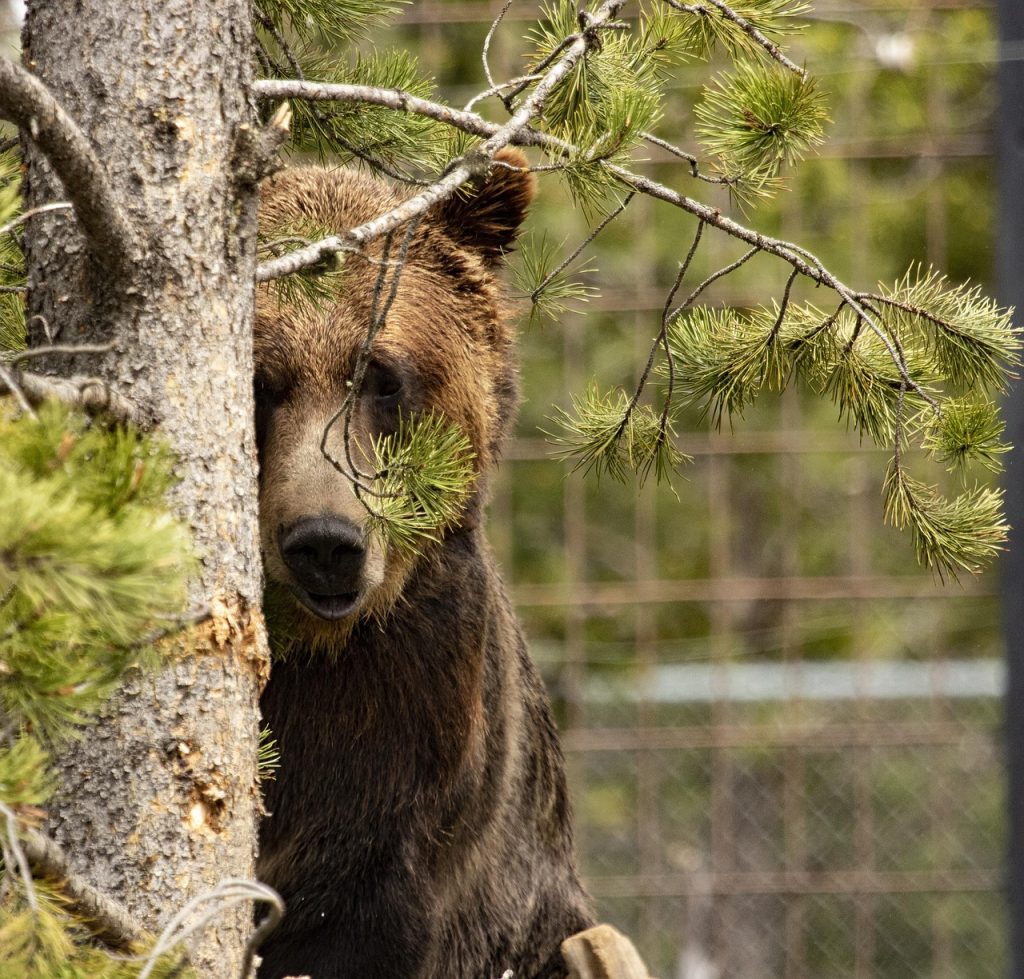
A push by the California Grizzly Alliance to rewild nearly 1,200 grizzly bears in California is concerning conservationists, who say the idea is impractical and dangerous in such a densely populated state.
The alliance, a coalition of environmental groups, wildlife advocates, and tribal leaders, states its goal is to “recover grizzly bears in California.”
It released a feasibility study in April, stating that the state could sustain 1,183 grizzly bears, assuming “that grizzlies could not live outside these three areas,” which include 832 bears in the Sierra Nevada, 236 in the Northwest Forest, and 115 in the Transverse Ranges north of Los Angeles.
Josh Brones, a longtime wildlife conservation advocate, questions the assumption that grizzlies, the top predator in the food chain, would instinctively stay in high-elevation forests when there are more abundant food sources at lower elevations.
Grizzlies “are not afraid of anything,” so they don’t need the protection of remote forests, and will likely move down the mountain slopes where they will encounter ranchers and livestock, he said.
“I find it very unfortunate and saddening that the California grizzly no longer exists. I love the idea of grizzlies living in California once again, but I have very grave concerns,” said Brones, who studied wildlife biology, researched large carnivores, and has represented fishing, hunting, and trapping groups such as the Sportsmen’s Alliance and California Houndsmen for Conservation.
“There is no getting along with grizzlies.”
Because grizzlies need “tremendous amounts” of habitat and prey to survive, hunters and conservationists are worried native deer and elk populations couldn’t sustain cohabitation with these bears, Brones said.
Peter Alagona, a professor at the University of California–Santa Barbara and lead author of the study, told The Epoch Times that while it’s true that the coastal areas and California foothills were excellent grizzly bear habitat, historical accounts indicate these bears lived everywhere in California except the deserts.
A grizzly hasn’t been spotted in the wilds of the Golden State since 1924.
Alagona said he would “love to see” grizzly bears on the California landscape in his lifetime, but that it will likely take decades.
He said the feasibility study indicates “that there’s a lot we don’t know.”
“These animals bring up a lot of emotions, and for a lot of people, it’s fear,” he said.
The study concludes that “recovering grizzly bears in California is very likely biologically feasible; the success of a recovery program depends on people’s willingness to undertake it.”
“The most important habitat for grizzlies, as people who have dedicated their lives to studying and protecting the bears often say, is not in some dataset, scientific report, or computer model. It’s not even in the forests and mountains. It’s in people’s hearts,” the study says.
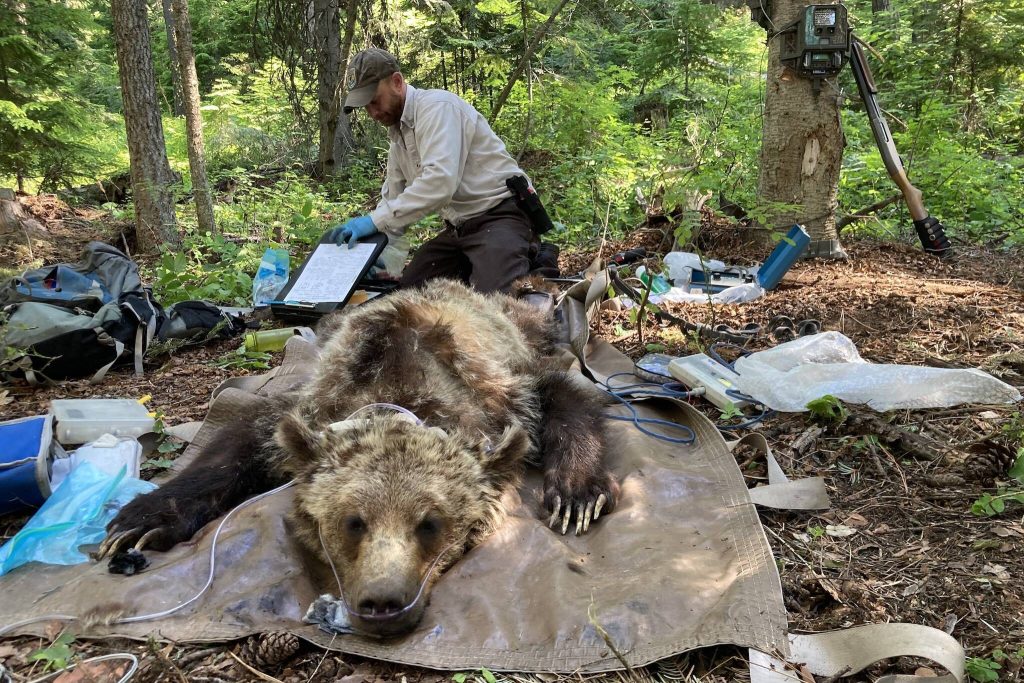
Grizzly Habitat
Mike Costello, a pro-hunting conservation advocate and strategic partner at Howl for Wildlife, told The Epoch Times that the nonprofit group opposes grizzly reintroduction efforts, but isn’t averse to the bears making a natural comeback on their own.
Today’s grizzly habitat is found mainly in wide open spaces such as in Alaska and parts of other states with low population density, Costello said.
There are about 25 times more grizzly-on-human conflicts per grizzly bear in the northern Rockies than in Alaska because there are more people, so moving them to an area such as California, where nearly 40 million people live, would be “an absolute trainwreck,” he said.
Although the study proposes rewilding grizzly bears in remote regions such as the Sierra Nevada, those areas are the natural habitat of black bears—not grizzlies, Costello said.
The California grizzly once thrived in the coastal mountains, the Bay Area and the Central Valley as far south as where Los Angeles and Ventura counties exist today—the most populous area of the state, he said.
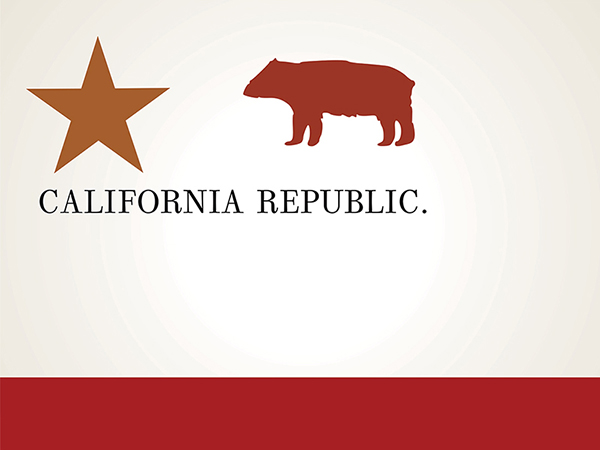
Before European settlers arrived in North America, California was home to 10,000 grizzly bears, according to the Center for Biological Diversity (CBD), an environmental nonprofit.
“Native Californians had coexisted with the bear since time immemorial, many considering grizzlies their relatives,” the CBD states, but “decades of persecution—not habitat loss—drove grizzlies off the landscape.”
The Push to Rewild Grizzlies
The California Grizzly Alliance feasibility study concludes that grizzlies are no longer in imminent danger of extinction in the lower 48 states but that the current recovery program doesn’t ensure the long-term survival of the bears nor is it “conceived, designed, or equipped to achieve a meaningful recovery south of the Canadian border.”
The alliance credits the Holdfast Collective, a nonprofit entity that owns 98 percent of clothing brand Patagonia, for the “generous funding” of its work, as well as Re:wild, another environmental group founded by scientists and Hollywood movie star Leonardo DiCaprio.
The California Grizzly Alliance, formed in 2022, is an offshoot of the California Grizzly Research Network, a University of California, Santa Barbara, research group launched in 2016.
The network published poll results in 2019 indicating that nearly two-thirds of 980 Californian respondents “were supportive” of reintroducing grizzlies in the state, while 14 percent opposed the idea.
The CBD, which says it stands “at the core of the effort to return grizzlies to California,” lauded the California Grizzly Alliance study.
“It’s time to bring the bears back to the Golden State, and the Center is committed to achieving this bold and important goal,” the center states on its website.
In 2014, the CBD filed a legal petition calling on the U.S. Fish and Wildlife Service to “greatly expand its plans for recovering grizzly bears across the American West.”
It identified 110,000 square miles of potential habitat in the Gila/Mogollon complex in Arizona and New Mexico, Utah’s Uinta Mountains, the Grand Canyon in Arizona, and California’s Sierra Nevada.
While the petition was rejected—as was the CBD’s appeal to the Ninth Circuit—expanding the range of grizzlies would be a crucial step toward moving the bears closer to recovery under the Endangered Species Act, according to the CBD.
The California Grizzly Alliance study suggests grizzlies could be transplanted to California from anywhere in the northern Rockies region, including British Columbia.
Alagona said the study shows there are opportunities “to capture some of those rich habitats” where grizzlies once roamed and to connect more of California’s “disconnected habitats.”
“The bear is sort of showing us through these models in a way where we might need to focus future conservation efforts. The habitat that the bears would prefer would also protect a lot of other really cool and amazing California wildlife,” he said. “You just learn so much from these animals and it’s very humbling.”
While some amount of fear toward grizzlies is healthy respect, much of it is based on inaccurate perceptions from generations past, Alagona said.
Though grizzlies are one of the most studied large animal species in the world, they’re also one of the “most misunderstood,” he said, referring to what the study calls “outsized perceptions of risk.”
Last year, the National Park Service and U.S. Fish and Wildlife Service announced a plan to restore grizzly bears to the North Cascades of Washington state.
That plan was 20 years in the making, but it isn’t moving forward, Alagona said.
“They didn’t bring any bears out last season, and now everything is on hold because of the new administration,” he said.
Adding Grizzlies to the Mix
The feasibility study is robust but “purely exploratory,” Brones said. Introducing a different subspecies of brown bear that’s not native to the state could bring a lot of unknowns, he said.
The extinct California grizzly bear (Ursus arctos californicus) is considered a distinct subspecies of the brown bear (Ursus arctos) and separate from the mainland grizzly (Ursus arctos horribilis) found elsewhere in the western United States, Canada, and Alaska.
A goal of nearly 1,200 grizzlies is so ambitious that it’s “practically and ecologically unsustainable,” said Brones, pointing out that’s more than half the number of grizzlies in Montana, which has far fewer people.
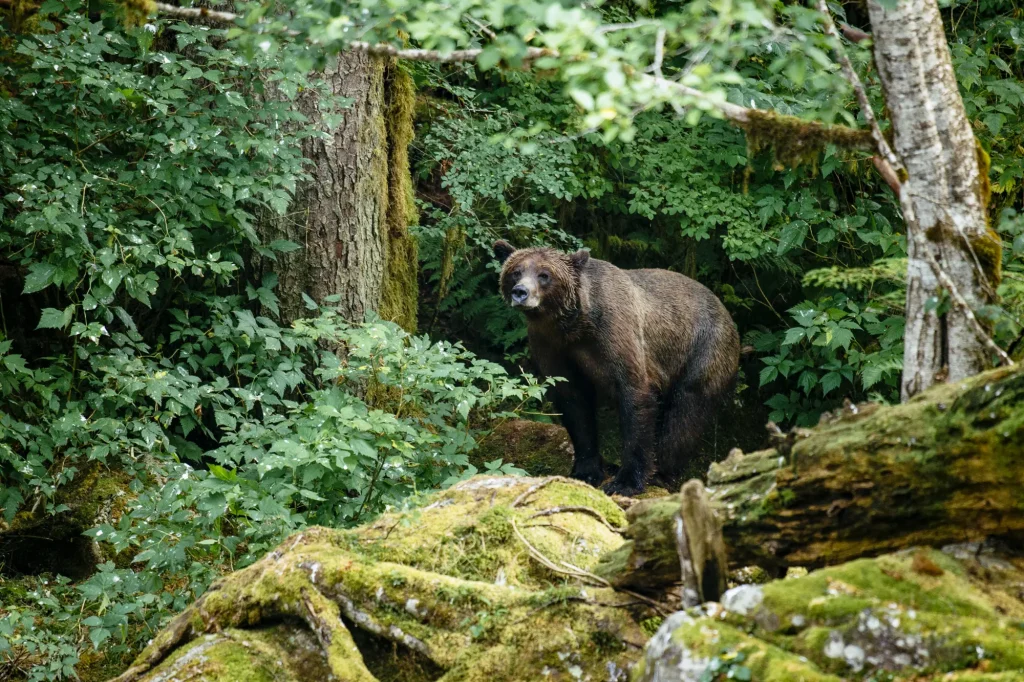
Given the sheer size of grizzlies, their lack of fear, and inclination to roam wherever they please, there would be too many encounters with people, he said.
Courtesy of Nimmo Bay Wilderness Resort
Jim Beers, a retired U.S. Fish and Wildlife Service wildlife biologist, special agent, and refuge manager, said the reintroduction of large carnivores, such as wolves and grizzly bears, is part of a larger concept to rewild rural lands and drive people out of the backcountry.
Rewilding grizzlies would mean more human casualties from encounters with bears, Beers said.
“They’re going to see you and your daughter out there for a camping trip or a hike and the sow bear will go after you, and good luck to you,” he said. “It’s so crazy.”
In Northern California and Oregon, descendants of re-wilded wolves have taken a heavy toll on ranchers, as the protected animals turn to killing cattle amid competition with other predators for wild prey such as deer and elk.
Wolves are dangerous enough, but adding grizzlies to the mix in a densely populated state would be “absolutely insane,” Beers said.
‘Not a State Priority’
Steve Gonzalez, a spokesman for the California Department of Fish and Wildlife (CDFW), said that California is a vastly different state today than it was when grizzly bears last occupied the state more than 100 years ago.
California, with almost 40 million people, has “no more truly remote, unoccupied places where grizzly bears could be introduced without coming into human conflict,” he told The Epoch Times via email.
Grizzly bears that once roamed California’s coastline and beaches survived on wild food sources, including salmon and native plant species and grasses, which aren’t as abundant today. They also fed on seal and whale carcasses, but with developed coastal communities that is no longer an option for them, Gonzalez said.
National Park Service
“Grizzly bear reintroduction is not a state priority at this time,” he said.
“While we appreciate the interest and admire the effort, any consideration of reintroducing grizzly bears into California would require CDFW to conduct a scientific analysis of feasibility as a necessary first step,” he said.
The agency hasn’t conducted any research or studies into grizzly bear reintroduction and currently doesn’t have the resources to do so, he said.
The state has many pressing fish and wildlife priorities such as recovering salmon populations and existing endangered species, but grizzly bears are not among them, Gonzalez said.
He said research indicates that there is “no reason to believe that grizzly bears would stay put in remote areas.”
“Reintroducing grizzly bears into California would most likely set them up for unavoidable and inescapable human conflict,” he said. That conflict has already proved challenging with other species such as mountain lions, gray wolves, coyotes, and black bears.
The U.S. Fish and Wildlife Service declined to comment “due to ongoing litigation.” The Center for Biological Diversity did not respond to multiple inquiries.
This article was originally published by THE EPOCH TIMES
- Writing Classes and Contests – John Sammon
- Loose Screws: Mount Shasta Leadership Shakeup Leaves Questions Unanswered
- Protecting Your Health During A Wildfire : What Northern California Residents Should Know
- State Water Board To Consider LOW-INTEREST LOAN For Quartz Valley Tribe Land Acquisition In Scott River Headwaters
- Obituary: Minnie “Bunny” Frederick





One Comment
As usual, it appears that individuals with no stake in northern California have come up with an idea that is not feasible. The day of the grizzly in California is long passed. Human beings cannot coexist on friendly terms with the largest carnivore in the lower 48.