Home / Siskiyou News / Klamath River Returned to Historic Path, Locals Say Dam Removal Impacting Fish

Klamath River Returned to Historic Path, Locals Say Dam Removal Impacting Fish

The dam removal projectโ€”the largest in U.S. historyโ€”has been one of bitter controversy for decades.
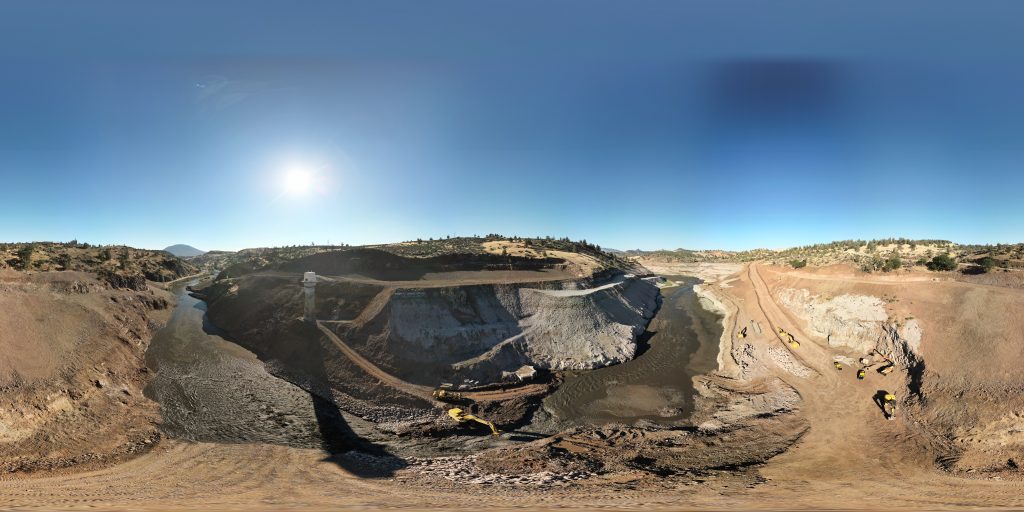
Image taken by Jay Martin shows removal of the cofferdam at IronGate on the Klamath River.

Byย Brad Jones “The Epoch Times”

For the first time in more than a century, after decades of controversy surrounding the largest dam removal project in U.S. history, salmon are swimming freely through the Klamath River in California.

Environmental nonprofit groups and Native American tribes have long blamed the four obsolete hydroelectric dams for damaging the riverโ€™s ecology and blocking upstream spawning habitat, causing a decline in salmon populations.

On Aug. 28, the river flow was restored as two cofferdams were broken, hailed by California Gov. Gavin Newsom for opening up a new 400-mile stretch of river for native fish habitats.

But some residents near the dam removal sites in Siskiyou County say the dam removal itself is harming the river and the fish, as massive volumes of sediment are stirred up and sent downstream.

The Klamath River Renewal Corp. (KRRC), whose board majority was appointed by the California and Oregon governors, is responsible for the demolition of four hydroelectric dams.

The breaching of two cofferdams at the Iron Gate and Copco No. 1 sites means native fish species such as steelhead, coho and Chinook salmon now have access to more than 400 miles of newly opened spawning and rearing habitat, according to Newsom.

 โ€œThis moment is decades in the makingโ€”and reflects Californiaโ€™s commitment to righting the wrongs of the past. Today, fish are swimming freely in the Klamath for the first time in more than a century, thanks to the incredible work of our tribal, local and federal partners,โ€ he said.

The Klamath River was once the third-largest salmon-producing river on the West Coast before the construction of the dams in the early 1900s, which blocked migratory salmon and steelhead from reaching โ€œcriticalโ€ habitat upstream, Newsom said.

The dam removal project, which began in September 2023, will provide consistent sources of cool water in warm months, he said.

The 263-mile Klamath River drains a basin spanning about 12,000 square miles and traverses the Californiaโ€“Oregon border from its headwaters in Oregon through the Cascade Mountains to the Pacific Ocean south of Crescent City, California.

Since 1912, more than 2,100 dams have been removed in the United States, including more than 180 in California, according to American Rivers, an environmental group that tracks dam removal trends and maintains a national dam removal database.

Last year was a โ€œmajor milestone year for dam removal in the U.S,โ€ affecting 79 other dams aside from those on the Klamath River, according to American Rivers.

โ€œI am excited to move into the restoration phase of the Klamath River,โ€ Karuk Tribe Chairman Russell โ€˜Busterโ€™ Attebery said in a statement posted on Facebook. โ€œRestoring hundreds of miles of spawning grounds and improving water quality will help support the return of our salmon, a healthy, sustainable food source for several Tribal Nations.โ€ 

Yurok Tribe Vice Chairman Frankie Myers said in a statement, โ€œAnother wall fell today. The dams that have divided the basin are now gone and the river is free. Our sacred duty to our children, our ancestors, and for ourselves, is to take care of the river, and todayโ€™s events represent a fulfillment of that obligation.โ€

โ€œWhile there is still work to be done, today we are celebrating,โ€ said Mark Bransom, CEO of the KRC, the nonprofit entity tasked with the removal of the dams. โ€œWatching the Klamath River return to its historic path in the reservoirs and now through the dam sites has been incredible, and I feel honored to take this project over the finish line for our Tribal partners, and river communities.โ€

While proponents of the dam removals are celebrating victory after their decades-long battle to restore the free-flowing river, some residents and property owners near the former manmade Iron Gate and Copco lakes say the demolition of the dams is crippling tourism and recreation activities such as camping, water skiing, sport fishing, and boating, hurting wildlife, increasing wildfire risks and raising concerns about flood control and irrigation for ranching and farming.

The free-flowing Klamath River meanders through the footprint of the Copco Lake reservoir July 15, 2024. Jay Martin – Siskiyou News

County Shut Out

The Siskiyou County Board of Supervisors received an email from Bransom on April 4, essentially stating that the corporation was curtailing communications with the county, according to Supervisor Ray Haupt.

โ€œThey actually sent an email to us back in June and said they were done with us. They werenโ€™t going to communicate with us anymore,โ€ Haupt told The Epoch Times.

The county responded by sending its own letter to the Federal Energy Regulatory Commission, which referred to Bransomโ€™s email and included it as an attachment.

Bransom wrote in the email that the KRRC would no longer attend the countyโ€™s biweekly public information meetings, claiming that they resulted in the spread of misinformation about the project.

โ€œIt does not behoove any of us to dedicate time to these meetings on a regular basis, when the outcome is the perpetuation of inaccurate information about the project,โ€ Bransom wrote.

Haupt said the KRRC has been โ€œputting out constant propagandaโ€ about the success of the dam removal project โ€œto beat back any scrutinyโ€ despite widespread concerns from the county and local residents about the projectโ€™s impacts, including the condition of the river and its negative effects on fish and other wildlife.

โ€œItโ€™s just this constant mantra about how great it is. Their overarching strategy was to do this here in a big way, so American Rivers can take down dams across the country,โ€ he said.

Politically, there is a lot at stake for the governor and KRRC, he said.

โ€œThey canโ€™t politically afford for this thing to be a failure or even scrutinized. There is much more afoot here than just the Klamath,โ€ Haupt said.

These celebrations are โ€œmade-for-TV photo opsโ€ to promote more dam removal projects across the nation, including the Columbia and Snake Rivers in Washington state and Oregon, he said.

Neither KRRC spokeswoman Ren Brownell nor Bransom responded to a request for comment by the time of publishing.

Eastern Washington Congresswoman Cathy McMorris Rodgers, in September 2023, called out the White House Council on Environmental Quality (CEQ) for its โ€œmonths-long mediation process over the future of the Columbia-Snake River Systemโ€ which, she said โ€œwas supposed to be open and transparent, has instead consisted of an undisclosed number of backdoor meetings between a select group of organizations and individuals who believe breaching the four Lower Snake River dams is the only way to recover endangered salmon populations.โ€

Rodgers made the comments at a Sept. 20, 2023, House Energy and Commerce Committee hearing on unleashing American hydropower.

ย “horrible” thick clay was released downstream of the former Iron Gate Dam on Aug. 28, 2024. Drone image by Jay Martin – Siskiyou News

Residents Concerned

Richard Marshall, president of the Siskiyou Water Users Association which opposed the project told The Epoch Times that massive volumes of sediment that have flowed downstream since the dam removals began have killed not only native and non-native fish species but other wildlife.

โ€œThey killed some of the very hard-to-kill things like the crustaceans that were along the riverโ€”the little freshwater crawdads, which are pretty hardy,โ€ Marshall said. โ€œAnd letโ€™s not forget the deer that got caught in the mud and died and other animals up and down the river.โ€

The association also has photographs of an eagle that โ€œgot caught up in the mud trying to catch a fish that was flopping around,โ€ he said.

The KRRCโ€™s decision to curtail dialogue with county officials who represent residents impacted by the dam removals is alarming, Marshall said.

The governorโ€™s โ€œdrumbeat about what a success this is,โ€ is prematureโ€”ahead of the โ€œthe real storyโ€ which will be told when winter rains โ€œwash down the sides of those muddy canyon walls,โ€ Marshall said.

William Simpson, a ranch owner near the former Iron Gate Dam, filmed the conditions of the river on Aug. 28, after an excavator shovel dug into the clay core of the dam at what he called a โ€œdam-breaking ceremonyโ€ held in a parking lot downstream along the river.

โ€œThey took out a scoop and made a big press release out of that,โ€ he said.  โ€œThey had a big salmon feed.โ€

And, when everybody left the celebration, โ€œthey really breached it,โ€ releasing โ€œthis horrible materialโ€ and thick clay downstream,โ€ he said. โ€œThe viscosity was like motor oilโ€”very clumpy and nasty โ€ฆ and the stench was horrendous.โ€

The Klamath River downstream from the Iron Gate Dam site on Aug. 28 after the cofferdams were breached. Jay Martin – Siskiyou News

Simpson, who filmed and photographed the riverโ€™s condition the day the cofferdams were breached, said that some of the clay particles were so small that they formed a film on the waterโ€™s surface.

โ€œYou can see these big blotches. It looks like an oil spill with black clay,โ€ he said.

โ€œWe already killed the river back in January, all the way to the beach. All the aquatic life was dead right down to the mollusks and the snails. The invertebrates, the native fish to trout, the salmon, the suckers, the sturgeonโ€”everything got dead. The crabs in the ocean in front of the Klamath River were dead,โ€ he said. โ€œAnd now, they just let down the worst of the worst.โ€

Simpson said there is now a scarcity of otters, beavers, and migratory birds.

โ€œThe cormorants, California pelicans, geeseโ€”nothing showed up this year,โ€ he said. โ€œWe donโ€™t have eagles anymore. We donโ€™t have osprey.โ€

โ€œThereโ€™s nothing for them to eat. They all left.

โ€œIt couldnโ€™t be worse. The animals canโ€™t even drink this water. My horses canโ€™t drink it. The cows canโ€™t drink it. The deer canโ€™t drink it.โ€

The fish the governor is talking about are returning salmon, according to Simpson.

โ€œThose baby fish went down the river to the ocean, got big, and came back. So these are fish from four years ago when the river was horrible, according to them,โ€ he said. โ€œTheyโ€™re celebrating a return of salmon from when the dams were here.โ€

Reprinted with “THE EPOCH TIMES PERMISSION”


Leave a Reply

Your email address will not be published. Required fields are marked *