Cover photo from CALTROUT.ORG News
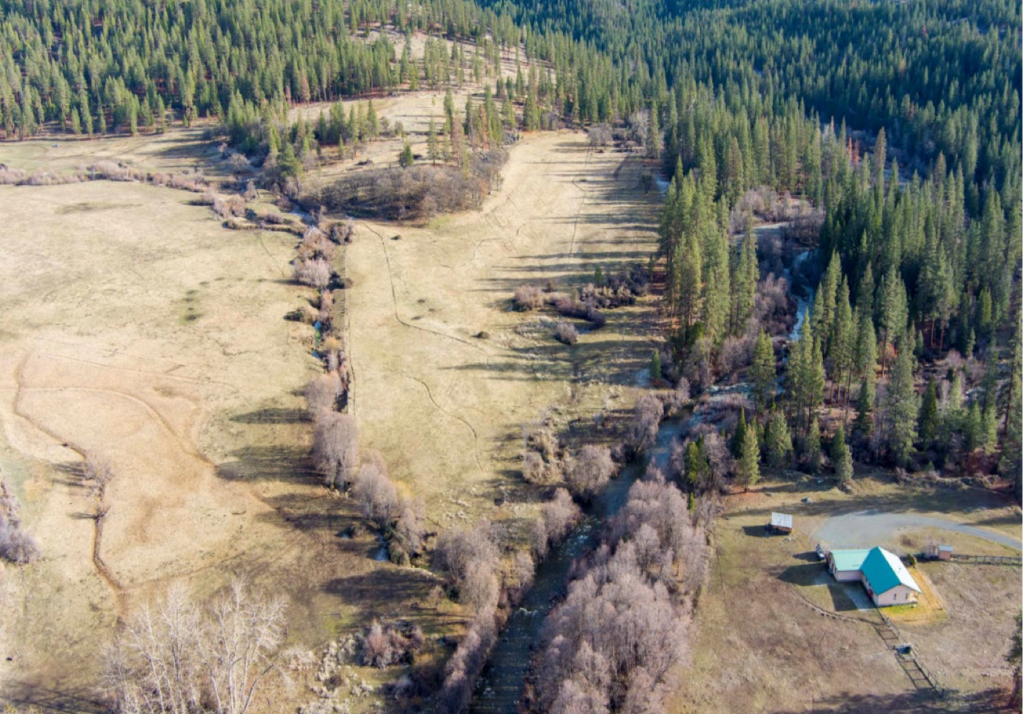
The Beaver Valley Headwaters Preserve is a 6,000 acre ranch purchased in 2021 by The Wildlands Conservancy (TWC) along the iconic Klamath River tributary, the Scott River, in Northern California. A coalition of over 15 partners, including TWC, local tribes, government agencies, and non-profits, have come together around a $5 million vision to transform aquatic habitat on the property through a landscape-scale restoration effort focused on reviving struggling salmon populations.
The project, titled “Transforming the Beaver Valley Headwaters Preserve – a Holistic, Community Based Approach to Restoring a Klamath River Salmon Stronghold,” aims to take a holistic approach to enhancing over 6 miles of habitat for threatened coho salmon as well as steelhead, Chinook and Pacific lamprey. Proposed actions include reconnecting floodplains, improving instream flows through water rights dedications, replacing a blocked culvert on Big Mill Creek to open up 1.4 miles of spawning grounds, and engaging with the local community.
With designs 65-100% complete, permits underway, and full owner support, the coalition has shovel-ready plans pending $5 million in construction funding. Estimated costs include:
- $2.5 million to replace the blocked culvert on Big Mill Creek with a free-spanning bridge, restoring fish passage
- $1 million to reconstruct stream channels, reconnect historic floodplains and enhance in-stream habitat complexity
- $500,000 to dedicate water rights instream to improve flow conditions
- $500,000 for project management, monitoring, community/tribal engagement and education
- $500,000 contingency
The project represents an exceptional opportunity to boost the recovery of coho salmon populations in the Klamath Basin as well as support the economy of the disadvantaged Scott Valley community through jobs and involvement. With the imminent removal of four dams on the Klamath, improving habitat and fish passage on key tributaries like the Scott River will be critical to ensuring salmon can fully capitalize on coming access to over 300 more miles of spawning grounds. The broad coalition of partners also hopes the project can serve as a model for future holistic, watershed-scale restoration efforts on private lands.
- Travels of Different FlavorsPost Views: 7 I think back to trips I have taken, years ago, decades. I think of the benches and chairs I slept upon; of the meals I ate, by pointing at words written in a different language; of people that I met, who came and went in a heartbeat, saying or doing profound things,
- Supreme Court Narrows Federal Law Barring Drug Users From Owning GunsPost Views: 8 Justices rule the government may not automatically disarm an occasional marijuana user, but stop short of striking the statute down WASHINGTON โ The U.S. Supreme Court ruled Thursday that the federal government cannot automatically strip an occasional marijuana user of his right to own a firearm, narrowing a provision of the federal
- KLAMATH WATER USERS ASSOCIATION REACTS TO NEW COURT DECISION ON THE ENDANGERED SPECIES ACTPost Views: 21 Klamath Water Users Association (KWUA) is disappointed in a decision issued today by the United States Court of Appeals that affects water users who rely on the Klamath Project for irrigation water. In a 2-1 ruling, the court found that the U.S. Bureau of Reclamation (Reclamation) has discretion to curtail water deliveries
- Obituary: Carol Lee MunsonPost Views: 14 Carol Lee (Hammond) Munson passed away with family by her side on June 15, 2026 at Madrone Hospice House in Yreka. Carol was born in Yreka at the Siskiyou General Hospital to parents Carl and Jessie Hammond on April 27, 1941. At that time, Carl was a timber faller and the family
- Shasta River Flows Plummet Below Minimum โ State Water Board Reinstates Conditional Curtailments on Junior RightsPost Views: 82 | Siskiyou News | June 16, 2026 YREKA โ The State Water Resources Control Board has reinstated conditional curtailments for numerous junior water rights in the Shasta River watershed after flows at the Yreka USGS gage dropped sharply below the required minimum. As of early morning on June 16, 2026, flows measured