
By Nigel Duara and Natasha Uzcátegui-Liggett, CalMatters
This story was originally published by CalMatters.
Sign up for their newsletters.
In 2020, with the death of George Floyd still dominating the national conversation over police accountability, Gov. Gavin Newsom signed a law taking away responsibility for investigating fatal police shootings from local authorities and putting it in the hands of the state attorney general.
Lawmakers reasoned that an independent outside agency would bring more credibility — as well as speed and investigative firepower — to the process while eliminating potential conflicts of interest that can arise when police or local district attorneys have to investigate agencies they work closely with.
Police accountability advocates enthusiastically endorsed the legislation that authorized the switch. Then-Assemblymember Rob Bonta championed it, too. When Bonta became attorney general the following year, he pledged to complete all investigations within 12 months.
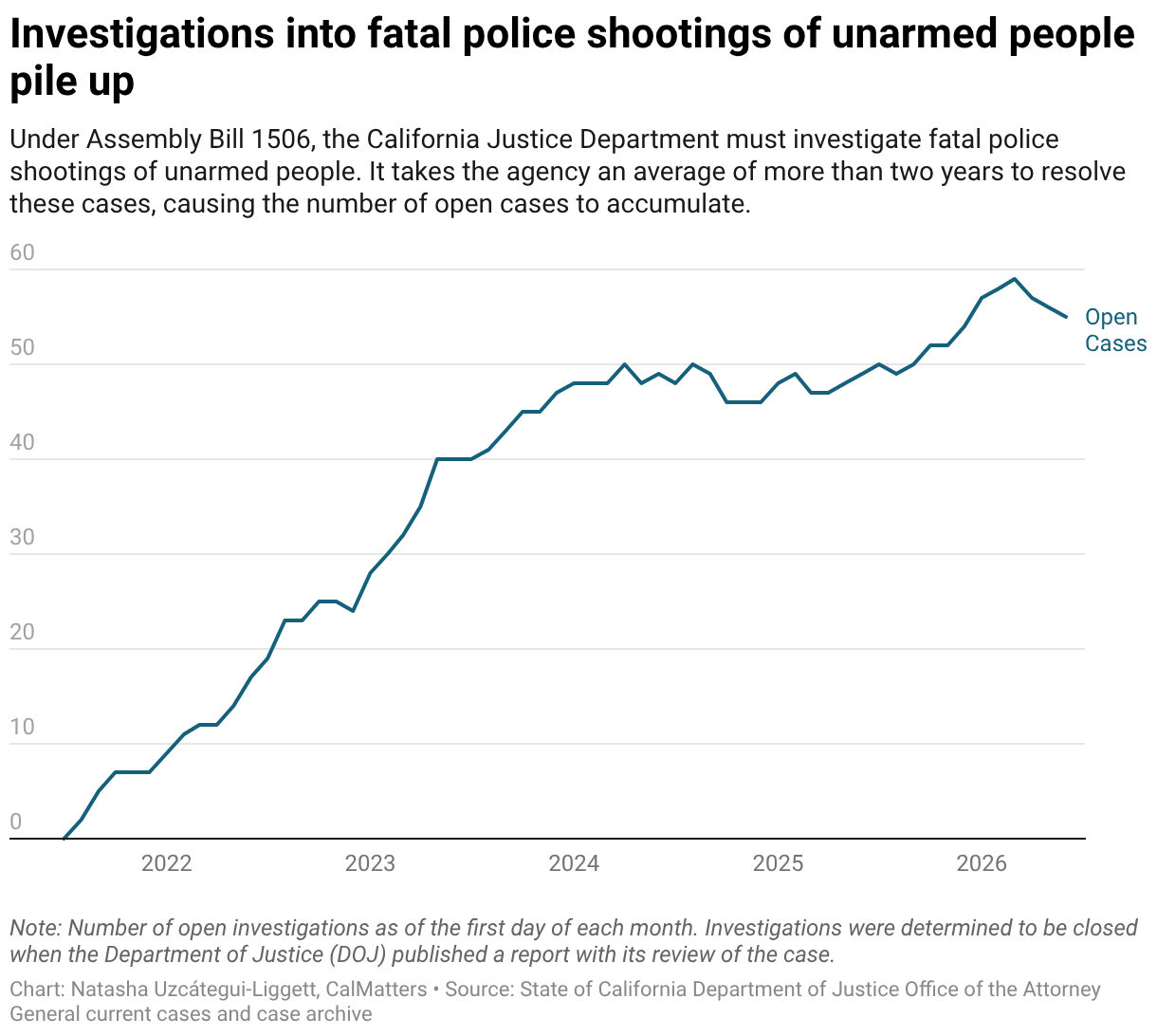
He hasn’t come close. The department has yet to close a single investigation within one year.
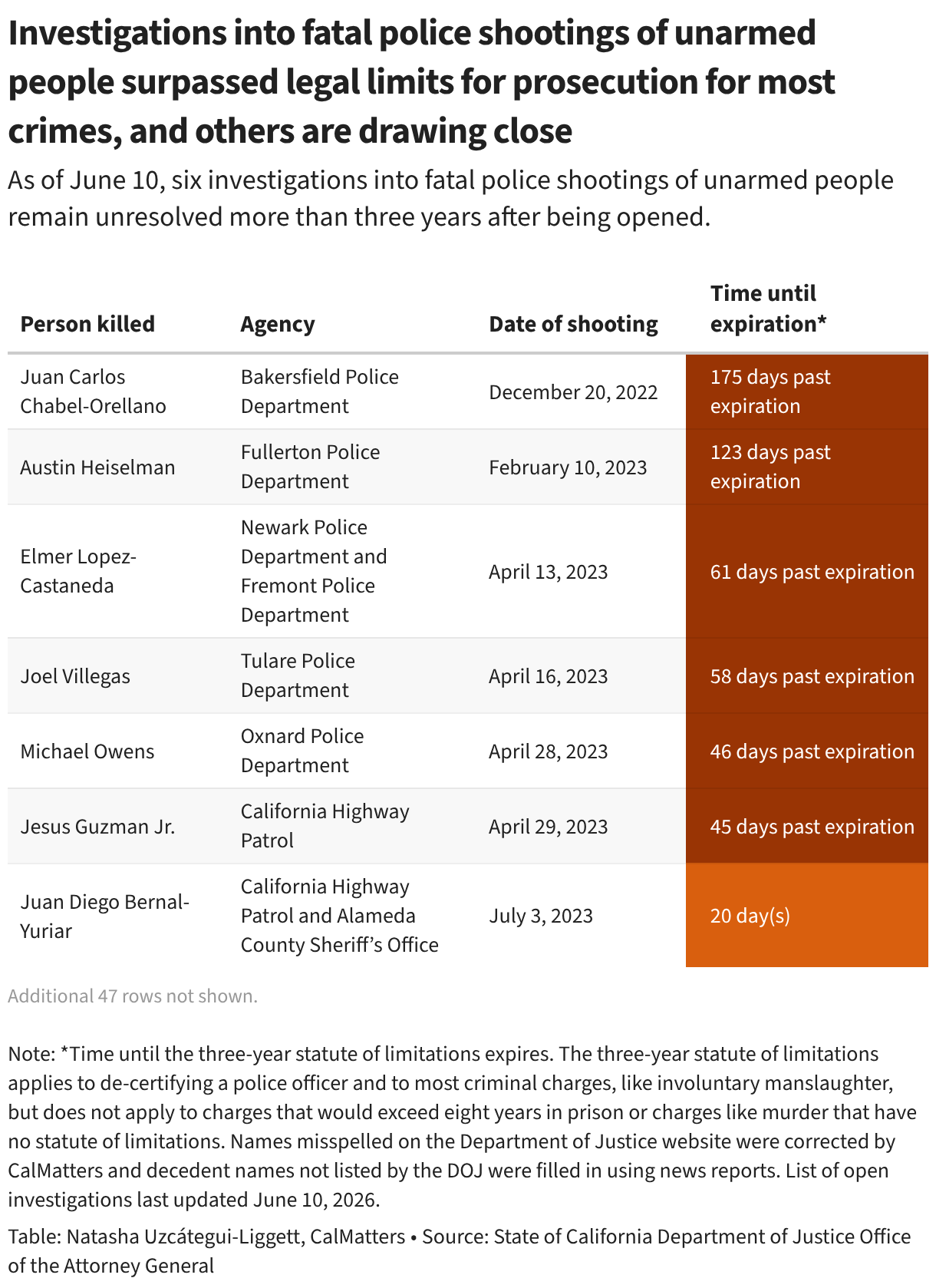
In fact, a CalMatters investigation found that Bonta’s office has 13 use-of-force investigations that have exceeded three years or longer — well past the statute of limitations for many of the crimes an officer or a deputy could conceivably be charged with short of murder.
The average fatal shooting investigation takes Bonta’s team nearly two years and five months to complete. Just eight of 41 closed cases took less than two years.
The delays take away another potential enforcement tool as well: Once a case extends beyond three years, an officer cannot be decertified, meaning they cannot be prevented from working for other law enforcement agencies.
The time lag leaves families of potential victims waiting for justice and leaves officers in limbo as they wait to be charged or exonerated.
“In my experience, three years is an awful long period of time, especially if you’re starting to come upon statutes of limitations,” said Anne Marie Schubert, the former Sacramento County District Attorney who unsuccessfully ran for attorney general in 2022.
Schubert said she was surprised to see that the last case closed by the program was on a shooting in 2023.
“Is it resources?” she asked. “Is it experience? That’s a question I’d want to know.”
To date, not a single officer has been prosecuted by Bonta’s office, and no officer has been referred for decertification or even discipline after a police shooting investigation.
Bonta blames the backlog on a lack of funding and other priorities from the Legislature. His predecessor, Xavier Becerra, made the same argument just before the law took effect when he requested twice as much money for the investigations than the Legislature provided. On its first investigation, Justice Department employees complained in internal emails that they were undermanned.
Bonta’s office also says nothing in the law prevents local authorities from conducting their own parallel investigations.
But the CalMatters investigation found that as a practical matter, local authorities take a hands-off approach once Bonta’s office steps in.
“If the case meets the criteria under (the police shooting law) and DOJ confirms they are taking over the investigation, we do not do a parallel criminal investigation of our own or do a criminal investigation of our own after DOJ concludes their investigation,” said Capt. Brian Cole, who oversees the detective division at the Redding Police Department. “They have complete criminal jurisdiction of the matter.”
‘I didn’t see him again alive’
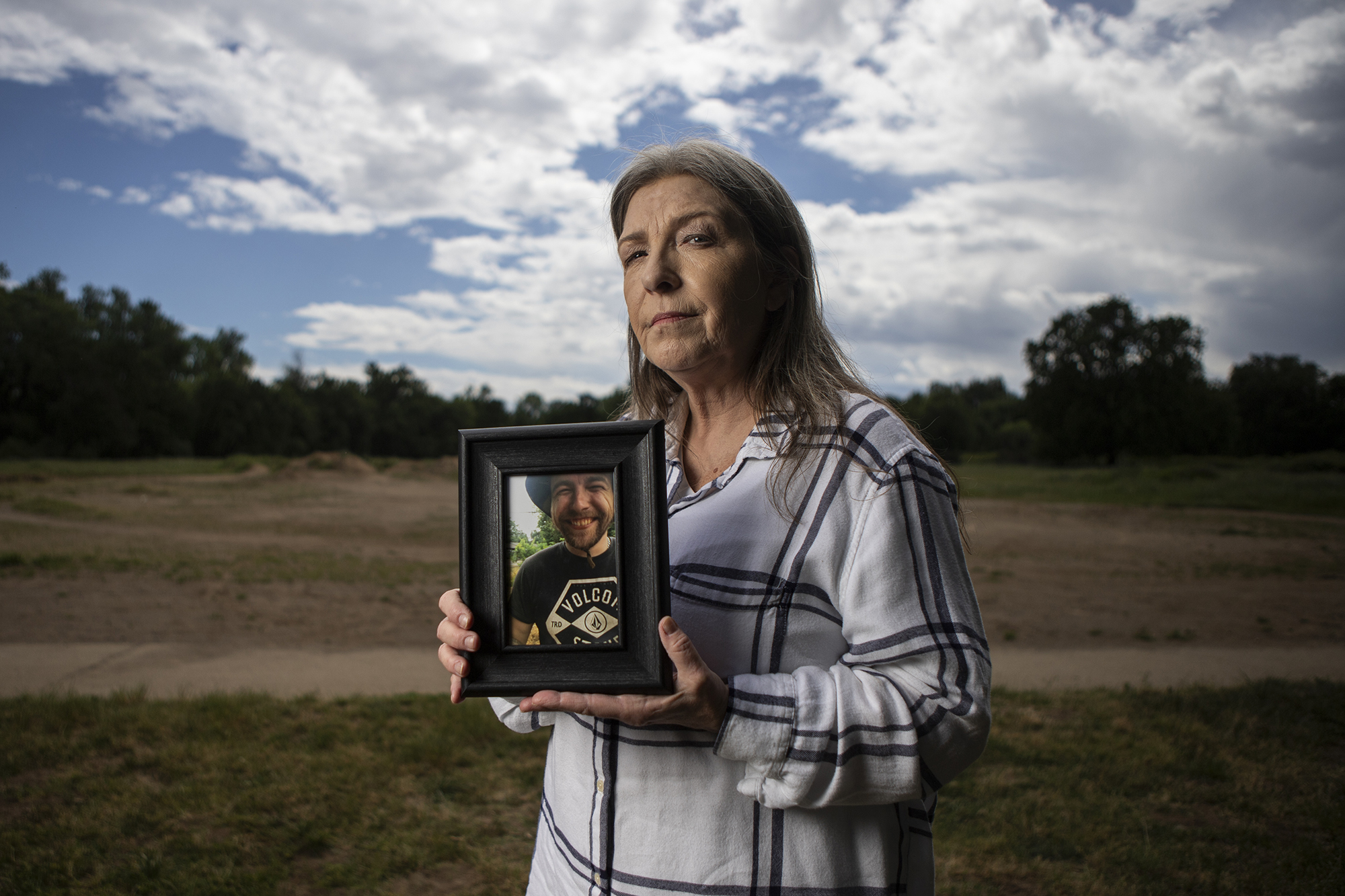
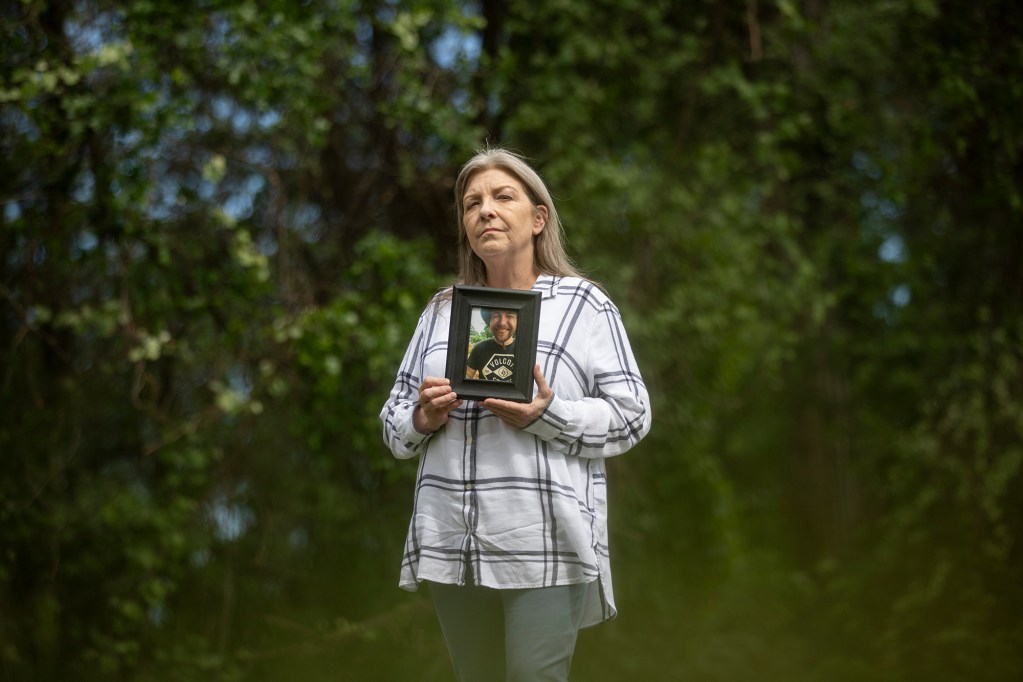
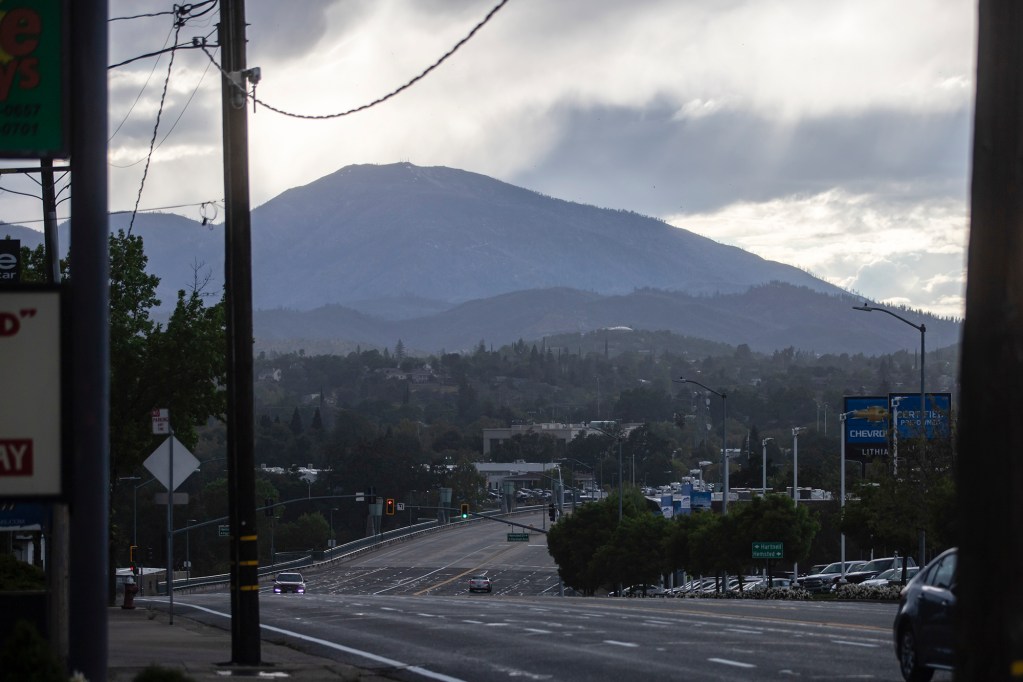
That happened with a Redding case that began on Christmas Day, 2022, when David Couch was taken to jail. Since then, Jeanelle Couch spent three and a half years trying to find out exactly what happened to her son.
By the time David Couch, 31, was released on Feb. 8, 2023, Jeanelle Couch said her son was experiencing a manic episode.
According to a lawsuit Jeanelle later filed, David was given the wrong medication for his bipolar disorder for his entire jail stay. He told her he had spent the majority of his time in solitary confinement, another allegation in the lawsuit.
“He was happy to see us and he asked if we remembered him,” she said about the day he went home. “When I got up the next morning to go to work, he talked to me for a long time and I said, ‘oh, honey, I’m so sorry, I got to go to work now.’
“And then I didn’t see him again alive.”
That afternoon, David sat in his car in his mother’s driveway in a small residential neighborhood in Redding.
At 5:25 p.m., the California Highway Patrol received a call of a driver southbound on Interstate 5 who was brandishing a gun. The make, model and plates matched David’s car.
Nine minutes later, California Highway Patrol officer Ryan Cates pulled into Couch’s driveway.
According to dashboard camera footage, Couch was sitting in his white Ford sedan with the driver’s side door open.
“Show me your hands!” Cates called out. “Put your hands up!”
Couch emerged in a brown hooded sweatshirt, khaki pants and a gray baseball cap, the dashcam footage shows. He was wearing a backpack and gripping his cell phone with both hands. Couch also had a pair of knives strapped to his jacket, according to a Justice Department investigation, but didn’t touch them. Couch took eight steps toward Cates, who had his gun in his right hand, pointed at Couch.
Their initial conversation is inaudible.
Cates raised his gun, holding it now with both hands. Couch came toward him. The dashboard camera was able to record more of their argument, which involved Couch saying to leave him alone, then calling Cate obscenities and saying “shoot.” A struggle ensued that was not visible on camera. At least twice, Couch called Cates a slur.
“Get on the ground,” Cates said. “I will shoot you right now.”
According to a Department of Justice report issued last week, Couch then got ahold of Cates’ Taser.
Couch continued to berate Cates, calling him a “dirty cop.” The two slid back into view, with Cates holding Couch against the hood of the car, Couch’s face bathed red in the patrol car’s dashboard lights. Cates attempted to put handcuffs on Couch, but Couch slipped to his right and out of view of the dashboard camera again.
“Give me a .45 (caliber handgun) and I’d f— you up!” Couch yelled at Cates.
Cates would later tell Justice Department investigators that he believed Couch was trying to take his handgun.
Then, there were several audible clicks. Couch taunted Cates, asking “it’s not working?” A second later, Cates fired four shots. The entire encounter lasted exactly one minute.
“I am uninjured,” Cates said into his police radio. “Suspect down, multiple gunshot wounds.”
Couch lived for nine days. He died on Feb. 17, 2023.
According to Couch’s sister, “David was shot so many times he was no longer recognizable.” In an online fundraising appeal for the family, the sister, Lauren Metzger, added that, “We can’t understand why this happened, but we do know he did not have a gun anywhere around his person when he was discovered laying in the street by my parents and his best friend.”
For the nine days David Couch survived, a five-agency team convened to investigate the shooting, led by the Redding Police Department. Then, when Couch died, the Department of Justice shooting investigation team took over, and the local team ended its inquiry.
More than three years have passed. Cates returned to work, according to the California Highway Patrol. His lawyer did not respond to messages from CalMatters.
Shasta County and the state of California have denied responsibility in the federal lawsuit filed by Couch’s family in the Eastern District of California. In its response, Shasta County said Cates is entitled to qualified immunity, which limits the civil liability of government officials, usually police officers.
The investigation from the Department of Justice took 1,199 days. It found “there is insufficient evidence to support a criminal prosecution of Officer Cates.”
Shorthanded from the start
Giving the state justice department more power to investigate law enforcement shootings was hailed as a big win for the police accountability movement when Newsom signed the law in 2020.
Former Assemblymember Kevin McCarty of Sacramento had proposed the legislation several times before. The fatal shooting of Stephon Clark by Sacramento police in 2018 lent momentum to McCarty’s effort – Clark’s family was outraged that Schubert, then the district attorney, didn’t press charges against officers in his killing.
George Floyd’s killing by a Minneapolis police officer in May 2020 emboldened a bipartisan push for police reform laws that ultimately carried McCarty’s bill through the Legislature and on to Newsom’s desk.
But within days of receiving their first case, the Justice Department’s shooting investigation teams knew they were undermanned.
“There were dozens of tasks and assignments that the … special agents could not accomplish because of limited staffing,” the department wrote in a budget request submitted to the Legislature in 2022.
Even before the shooting teams deployed, there were early warnings that the Justice Department might have bitten off more than it could chew.
The department asked for $26 million to pay for the new shooting investigation teams. The Legislature allotted half of that, about $13 million.
The allocation “is significantly lower than our estimates and not enough resources to stand up professional teams to perform these new investigative and prosecutorial duties,” former Attorney General Xavier Becerra wrote to McCarty in January 2021, six months before the law took effect.
The department originally wanted four investigative teams — one each in Sacramento, Fresno, Los Angeles and Riverside. Instead, it got two, one North and one South.
One year into the program, shooting investigations were already lagging behind Bonta’s self-imposed timeline of one year.
In response, at the time, Bonta said: “We got the funding that we got, and we’re going to make it work. We have no choice. We have to find a way.”
Investigations first stretched past one year, then two years, and in 2025, a case reached beyond three years.
The California Department of Justice did not make anyone available for an interview about its backlog of police shooting investigations. In a written statement, an unnamed spokesperson said Bonta personally reviews every investigation.
“All investigations are unique in their complexity, and some may take longer than others to investigate and reach a conclusion.” the statement read.
“We’re continuously identifying ways to tighten timelines and improve our processes. It’s a balancing act — but it’s one we’re actively managing. Improvements are already taking hold. In the last two and a half years, we closed 9 times as many cases as were closed in the first two and a half years that the law was operational, and we remain committed to improving.”
Police chiefs want faster investigations
Many law enforcement leaders are growing impatient.
“Police chiefs across the state have consistently raised concerns and advocated for a timelier process, yet progress has been minimal,” said Sean Thuilliez, president of the California Police Chiefs Association.“When transparency is not accompanied by timeliness, the system risks falling short for everyone—eroding confidence, deepening mistrust, and prolonging uncertainty.
Law enforcement and conservative prosecutors were, perhaps predictably, opposed to losing local shooting investigations to the state. But even prosecutors who were pursuing police accountability were nervous about removing locals from the process.
With the state in control, local citizens have less power to protest or pressure their local leaders.
“Local concern, local protests, local interest is felt by local prosecutors,” said Cristine Soto DeBerry, who created a unit investigating police officers at the San Francisco District Attorney’s Office, where she was chief of staff. She is now the executive director of the progressive advocacy group Prosecutors Alliance.
“The very real pain of family and community members that experience that absolutely has an impact on a prosecutor and their willingness to take this crime seriously.”
Jeanelle Couch said that even though the DOJ investigation is over, she’s still hopeful about the lawsuits her family filed against the state, the county and the officer who killed her son.
“I want light on it,” Couch said. “That’s what I want. Just, justice.”
What does justice look like to her?
She looked at the ground.
“Now? I don’t know.”
This article was originally published on CalMatters and was republished under the Creative Commons Attribution-NonCommercial-NoDerivatives license.