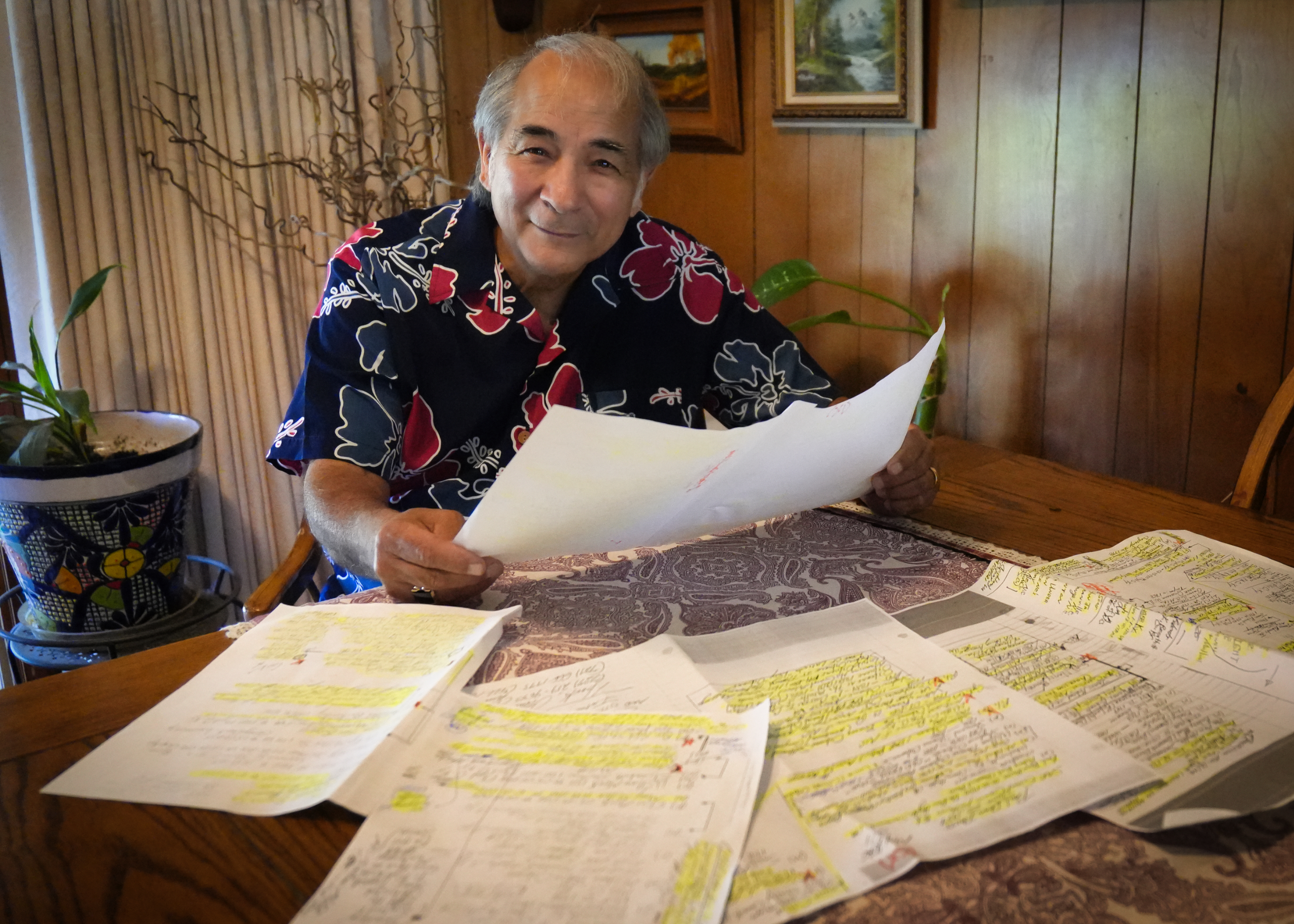
As America marks 250 years of independence, Paul Dean Davis traces sixteen direct ancestors who took up arms against the Crown — frontier fathers, sons, and cousins who built forts, buried their dead, and carried the new nation west.
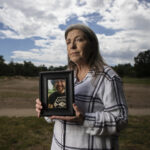
SISKIYOU COUNTY — Paul Dean (Damon) Davis doesn’t need a fireworks display to feel the 250th anniversary of American independence.
He feels it in sixteen names.
Sitting at his home in Siskiyou County, Davis can trace his bloodline through a dense thicket of Revolutionary War muster rolls, pension applications, and records of the Daughters of the American Revolution (DAR) — each name a link in a chain that stretches from the surrender at Yorktown to the Battle of Shallow Ford, from General George Washington’s headquarters to the frontier forts of Virginia and North Carolina.
“All of my great-grandfathers that fought in the American Revolutionary War were either from Virginia, Kentucky, or North Carolina,” says Davis, who was born June 22, 1954, in Del Paso Heights, Sacramento, and now makes his home in Siskiyou County. “And they didn’t just fight together. They moved together, married together, and built the frontier together.”
The migration tells the story: a 48-mile push from Wilkes County, North Carolina, to Grayson County, Virginia, then 167 miles into the mountains of Pike County, Kentucky. Davis calls it a “90-degree angle of travel.” Historians might call it the blueprint of the American backcountry.
“They are so closely knitted together,” Davis says of the families packed inside that geographic triangle. “Many of the first families married within each other’s families.”
That intermarriage created something remarkable. Where most Americans struggle to name a single Revolutionary ancestor, Davis can name sixteen direct ancestral grandfathers who took up arms against the Crown. The roster, as he has compiled it, reads like a cross-section of the war itself: Continental regulars and frontier militia, teenage couriers and fifty-something patriots, men who fought beside their sons and men who died beside them.
The Osborne Fort: A Family Affair
If Davis’s family tree has a geographic heart, it is Osborne’s Fort in the Grayson and Montgomery County area of Virginia.
There, Captain Enoch Osborne (1741–1818; DAR #A084416) commanded a frontier fortification that bore his family’s name. But the fort was not garrisoned by strangers — it was manned by kin. Enoch’s father, Private Ephraim Washington Osborne Sr. (1725–1794; DAR #A084430), served under his own son’s command, as did Enoch’s cousin, Private Stephen Osborne (1745–1824; DAR #A084557).
Sergeant Solomon “Indian Creek” Osborne (1765–1852; DAR #A205718), Enoch’s son, fought alongside his father at the fort. Solomon married Hannah Bolling, daughter of Private Benjamin Bolling (1736–1834), who served in the North Carolina Militia in Granville County under Captain William Easton, marching in March 1776 — one more thread binding the families inside Davis’s migration triangle.
“These weren’t just neighbors,” Davis notes. “They were fathers, sons, and cousins, holding the line on the edge of the frontier.”
From Yorktown to the Waxhaws
Among the sixteen names, some stand out for their proximity to famous events.
Colonel Peregrine Fitzhugh (1759–1811), a relative through the Gray-Fitzhugh line, served as aide-de-camp to General George Washington during the final two years of the war, including the Yorktown campaign of 1781. A lieutenant and later captain in the 3rd Regiment of Dragoons, Virginia Continental Line, Fitzhugh had previously been captured at the Baylor Massacre at Old Tappan, New Jersey, and held as a prisoner of war for two years before Washington negotiated his exchange. On Washington’s staff he communicated orders and managed correspondence.
Another ancestor, Private Joseph Bourney (also spelled Boney or Bouney; 1754–1826; DAR #A200427), born in France, joined Colonel Abraham Buford’s forces and was severely wounded in the head and ankle by a British cavalry sword during the Battle of the Waxhaws in South Carolina in May 1780 — the engagement infamous for “Tarleton’s Quarter,” where British dragoons under Banastre Tarleton cut down surrendering American troops.
Private Ambrose Mullins Sr. (1751–1838; NSSAR #P-34139), Bourney’s father-in-law, served in the 2nd Virginia Regiment under Colonel Christian Febiger. He fought at Stony Point, New York — the daring July 1779 night assault led by General “Mad Anthony” Wayne, where Colonel Febiger received the surrender of the British garrison — and later marched toward Charleston, South Carolina, though illness and the city’s fall to the British interrupted his campaign.
Family tradition within the Mullins–Thompson line holds that Nancy Jackson Thompson, wife of Patriot Ambrose Mullins Sr. and mother of Hannah who married Joseph Boney, was a cousin of future President Andrew Jackson through her mother, Margaret Jackson. The young Andrew Jackson himself served as a courier and auxiliary in the same South Carolina backcountry during the Revolution. At around age 13–14 he was captured by the British; when he refused an officer’s order to clean his boots, he was struck with a sword, leaving scars on his face and hand that he carried for life. He is recognized as the last U.S. President to have direct experience in the Revolutionary War. (Siskiyou News has not independently verified the Jackson kinship; it is offered here as family tradition.)
The Battle of Shallow Ford
Not all of Davis’s ancestors survived the war.
Captain Henry Francis (1734–1780; DAR #A041577) of Montgomery County, Virginia, was killed in action on October 14, 1780, at the Battle of Shallow Ford on the Yadkin River in North Carolina. The detail is more than family lore: historical accounts of the battle — in which roughly 300 Patriot militia routed a larger Loyalist force near present-day Huntsville — record that the lone Patriot killed that day was Captain Henry Francis of Virginia. Some accounts list him among the company captains who had marched south for the Kings Mountain campaign and were redirected to Surry County.
According to family history, Francis was 46 years old and shot through the head, and one of his two sons — also in the battle — killed the British soldier instantly. His son, Private John Francis (1760–1829), survived the war and is listed in DAR records, carrying on the family line.
The Oath-Takers, Drummers, and Militiamen
The list includes more than battlefield casualties and officers.
Reverend Ralph Stafford, born in England in 1757, took the Oath of Allegiance in Cumberland, Pennsylvania, on June 19, 1778, and fought at Yorktown. He died in Montgomery County, Virginia, from injuries sustained in that final siege.
Private John Damron (1757–1836; DAR #A029442) served as a drummer in the 9th Virginia Regiment in 1776 — a reminder that the Continental Army needed musicians to relay commands across smoky battlefields. Private Edward “Neddie” Burgess (1744–1835) of Kentucky fought at Camden, Ramsour’s Mill, and Clapp’s Mill in North Carolina, serving under Colonel Abraham Buford.
Private John Miller Jr. (1754–1784) is recorded for his Revolutionary service under Captain Harmon Critz Jr. in Henry County, Virginia, as documented in John H. Gwathmey’s standard reference, Virginians in the Revolution. Private Cornelius “Neal” A. Roberts (1749–1788) rode with the frontier militia of the Elk Creek District in Montgomery County, Virginia, under Captain Charles Morgan.
Jeremiah Patrick (1738–1825; DAR #A088680) took the Oath of Allegiance at age 39. John Hash Sr. (1724–1784), father-in-law to Captain Enoch Osborne, took his oath in 1777 in Grayson County and served at Osborne’s Fort.
The Hash line direct from John Phelps reaches further back still: by Davis’s research, John Phelps 1705-1772 the father of Hannah ( Phelps) Bolling the wife of Benjamin Bolling that served in the Virginia House of Burgesses, along with Peter Jefferson and Augustine Washington. — the colonial predecessor of the Virginia General Assembly, frequently described as the oldest continuously operating legislative body in the Western Hemisphere.
Rounding out the line are Private Noah Mollett, born in England in 1750; David Gower Branham (1746–1825), who served in Captain Jonathan Isom’s militia company in Montgomery County; and Isaac Little (1758–1824), of that same company, whose daughter Elizabeth married into the Branham family.
The Great-Uncles
Beyond the sixteen direct ancestors, Davis’s tree includes great-uncles and cousins who also served.
Private Jonathan Osborne (1753–1834) and Private James (Robert) Osborne (1745–1818) both served under their brother, Captain Enoch Osborne. Private Samuel Howard (DAR #A058124) married into the Osborne line and served in the Virginia Continental Line, including service associated with Valley Forge and Yorktown.
A note on family tradition: Howard’s name has long been linked in family lore to the Overmountain Men, but the historical record identifies him as a private in the Virginia Line. The Overmountain Men who won the Battle of Kings Mountain on October 7, 1780, were led by Colonels William Campbell, Isaac Shelby, John Sevier, Joseph McDowell, and Benjamin Cleveland, with Campbell elected as overall commander.
General Samuel Benton Jr. 1758- 1810 was the son of Samuel Benton 1720-1770, who happens to be the father of Mary Ellen Polly Benton who married Cornelius Neal A Roberts. Both Samuel Benton and Cornelius Neal A. Roberts fought in the American Rev. War, as well of General Samuel Benton Jr..
Through the Fitzhugh connection, Davis also traces lineage to Colonel William Fitzhugh of Marmion (1725–1791) and Captain John Fitzhugh, officers in the Virginia militia. The Fitzhugh family, along with the Randolph and Isham lines, represents some of the most established colonial families in Virginia.
The Numbers Tell a Story
Davis has compiled more than just names. He has compiled a portrait of who these men were when they went to war. Of the sixteen direct ancestral grandfathers, the ages at which they joined break down as follows:
- Teens: 2
- 20s: 6
- 30s: 5
- 40s: 2
- 50s: 1
The majority were young men in their twenties, leaving farms and new wives to fight. And they married young, too. Davis’s grandmothers in this line were wed at ages ranging from 13 to 25, with many in their mid-teens — reflecting the harsh demographics of the frontier, where life was short and households needed to be established early.
A Living Legacy

carrying those names.”
For Davis, the 250th anniversary of the Declaration of Independence is not an abstraction. It is a family reunion across centuries and continents.
“These men moved from North Carolina into Virginia, then into Kentucky,” he says, tracing that 90-degree angle on a map. “And somehow, 250 years later, I am in California, carrying those names.”
As communities across Siskiyou County prepare to mark the nation’s semiquincentennial, Davis’s research offers a reminder that the Revolution was not fought only by famous names in Boston or Philadelphia. It was fought by frontier families — Osbornes and Bollings, Francises and Fitzhughs, Mullinses and Damrons — who built forts, buried their dead, and then kept moving west, carrying the new nation with them.
SIDEBAR — The Maxwell Settlement: From Slavery to the Civil War
How one Revolutionary War officer’s New York estate gave rise to a community of freedmen who fought for the Union
Colonel Peregrine Fitzhugh’s legacy did not end with the Revolutionary War.
After serving as General George Washington’s aide-de-camp during the final two years of the conflict, Fitzhugh returned to Maryland before relocating to the Sodus Bay area on Lake Ontario in western New York. In 1803 he moved his family and roughly thirty enslaved men, women, and children to the frontier settlement on the lake’s south shore.
Fitzhugh died in 1811. In the years that followed, a free Black community took root on land west of the bay — a settlement that appears on early maps as the “Colored Settlement” and is remembered today as the Maxwell Settlement. The story of how its first families gained their freedom is more complicated than a single act of manumission: some were freed through Fitzhugh’s estate, some purchased land of their own, and some, the historical record shows, sought their freedom on their own terms. Early landowners such as David Cooper and Abraham Bradington — both formerly enslaved by Fitzhugh — worked the land, raised families, and anchored a community that grew across some sixty acres but never numbered more than about a hundred residents.
That community’s legacy reached the Civil War. Fifteen young men with ties to the Maxwell Settlement enlisted in the United States Colored Troops (USCT) and fought for the Union; some, like William Dorsey, never returned home.
Much of Fitzhugh’s personal Revolutionary War memorabilia was lost in 1846, when a fire destroyed the Sodus Point home of his widow, Elizabeth Chew Fitzhugh. The blaze consumed his sword, his uniform, and signed letters from General Washington. Surviving correspondence and the settlement’s history are preserved today by the Historic Sodus Point historical society, keeping the thread between Washington’s staff and the Maxwell Settlement part of the public record.
For Davis, the Fitzhugh line connects his family’s Revolutionary heritage to a broader, more complex American story — one that stretches from Washington’s war tent to the emancipated communities of the North, and from the 18th century to the Civil War and beyond.
Editor’s Note: Revolutionary War service records, DAR and NSSAR patriot numbers, and the family migration triangle cited in this article are drawn from genealogical research compiled by Paul Dean Damron Davis. Where this article states established historical facts — battle dates and locations, unit commanders, the documented record of Colonel Peregrine Fitzhugh, and the Revolutionary boyhood of Andrew Jackson — those details have been independently checked against published historical sources. The claimed family kinship to Andrew Jackson has not been independently verified and is presented as family tradition. Readers interested in tracing their own Revolutionary ancestry can consult the National Archives, the DAR Genealogical Research System, and the NSSAR Patriot Index. Readers with their own Revolutionary War ancestry or family stories tied to America’s founding are encouraged to reach out to Siskiyou News; the paper welcomes submissions for future features as we approach July 4, 2026.