In the rugged landscape of the Klamath Basin, a tale of human arrogance unfolds in the ebb and flow of salmon populations. For decades, we’ve wielded our engineering might to bend rivers to our will, convinced of our superiority over natural processes. Yet, the cold, hard numbers of fish counts tell a different storyโone that challenges our assumptions and exposes the folly of our hubris.
Let’s look at the data:
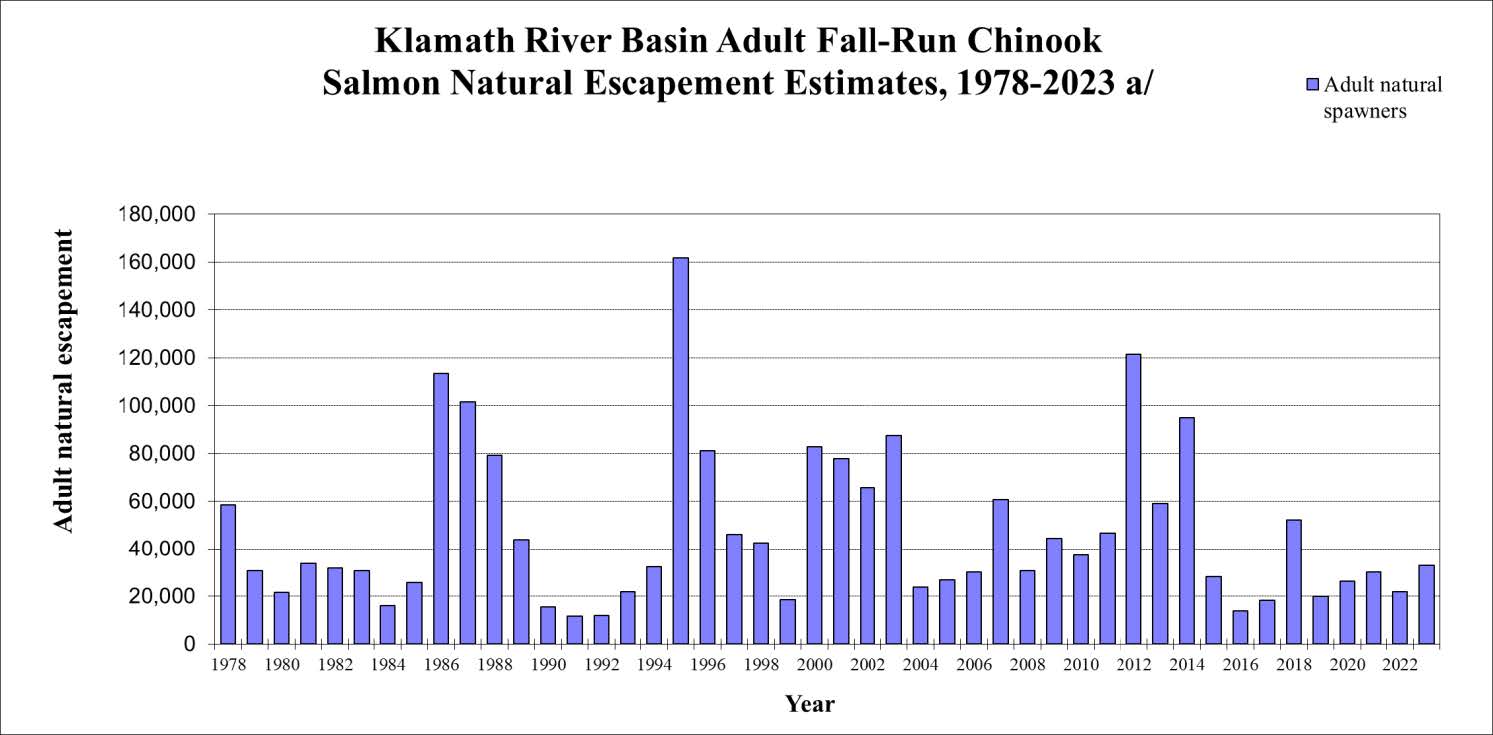
- The Salmon River, left largely untouched by human hands, has maintained a relatively stable salmon population. From 1978 to 2023, its adult salmon numbers have generally ranged between 1,000 and 5,000 fish annually.
- In stark contrast, the Shasta River, heavily managed for agriculture, has seen wild swings in its salmon population. In 2011, it bottomed out at a mere 213 fish, only to explode to 27,600 the very next year.
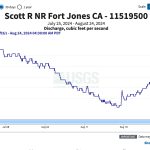
- The Scott River tells a similar tale of instability, with its population plummeting to 445 fish in 2004.
These numbers paint a clear picture: our attempts to “improve” upon nature have resulted in chaos and instability. We’ve replaced the steady rhythm of natural cycles with a erratic dance of boom and bust.
The hubris of our approach is staggering. We’ve carved up rivers with dams, diverted water for crops, and reshaped entire ecosystems, all under the misguided belief that we know better than millions of years of evolution. We’ve acted as if rivers are simple systems that can be tweaked and adjusted like machinery, ignoring their complex interconnections with land, air, and ocean.
Our management of the Shasta and Scott Rivers epitomizes this arrogance. We’ve treated these waterways as mere conduits for agricultural production, disregarding their role as living systems. The result? Salmon populations that whipsaw between near-extinction and unsustainable abundance, a far cry from the natural balance maintained in the less-tampered-with Salmon River.
But the folly doesn’t stop at the riverbank. Our mismanagement of these rivers ripples through the entire ecosystem and economy of the Klamath Basin. Indigenous communities, who have lived in harmony with these rivers for millennia, watch as their cultural and sustenance practices are threatened. Commercial fishing industries boom and bust along with the salmon populations, creating economic instability.
Perhaps most telling is our response to the problems we’ve created. Instead of stepping back and allowing natural processes to reassert themselves, we double down on our interventions. Fish hatcheries, artificial spawning grounds, and ever-more-complex water management schemes are presented as solutions, further entrenching us in a cycle of intervention and unintended consequences.
The Salmon River stands as a rebuke to this approach. Its relative stability is not the result of careful human management, but of our absence. It’s a reminder that nature, left to its own devices, is fully capable of maintaining balance and abundance.
As climate change introduces new variables into this already complex equation, our hubris becomes even more dangerous. We cling to the illusion of control even as global forces reshape the very foundations of our environment.
The lesson from the Klamath Basin is clear: it’s time to embrace humility. We must recognize that our understanding of natural systems is limited and that our interventions often do more harm than good. This doesn’t mean abandoning all management efforts, but rather approaching them with a deep respect for natural processes and a willingness to let nature lead the way.
In the end, the fish counts of the Klamath Basin do more than tell us about the health of salmon populations. They tell us about ourselves, our relationship with the natural world, and the urgent need to reassess our role as stewards rather than masters of our environment. It’s a lesson in humility that we ignore at our perilโand at the peril of the ecosystems we claim to manage.
- CALFIRE SISKIYOU UNIT HAND CREW SELECTED FOR BLUE RIBBON AWARD
- 10th DAA selects Kenny Elwood for 2026 Golden Pass
- FICTITIOUS BUSINESS NAME STATEMENT: Carson’s Window Coverings & More
- Traffic Stop in Siskiyou County Leads to $1.9 Million Cocaine Seizure, Driver Arrested
- F-35A Lightning II Jets from Luke AFB Arrive for Two-Week Training at Kingsley Field