Home / Siskiyou News / More Novel Genres – John Sammon

More Novel Genres – John Sammon

By John Sammon

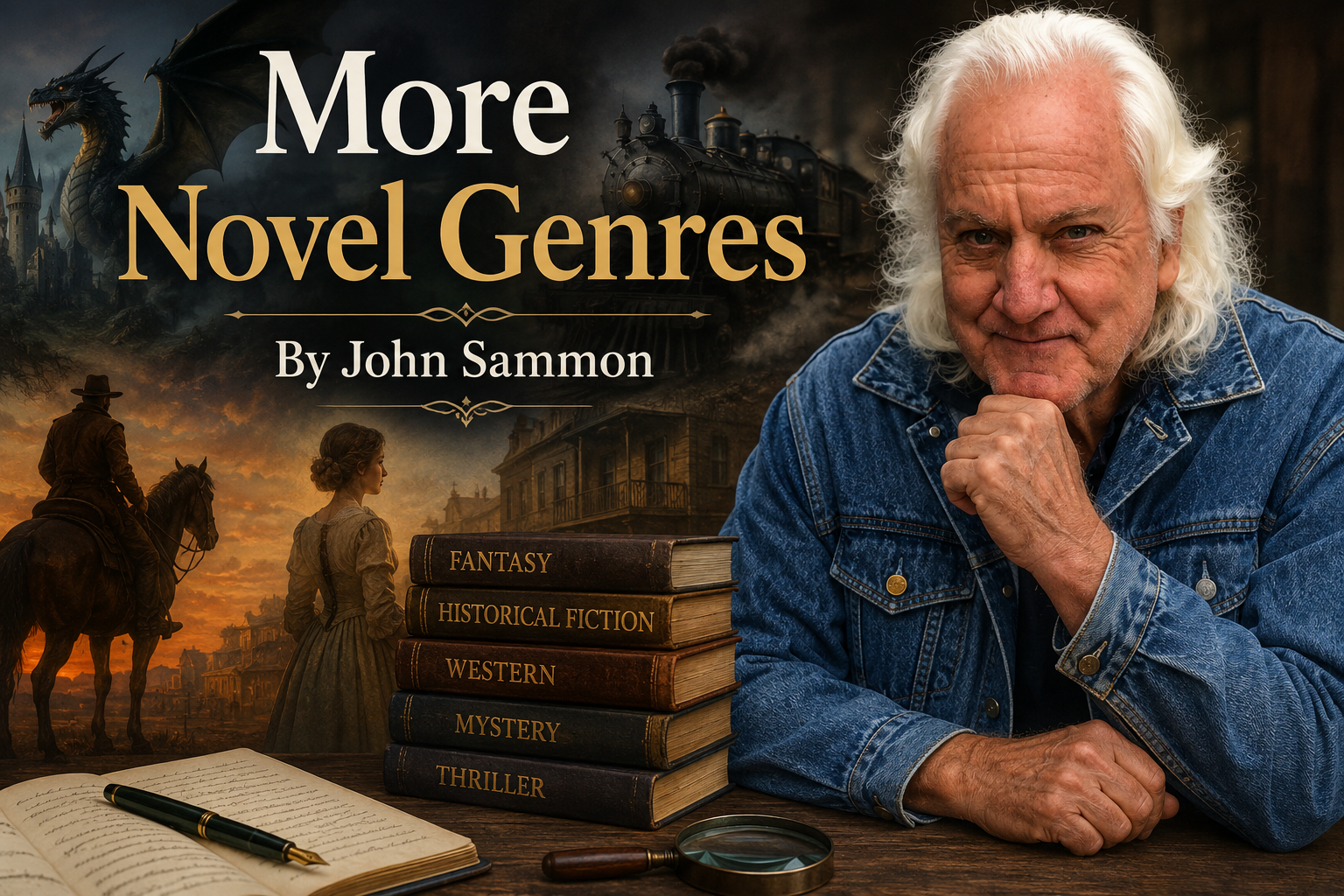
Last week we talked about picking a genre to write a novel and I listed them to include science fiction, fantasy, romance, mystery, thriller, literary fiction, monster, horror, historical fiction and westerns.

I recommended that if youโ€™re going to write a novel itโ€™s probably a good idea to select a genre that is the type of book you like to read, because youโ€™ll be familiar with the style and subject matter of such a book.

However, if you want to try a genre that youโ€™re not familiar with you can study the work of other (successful) authors in a genre to see how and what they write about.

The fantasy novel allows you greater leeway in thinking up wildly imaginative scenarios because it portrays impossible mythological happenings, and beings such as elves, fairies and dragons. In a fantasy novel virtually anything goes. You can let your imagination run free.

It is perhaps the most fictional of all fiction novels.

Nevertheless, you must still have characters who act believably and who the reader wants to see succeed (the hero defeats the dragon and the villain).

Because women make up a majority (80 percent) of novel readers, they also are a large segment of the fantasy novel audience.

If fantasy is probably the most made up fictional type of novel, historical fiction is the most restrictive. Historical fiction requires fact checking and research to portray an event or time period realistically. Authors need to accurately portray living and social conditions, what people wore in a time period, what they ate, how they lived; the architecture at the time, tools used and more.

Historical fiction is usually considered to be anything that happened at least 50 years ago.

The fiction part comes when the author invents (makes up) the dialog spoken between the characters and how they react to each other against a background setting that is historically accurate. Figures who are well known in the history book should be portrayed as close as possible to what is factually known about them.

If a character in a historical event is obscure (not documented), or so far back in ancient history that little is known about them, the author can get away with more, making up stuff about them.

The western novel is similar. The western must historically be accurate.

The majority of readers for a western novel in the past have been men in their 50โ€™s, although women authors have increased in recent years as well as authors of African American descent—-a welcome development since African Americans played a significant role in western history, not often portrayed in movies and books of the past.    

Readers of westerns tend to be drawn to stories of rugged independence and survival in a simpler world, where courage and righteousness are extolled, similar to stories about knights of the Middle Ages. 

The western is perhaps the most American of all genres, because of the historical importance of westward expansion in the United States and its role in shaping the American ethos.

The western is unique in that authors of this genre often live in western locales that would appeal to fans for example, Longmont, Colorado (and not New York City). The western author sometimes poses for a photo on a book cover wearing a cowboy hat or mounted on a horse.

The purpose of a thriller novel is to keep the reader on edge, even more so than a mystery or monster-horror novel. This type of fiction has formidable fast-moving obstacles, high danger (to the hero), relentless tension and life-or-death choices. Surprise (plot twists) and resulting shock are key elements here, and the villain must be a dangerous adversary, or the obstacle to be overcome requiring a supreme effort.

A continuous ramping up of tension and action keeps the reader (ideally) turning pages to find out what happens next.

Different genres have different techniques.

But for you the author they all share one all-important goal. You must find a way to make the reader care about your main character and what happens to him or her.         


Tagged:

Leave a Reply

Your email address will not be published. Required fields are marked *