
Home / Siskiyou News / KLAMATH WATER USERS ASSOCIATION REACTS TO NEW COURT DECISION ON THE ENDANGERED SPECIES ACT

KLAMATH WATER USERS ASSOCIATION REACTS TO NEW COURT DECISION ON THE ENDANGERED SPECIES ACT

Klamath Water Users Association (KWUA) is disappointed in a decision issued today by the United States Court of Appeals that affects water users who rely on the Klamath Project for irrigation water.

In a 2-1 ruling, the court found that the U.S. Bureau of Reclamation (Reclamation) has discretion to curtail water deliveries to protect species that are listed as threatened or endangered under the Endangered Species Act (ESA).

KWUA had argued, based on recent legal precedent, that longstanding contracts โ€“ some over 100 years old – do not trigger section 7 of the ESA, which requires federal agencies to exercise discretionary actions in a manner that does not jeopardize species populations. KWUA contended that water deliveries under Klamath Project contracts are nondiscretionary actions.

โ€œWe are still reviewing the decision, but we are of course disappointed with the outcome and what it means for our family farmers and ranchers, our communities, and the ecosystem of our watershed that depends on a functioning Klamath Project and Klamath Basin,โ€ said KWUA Executive Director Elizabeth Nielsen.

In an extensive dissenting opinion, Judge Ryan Nelson states the majorityโ€™s ruling โ€œfails to reckon with Supreme Court and circuit precedent.โ€

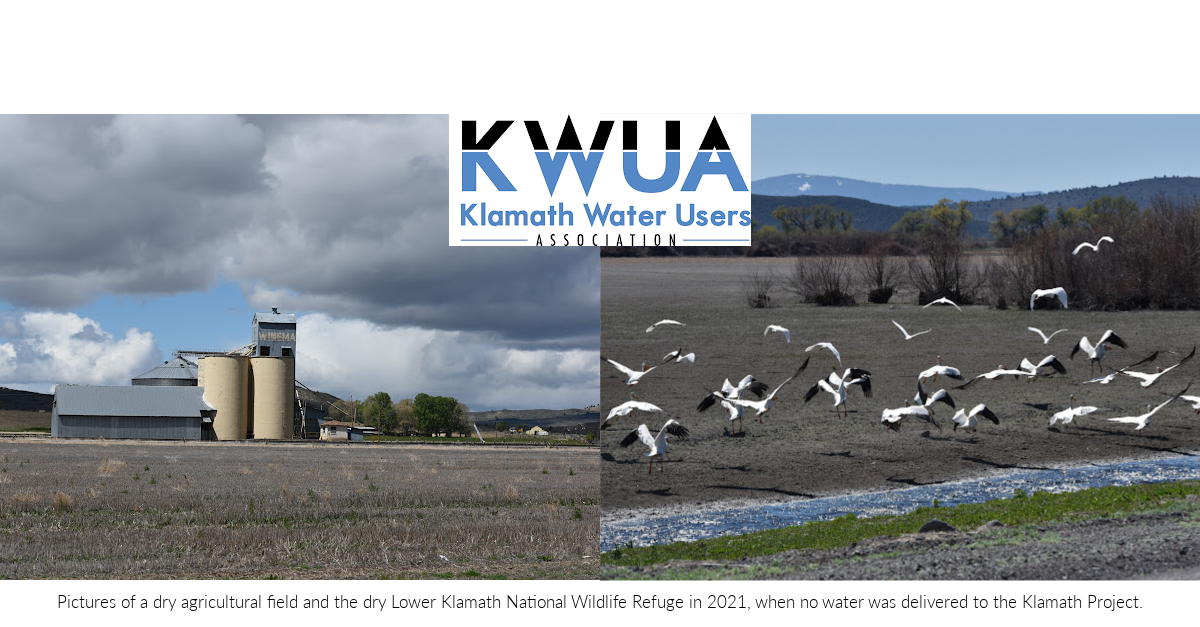
Mrs. Nielsen stated that KWUA will evaluate its options carefully, including whether to seek further judicial review as it continues to advocate for Basin farmers and ranchers. “Regardless of the final legal outcome, the current application of the ESA in the Klamath Basin has failed to recover species, decimated wildlife refuges and harmed agricultural communities. We all deserve better.”

The name of the case is Yurok Tribe v. U.S. Bureau of Reclamation, case No. 23-15499. Along with KWUA, Klamath Irrigation District is a party to this case and representing interests of irrigators in the Klamath Project.


Leave a Reply

Your email address will not be published. Required fields are marked *