Home / Siskiyou News / Sacramento / The Golden State Gag Order: How California’s Political Machine Learned to Love Censorship

The Golden State Gag Order: How California’s Political Machine Learned to Love Censorship

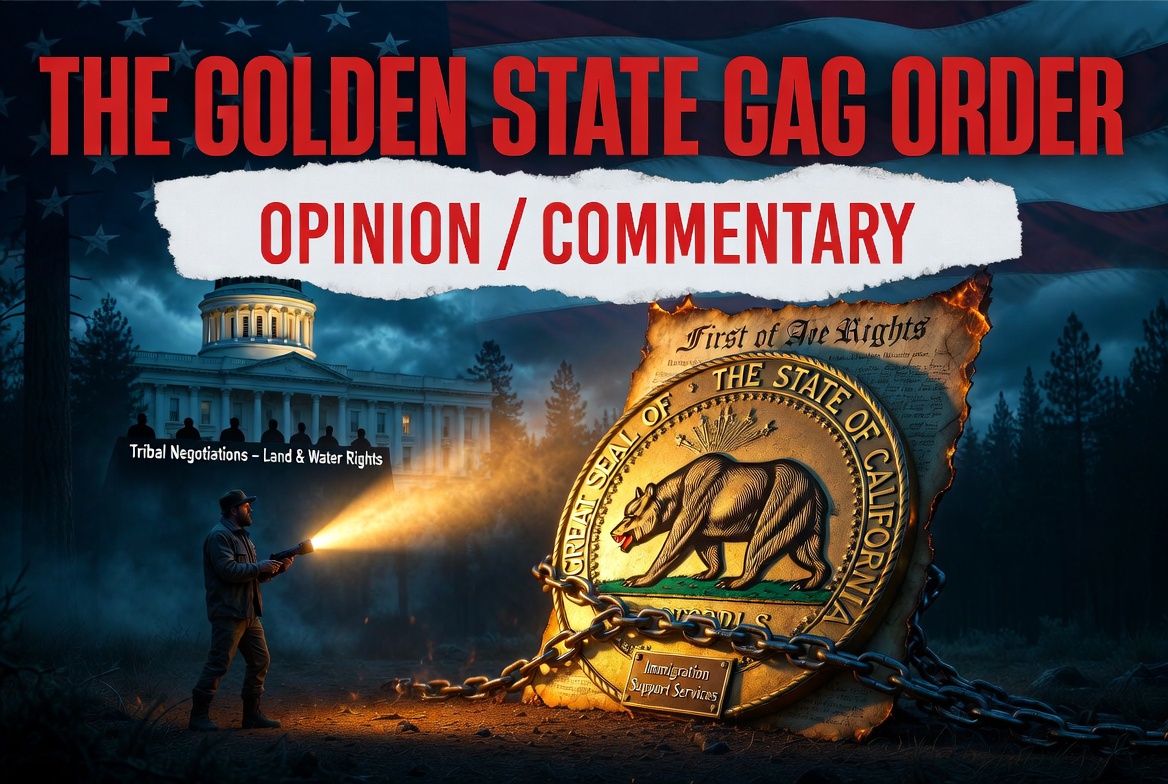
OPINION / COMMENTARY

SACRAMENTO — While Governor Gavin Newsom perfects his presidential posture in the mirror, his legislative allies are constructing a censorship machine in the Capitol basement that would make a banana republic blush. Assembly Bill 2624—euphemistically titled “Privacy for Immigration Support Services Providers”—isn’t a shield for the vulnerable. It’s a sword for the venal, wielded against the only constituency that can’t afford lobbyists: honest journalists.

This is the “Stop Nick Shirley Act” in drag, and as of April 2026 it continues advancing through the Legislature with enabling from Democrats who’ve mistaken investigative reporting for terrorism.

Here’s the mechanism of your muzzle: The bill creates a new protected class of “designated immigration support services providers” and outfits them with a Secretary of State-sanctioned confidentiality program. Sounds compassionate—until you read the criminal penalties. Publish a name, a workplace photo, or employment history of a nonprofit director you suspect of double-dipping federal grants? That’s now a wobbler—up to $10,000 and a year in county jail if the prosecutor decides your intent was to “incite harm.” If someone acts violently after reading your exposé, you’re staring at a $50,000 felony and state prison.

The intent standard? “Objectively reasonable fear.” That’s not a legal threshold—it’s a creative writing prompt for ambitious district attorneys.

This isn’t new. California already uses the exact same framework to shield health-care providers, and the “protected class” model is spreading through address confidentiality programs and vague anti-harassment statutes that chill scrutiny of government-funded operations. AB 2624 just adds another layer to the machine.

The Complacency of the Crown

Newsom won’t veto this. He’ll sign it with a fountain pen and a furrowed brow, mouthing platitudes about “protecting our immigrant communities” while his donors’ favorite nonprofits get legal immunity from scrutiny.

This is the same governor who built his career on “transparency” and “California values”—values that apparently include shielding fraudsters from rural papers with the audacity to ask tough questions.

The message is clear: In California, investigating the wrong kind of corruption—specifically the kind that flows through nonprofit industrial complexes with politically connected boards—is now legally hazardous. The governor isn’t protecting migrants; he’s protecting the machine that harvests their misery for grant money and photo ops.

The Rural Reckoning

Out here in Siskiyou County, we don’t have the Los Angeles Times legal team or the San Francisco Chronicle war chest. When we exposed the embezzling fire chief, or possibly corrupt mayor, and the reservation health scandal, we did it with courthouse records, leaked documents, and the stubborn conviction that sunlight disinfects.

Yet even basic access is under attack. Publisher and reporter J.A. Martin has repeatedly been ordered to leave public meetings of the California Department of Natural Resources and Water Boards while they negotiate with tribes—handing over land, water rights, and influence under the banner of “returning tribal lands.” The reason given? He “makes them feel uncomfortable.”

In my opinion, these closed-door sessions further an agenda that seeks to run rural America back to a distant, top-down model reminiscent of old England rather than the self-governing communities we built here.

Now the Capitol wants to make that sunlight a criminal act.

AB 2624’s definitions are designed for expansion. Today it’s “immigration support services”—tomorrow it’s “climate equity facilitators,” “harm reduction specialists,” or any other state-funded sinecure where the politically connected park their cousins.

The infrastructure is the point: Once California has a functioning censorship bureaucracy protecting “sensitive” government contractors and negotiators, the protected list grows like kudzu.

And when the nonprofit director—or the tribal negotiator—you’re investigating applies for confidentiality status—claiming your FOIA requests or mere presence constitutes “harassment”—you’ll be the criminal, not them.

A Calling Beyond Their Complicity

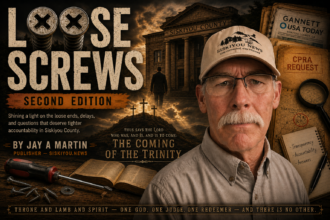
J.A.Martin
publisher of Siskiyou News

They think fear will work. They think the threat of felony charges and bankruptcy will send us back to covering bake sales and high school sports. They don’t understand the species.

Journalism isn’t a career choice in places like Siskiyou County—it’s a calling, one that predates the California Legislature and will outlast its cowardice. When God gives you a story about theft from the vulnerable, you don’t ask Gavin Newsom for permission to publish it. You publish it, and you let the Almighty sort out the legal fees.

But make no mistake: This bill is an act of legislative violence against the First Amendment. It weaponizes the vague threat of “harassment” to criminalize accountability. It empowers the governor’s friends to operate in darkness—whether they’re shielding nonprofits or quietly carving up rural land and water rights—while rural reporters risk prison for turning on the light.

Newsom may sign it. The courts may eventually strike it down. But between signature and striking, real stories will go untold, real fraud will continue, and real people will suffer—while the governor tests his smile for the Iowa caucuses.

We’re going to publish anyway. The victims deserve it. The patients deserve it. The families watching their land and water rights negotiated away in closed rooms deserve it. And the God who called us to this work demands it.

Let them bring their $50,000 fines and their felony statutes. We’ve got the truth, the courthouse records, and a First Amendment that predates their corruption.

That’ll have to be enough.
Because in California, the light is now illegal—but we’re shining it anyway.


Leave a Reply

Your email address will not be published. Required fields are marked *