Home / Siskiyou News / Federal Report Could Force Even Deeper Water Cuts on Siskiyou Farms & Ranches

Federal Report Could Force Even Deeper Water Cuts on Siskiyou Farms & Ranches

Federal Report Could Force Even Deeper Water Cuts on Siskiyou Farms & Ranches

YREKA, Calif. โ€” Imagine relying on a river for your livelihood, only to have distant government decisions dry it up year after year. That’s the reality for farmers in Siskiyou County, northern California, where water wars have raged for decades. Now, a new federal report could make things worse.

Released November 10, 2025, by the National Academies of Sciences, Engineering, and Medicine (NASEM), the 360-page document reviews the science behind two massive water systems: the federal Central Valley Project (CVP) and California’s State Water Project (SWP). These projects pump water from rivers like the Sacramento and Trinity to supply farms and cities in the drier Central and Southern parts of the state. The report calls key models for managing water temperatures and flows “too coarse” and “inadequate,” with “outdated climate inputs” failing to protect endangered fish under the Endangered Species Act (ESA). It urges fixes like better sensors and data to ensure species like salmon and Delta smelt survive.

For Siskiyou County, the trouble lies upstream. About 40% of Shasta Reservoir’s cold waterโ€”vital for downstream fishโ€”comes from local snowmelt. The CVP’s Trinity River Division diverts up to 25% of the Trinity River’s flow (part of the Klamath Basin) into Shasta, leaving less for northern users. The report’s push for stronger protections, including for green sturgeon that spawn in the Klamath, could mean more water stays in the Trinity and Klamath rivers, cutting supplies for Siskiyou’s Scott and Shasta Valleys.

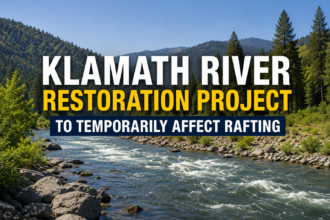
This builds on long-standing Klamath Basin conflicts, a vast watershed crossing Oregon and California borders. Since 1905, the federal Klamath Project has irrigated farms with dams and canals, but it blocked salmon runs and harmed sacred fish for tribes like the Klamath, Yurok, and Karuk. In 2001, the U.S. Bureau of Reclamation (USBR) halted water to farmers to save endangered suckers, sparking protests. Allocations hit zero in 2022 during droughts, costing over $34 million in farm losses regionally. Four dams were removed by 2024 to restore flows, aiding salmon, but debates rage on. In 2025, wetter weather allowed full deliveries for the first time since 2017, but tribes opposed extra water for irrigators, fearing harm to lake-dwelling suckers.

Siskiyou’s $232 million agriculture economyโ€”mostly pasture, alfalfa, and berries on 97,000 irrigated acresโ€”hangs in the balance. A 10-15% cut from report-driven changes could mean $12-17 million direct losses, up to $46 million including jobs and taxes.

Local voices paint a vivid picture. “We’ve seen this beforeโ€”models get ‘fixed,’ and northern ranches pay the price,” said Ryan Walker, president of the Siskiyou County Farm Bureau. “We canโ€™t fallow cows. We canโ€™t let our cows go dry and hope theyโ€™ll come back next year.”

Jim Morris, a farmer at Bryan-Morris Ranch, described the aftermath of voluntarily cutting water use during past state drought rules to protect salmon: โ€œIโ€™m still working on cleaning up the messes that I made through that processโ€”like weed-choked fields that didn’t recover as hoped. If we have to cut back on water, we will. But this is the price we pay.โ€ He added, โ€œAg is not like having an 8-to-5 jobโ€ฆ You need to make money when you can, because the next year, you wonโ€™t.โ€

Pamela Tozier Hayden, a Scott Valley rancher, urged collaboration: โ€œI would like to see us work together for reasonable solutions and local people not be pitted against one another by outside powers.โ€

District 4 Supervisor Nancy Ogren, a rancher herself, was direct: “Our communities can’t keep subsidizing downstream demands while our rivers run dry.”

Environmental groups are using the report for lawsuits, possibly forcing USBR updates by 2027. With climate change shrinking snowpack up to 80%, Siskiyou faces more “man-made droughts.” County leaders demand input in fixes, stressing that without fair changes, rural ways of life could vanish.

quotes from calmatters contributed to this article.

the report โคต๏ธŽ


Leave a Reply

Your email address will not be published. Required fields are marked *