
Virtual meeting set for April 9; written comments due April 20
The State Water Resources Control Board is asking for public input on a draft range of baseline minimum flows for the Shasta River watershed, as the agency moves forward with scientific and economic studies that could shape long-term water management in Siskiyou County.
The notice, dated March 13, 2026, follows a resolution the board adopted in October 2024 directing staff to develop the scientific basis for establishing long-term minimum instream flows in both the Shasta and Scott river watersheds.
Board staff emphasized that the draft flow ranges are not regulatory mandates. The scientific reports and economic analysis are informational documents and do not independently establish flows, according to the notice. Rather, the documents will provide technical analysis that could inform voluntary or regulatory actions in the future.
What the Draft Flows Would Cover
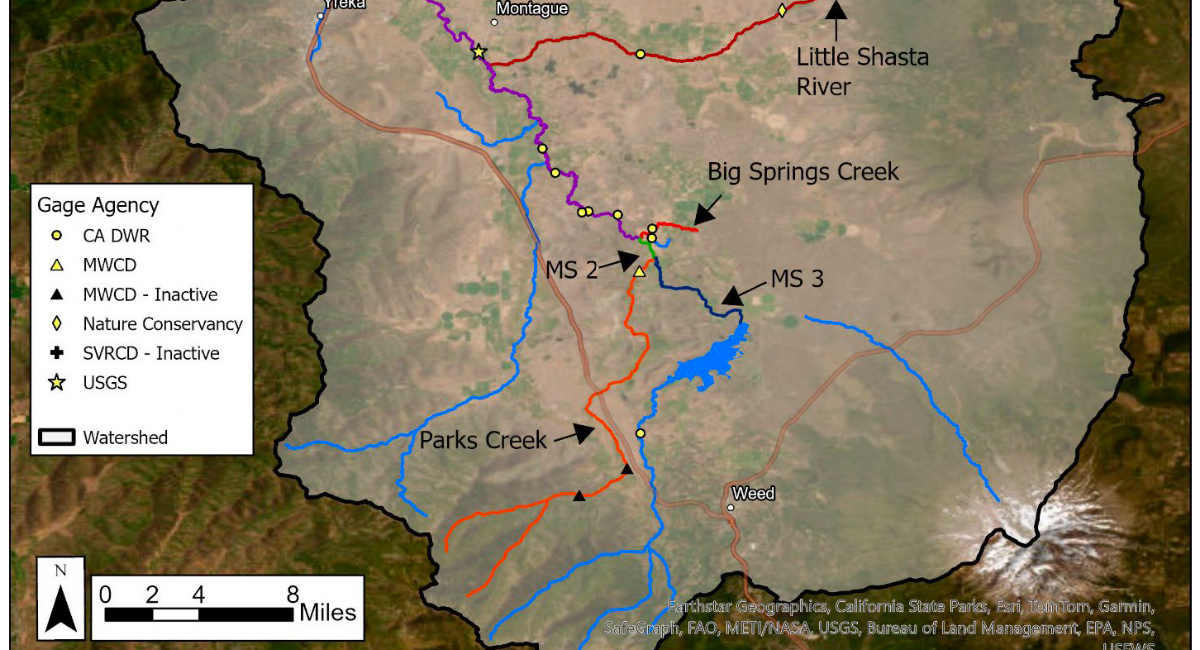
The proposed flow ranges target six locations across the Shasta River watershed, including three mainstem reaches, Big Springs Creek, Parks Creek, and the Little Shasta River. The ranges vary by season and location, reflecting the natural variation in hydrology throughout the year.
The most water-intensive requirements in the draft proposal apply to the mainstem below Big Springs Creek through the canyon reach, where flows ranging from 40 to 170 cubic feet per second are proposed depending on the month. Big Springs Creek, a significant cold-water source for the watershed, would be evaluated for flows ranging from 40 to 90 cfs year-round.
The draft also calls for evaluating water temperatures, with a target range of 16 to 20 degrees Celsius for most reaches and a cooler range of 14 to 18 degrees Celsius for Big Springs Creek. Staff would also evaluate minimum bypass flows for approximately 17 mapped cold-water springs in the watershed below Dwinnell Dam.
Why the Board Is Acting
According to the notice, hydrologic data show that summer flows in the Shasta River met or exceeded emergency regulation minimums in only two of the last 20 years prior to those emergency rules taking effect. The board cited declining snowpack, severe drought cycles, and reduced water availability as ongoing concerns consistent with climate change projections.
Minimum baseline flows, as defined in the notice, represent the water presumptively unreasonable to divert in any water year, with exceptions for human health and safety. The board describes them as the minimum level of fishery conditions needed for spawning, egg incubation, rearing, migration, and summer survival of anadromous fish — including in critically dry years.
How to Participate
A virtual public meeting will be held via Zoom on Thursday, April 9, 2026, at 2:00 p.m. Registration is required at:
Zoom Meeting RegistrationThe meeting is a staff-level session to collect public input and is not a formal board hearing. No board deliberation or action will take place.
Written comments are due by Monday, April 20, 2026, and may be submitted by email to ScottShastaFlows with the subject line “Shasta Range of Flows-Comments,” or by mail to the State Water Resources Control Board, Division of Water Rights, P.O. Box 2000, Sacramento, CA 95812. Comments recommending changes to the draft flow ranges should include scientific support.
Interpretation services and disability accommodations are available upon request by contacting ScottShastaFlows or calling (916) 327-3113.