
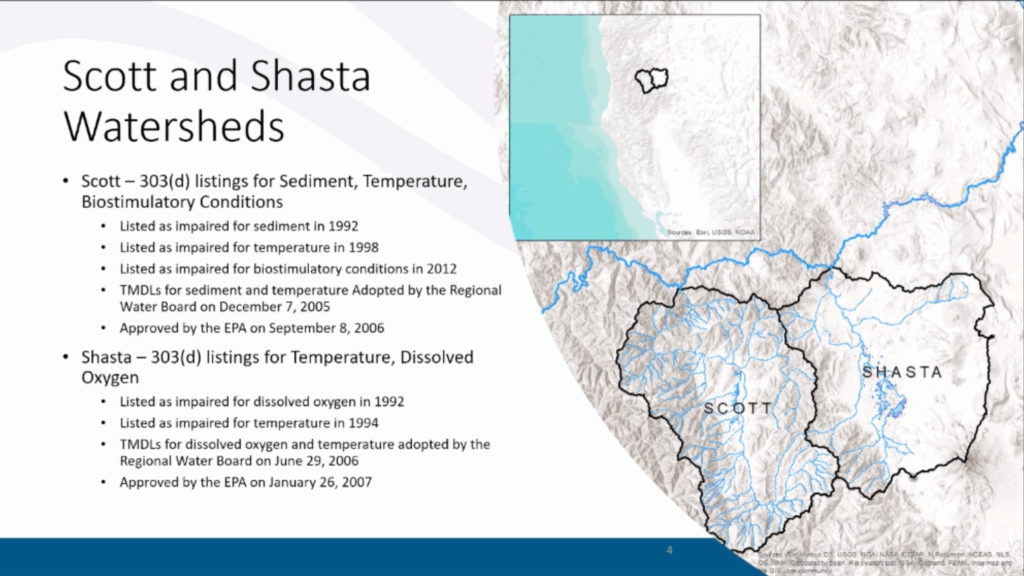
Yreka, Calif. – The North Coast Regional Water Quality Control Board is moving to replace two decades of lenient agricultural waivers with mandatory Waste Discharge Requirements (WDRs) for commercial agriculture in the Scott and Shasta River watersheds, sparking both urgency for salmon recovery and alarm among farmers. At a public workshop on October 10, 2025, held at the Karuk Tribe’s facility, board staff outlined a framework to address persistent water quality impairments threatening endangered coho and Chinook salmon, while local ranchers warned of financial burdens and echoes of past regulatory failures.
The Scott and Shasta Rivers, critical cold-water refuges in the Klamath Basin, have been listed as impaired under the Clean Water Act since the 1990s for sediment, temperature, and biostimulatory conditions. Total Maximum Daily Loads (TMDLs) adopted in 2005-2006 set pollution reduction targets, but waivers since the mid-2000s, relying on voluntary compliance and staff-led assessments, have yielded uneven progress. “After 20 years, we’ve identified gaps—tailwater discharges remain a threat, riparian buffers need clarity, and we must align with statewide standards,” said Eli Scott, Senior Environmental Scientist and watershed steward.
The proposed WDRs would mandate enrollment for commercial operations above a minimum acreage, those near riparian zones, or generating discharges. Key rules include prohibiting tailwater unless meeting strict TMDL standards (e.g., no net temperature increase in Shasta, nitrogenous BOD ≤ 0.85 mg/L), banning riparian grazing without approved plans, and barring tillage within 35 feet of riparian vegetation. Farms would face evaluations to identify threats, develop modular Agricultural Water Quality Management Plans (AWQMPs), and conduct monitoring—either individually or via coalitions modeled on the state’s Irrigated Lands Regulatory Program (ILRP). Adaptive management allows three years to correct issues like non-compliant tailwater or grazing, with steps like training and plan revisions. Monitoring includes nitrate and pesticide sampling (per state precedents) and coalition-led trend assessments for temperature, dissolved oxygen, and riparian health.
The Montague Water Conservation District (MWCD), which operates Dwinnell Dam on the Shasta River, emerged as a focal point. The dam, built in 1928, contributes to temperature and dissolved oxygen violations by releasing warm reservoir water, blocking cold spring flows, and fostering toxic ammonia at high pH levels (>9). A 2012 Klamath Riverkeeper complaint alleged MWCD’s operations harmed coho salmon, violating the Endangered Species Act. Recent data shows MWCD blending cold groundwater to meet TMDL targets, but critics argue this falls short of restoring flows or removing the dam, which also blocks fish migration and spawning gravels. “MWCD’s releases can create thermal traps, muting downstream refugia,” Scott noted, emphasizing ongoing oversight to protect salmon habitat.
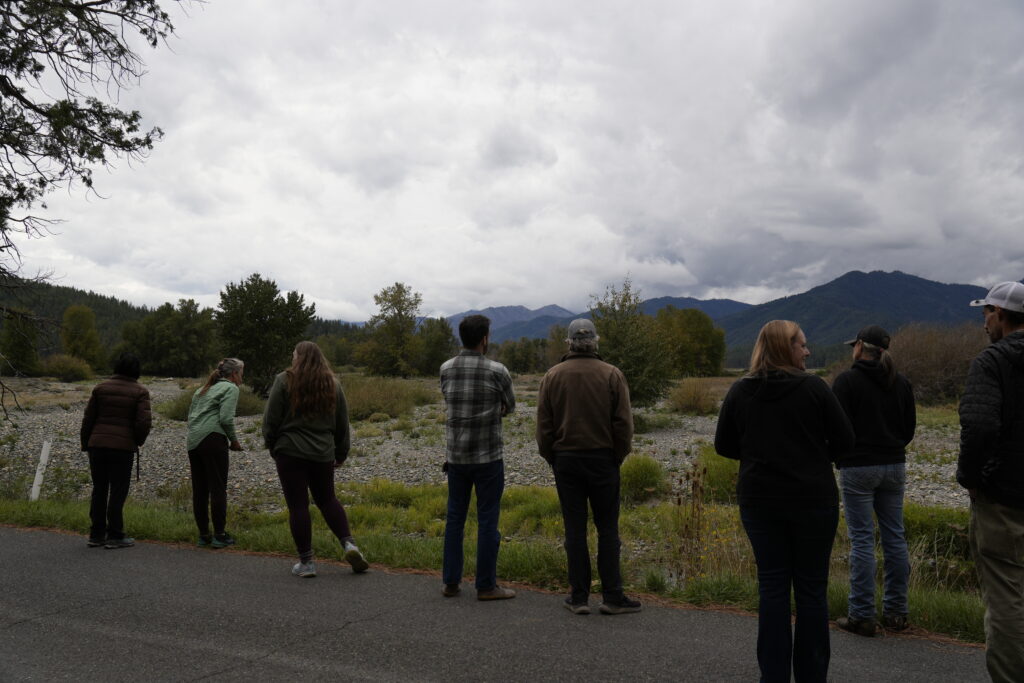
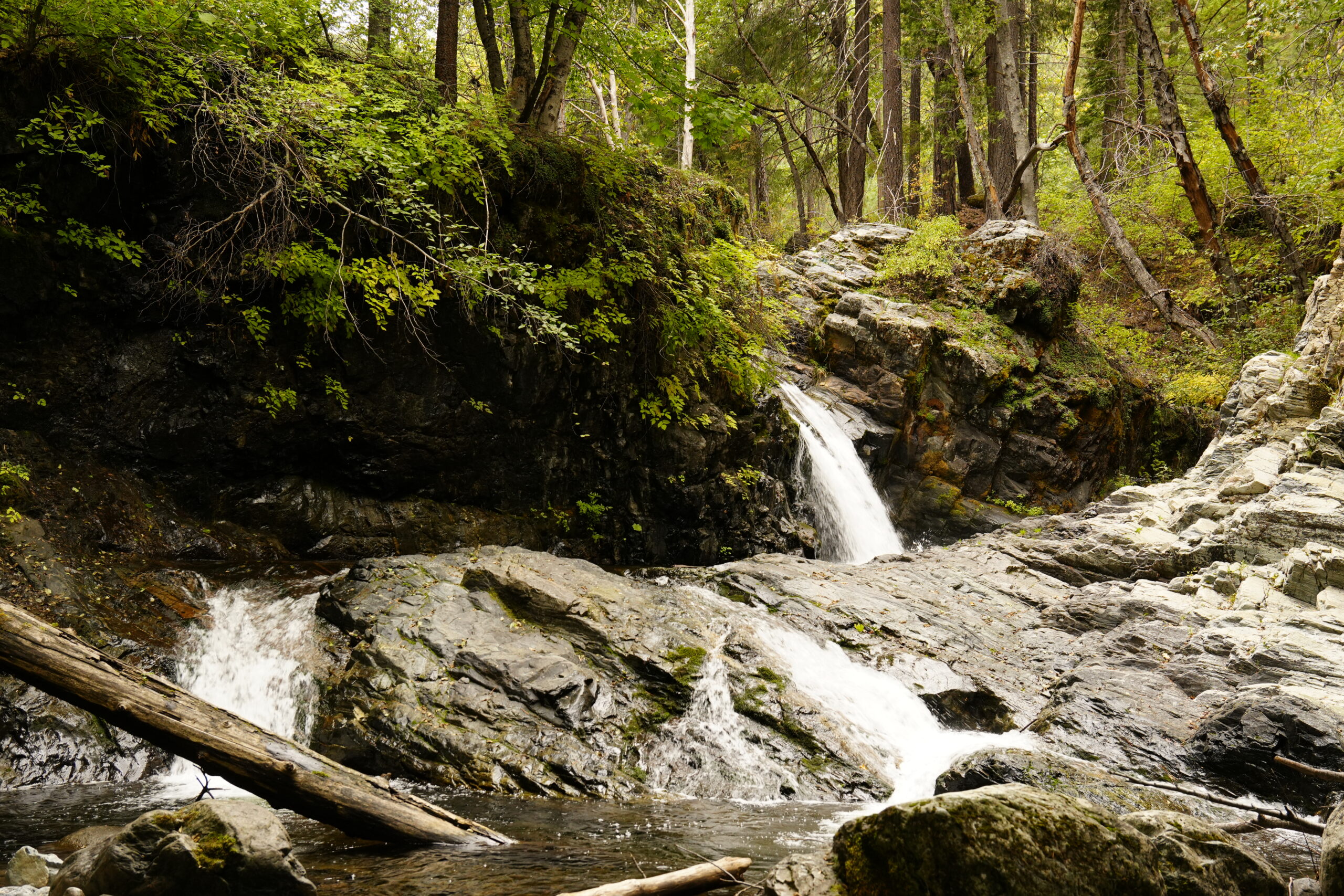
North Coast Water Board members observe a dry Shackleford Creek at its confluence with the Scott River during a field trip organized by the Quartz Valley Indian Reservation, October 9th, 2025. The Tribe, deeply invested in the creek’s health for its role in supporting cold-water fish like salmon and culturally significant species, highlighted the impacts of surface diversions on stream flow and salmon decline. While the North Coast Water Board lacks authority over water rights, its Scott River Temperature TMDL identifies diversions as a key factor in temperature impairment, underscoring the need for collaborative solutions to restore this vital waterway.
Public comments revealed deep divides. Environmental and tribal advocates demanded swift action. “This has been going on for 20 years—voluntary waivers failed,” said Sarah Schaefer of Quartz Valley Indian Reservation, citing toxic algae (saxotoxin, microcystin) and salmon declines impacting tribal health. Vivian Helliwell of Salmon Returning, from a Eureka fishing family, added, “Our coastal salmon fisheries are crumbling; these rivers are nurseries needing recovery-level flows.” Regina Chichizola of Save California Salmon urged no further delays, targeting non-compliant actors like MWCD.
Farmers, however, feared economic strain, with Scott Valley rancher Theodora Johnson emerging as a leading voice for local agriculture. A founding member of the Scott Valley Agricultural Water Alliance (SVAgWA)—formed in 2022 to raise awareness of emergency flow regulations and advocate for farmers’ needs—Johnson has been actively involved in the county’s Groundwater Sustainability Agency (GSA) advisory committee. She challenged the board on the lack of transparency and specificity in the data driving the WDRs, demanding clarity on metrics for sediment and temperature impairments. “Ranchers work hard and pay taxes—why fund our demise? We deserve to know what data is behind these decisions, what the end goals are, and how we measure success,” Johnson pressed, questioning how farm roads are proven to contribute sediment without on-site evidence.
Her exchange with Eli Scott highlighted the frustration: Johnson sought exact temperature targets (e.g., <16-18°C MWAT for coho) and proof linking farm activities to issues like fine sediment in spawning gravels, which reduces egg survival by up to 50-80%. “I don’t see what the data is that brought us to this point for Scott Valley for sediment and temperature,” Johnson said. “I would love to see the reports on those two elements so that we could be clear on, you know, what the problem is and then I also don’t know what the goals are so Scott Valley ranchers I know from experience they like to hear what the end goal is so if we knew what the desired temperatures were and what the desired results were for sediment and not had this feeling that we were we were about to embark on a regulatory program with an unknown fee attached to it that looked like it was endless.” Scott explained that assessments would identify site-specific threats, such as undersized culverts or unmaintained roads from historic timber practices, using tools like the Pacific Watershed Associates Rural Roads Handbook. But Johnson emphasized the overwhelm from layered regulations—SGMA, drought rules, and now WDRs—arguing, “People get overwhelmed by the different regulations coming from different angles. As you are well aware, we have many layers happening. We have sigma. We have the eregs. We have a proposed permanent in stream flow regulation. And this one, which has been kind of quiet because of the waiver scenario for so many years.” She added, “There’s a large impression that, you know, well, doesn’t the GSP cover this? Isn’t that what, haven’t you been going to meetings about this? Isn’t this what it’s all been about? And I have to tell people, like, no, this is different.” Johnson’s call for a local, relaxed meeting to review data underscored the need for better outreach to avoid blindsiding producers, noting, “SVAgWA exists to educate and unite farmers, but we need measurable outcomes, not endless fees.”
Ryan Walker of the Siskiyou County Farm Bureau echoed her concerns, warning of “property tax-like” fees piling onto SGMA and drought regulation costs, requesting a winter draft release for better engagement. Brandon Fawaz, a pesticide applicator, argued low-intensity crops like alfalfa don’t justify extensive monitoring, citing minimal pesticide use.
Blair Hart, a Siskiyou County Planning Commissioner and former Shasta Valley RCD chair, delivered a stark warning, calling the WDRs a “major train wreck.” Reflecting on a failed 2005 Incidental Take Permit (ITP 1600) for ag operations, Hart recounted how lawsuits, costing hundreds of thousands, and community acrimony fractured Shasta Valley. “It was a nightmare—people sold properties, and divisions linger 20 years later,” he said. Hart’s own NOAA Safe Harbor Agreement for Hart Ranch, costing $400,000 plus $30,000 per court challenge, restored instream flows but underscored a “broken system” where agencies allow excessive objections. “This needs solving, but don’t repeat past mistakes,” he urged, submitting written comments.
Board members acknowledged the tension. Chair Hector Bedolla emphasized balance: “We assume good intent but must protect beneficial uses.” Staff expressed openness to a six-month timeline shift (draft WDR in April 2026, adoption October 2026) and waiver extension to avoid irrigation-season conflicts. Coordination with agencies like the Division of Water Rights and CDFW was highlighted, alongside concerns about unchecked illegal cannabis grows in Mount Shasta Vista contributing pesticides and diversions.
The Scott and Shasta watersheds face intertwined struggles: the Scott battles fine sediment from historic timber roads and grazing, clogging spawning gravels and reducing salmon egg survival, compounded by diversions that warm smaller tributaries; the Shasta grapples with MWCD’s dam-driven thermal and oxygen impairments, alongside illegal cannabis impacts. Farmers like Johnson face mounting fees and regulatory overlap from SGMA and drought rules, fearing economic strain on family farms, while tribes and fishers demand urgent action to save collapsing salmon populations vital to cultural and coastal economies. With a tentative enrollment deadline of April 2028 and first monitoring reports by 2030, the board must navigate these tensions through transparent, data-driven solutions to restore watershed health without fracturing communities.
full meeting video link: https://cal-span.org/meeting/rwqcb-nc_20251010/
North Coast Regional Water Quality Control Board Meeting, October 9-10, 2025, Karuk Tribe Territory
Dive into the nearly 4-hour public workshop addressing water quality challenges in the Scott and Shasta River watersheds, critical salmon habitats. Held in Yreka, the meeting opened with procedural matters led by Chair Hector Bedolla, followed by board member reports and Executive Officer Valerie Quinto’s updates on initiatives like the Bay Delta Plan and Potter Valley Project (00:00:04-00:19:38). The core focus was a detailed presentation by Eli Scott, Watershed Steward, on transitioning from lenient agricultural waivers to mandatory Waste Discharge Requirements (WDRs) to tackle sediment, temperature, and nutrient impairments (00:40:18-01:50:38). Scott outlined enrollment, monitoring, and coalition-based frameworks, addressing past implementation gaps and proposing solutions like tailwater controls and riparian protections. Board members, including Greg Giusti and Jake Mackenzie, raised concerns about fees and monitoring fairness for low-intensity crops. Public comments (01:54:08-03:52:53) featured agricultural voices like Theodora Johnson of Scott Valley Agricultural Water Alliance, demanding clear data and goals amid regulatory overlap (SGMA, drought rules), and Ryan Walker of Siskiyou County Farm Bureau, urging a winter timeline shift. Environmental and tribal advocates, including Sarah Schaefer (Quartz Valley Indian Reservation) and Vivian Helliwell (Salmon Returning), stressed urgent salmon recovery needs, citing toxic algae and fishery collapses. Blair Hart warned of a “train wreck,” recalling costly past permit failures. The meeting closed with Quinto’s report and a call for comments on the draft WDR, with the next meeting set for December 4-5, 2025, in Santa Rosa (03:52:53). Watch for a deep dive into the tensions between watershed restoration and agricultural sustainability.
Highlights:
- Opening & Updates: Pledge, roll call, and board reports (00:00:04-00:19:38).
- WDR Workshop: Eli Scott’s framework presentation (00:40:18-01:50:38).
- Public Comments: Agricultural concerns (Johnson, Walker, Fawaz, Hart) and environmental/tribal urgency (Schaefer, Helliwell, Chichizola) (01:54:08-03:52:53).
- Conclusion: Executive report and next steps (03:52:53).