
Washington, D.C.—The House Transportation and Infrastructure Committee passed Congressman LaMalfa’s bill, H.R. 3300, the Forest Protection and Wildland Firefighter Safety Act, out of markup as part of a larger package. This legislation ensures that aerial fire retardant remains available for wildfire suppression efforts without being tied up in Clean Water Act permitting delays. The bill clarifies that federal, state, local, and tribal firefighting agencies do not need a National Pollutant Discharge Elimination System (NPDES) permit to use fire retardant from aircraft when responding to wildfires.
“Firefighters shouldn’t have to wait on a permit to fight a fire. With wildfire racing toward homes and forests, limiting or delaying the use of fire retardant due to waiting for bureaucracy to permit it is backward logic that gets people hurt and leaves entire landscapes scorched,” said Rep. LaMalfa. “Aerial retardant has been used safely for decades. What these lawsuits and delays really do is handcuff the very people trying to stop disaster. I’m glad to see this bill pass through committee, and I’ll keep working to make sure our firefighters can do their jobs without interference from fringe lawsuits or red tape.”
Background
In 2022, an environmental group sued the Forest Service over its use of aerial fire retardant, arguing it should be regulated under the Clean Water Act. A federal court ruled in 2023 that the Forest Service must obtain a NPDES permit from the EPA, but declined to issue an injunction that would have halted the use of retardant during fire season. The permitting process is expected to take years, and if future litigation results in a successful injunction, firefighters could be forced to ground aircraft or fly them with only water—putting lives, forests, and property at serious risk. Additionally, every state, local, and tribal fire agency may eventually need to get their own NPDES permit to use retardant, wasting tax dollars, time, and placing people in jeopardy.
The Forest Service has made clear in testimony that aerial retardant is a critical part of its integrated wildfire strategy and that current operations already prohibit discharge into waterways or buffer zones. Over the past decade, less than 1% of fire retardant drops have affected waterways.
The bill builds on existing exemptions in the Clean Water Act for fire control activities and ensures continued use of fire retardants that are approved and listed on the Forest Service’s Qualified Products List.
Congressman Doug LaMalfa is Chairman of the Congressional Western Caucus and a lifelong farmer representing California’s First Congressional District, including Butte, Colusa, Glenn, Lassen, Modoc, Shasta, Siskiyou, Sutter, Tehama and Yuba Counties.
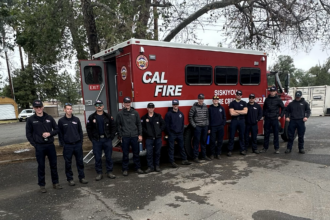
- CALFIRE SISKIYOU UNIT HAND CREW SELECTED FOR BLUE RIBBON AWARD
- 10th DAA selects Kenny Elwood for 2026 Golden Pass
- FICTITIOUS BUSINESS NAME STATEMENT: Carson’s Window Coverings & More
- Traffic Stop in Siskiyou County Leads to $1.9 Million Cocaine Seizure, Driver Arrested
- F-35A Lightning II Jets from Luke AFB Arrive for Two-Week Training at Kingsley Field