
By John Sammon
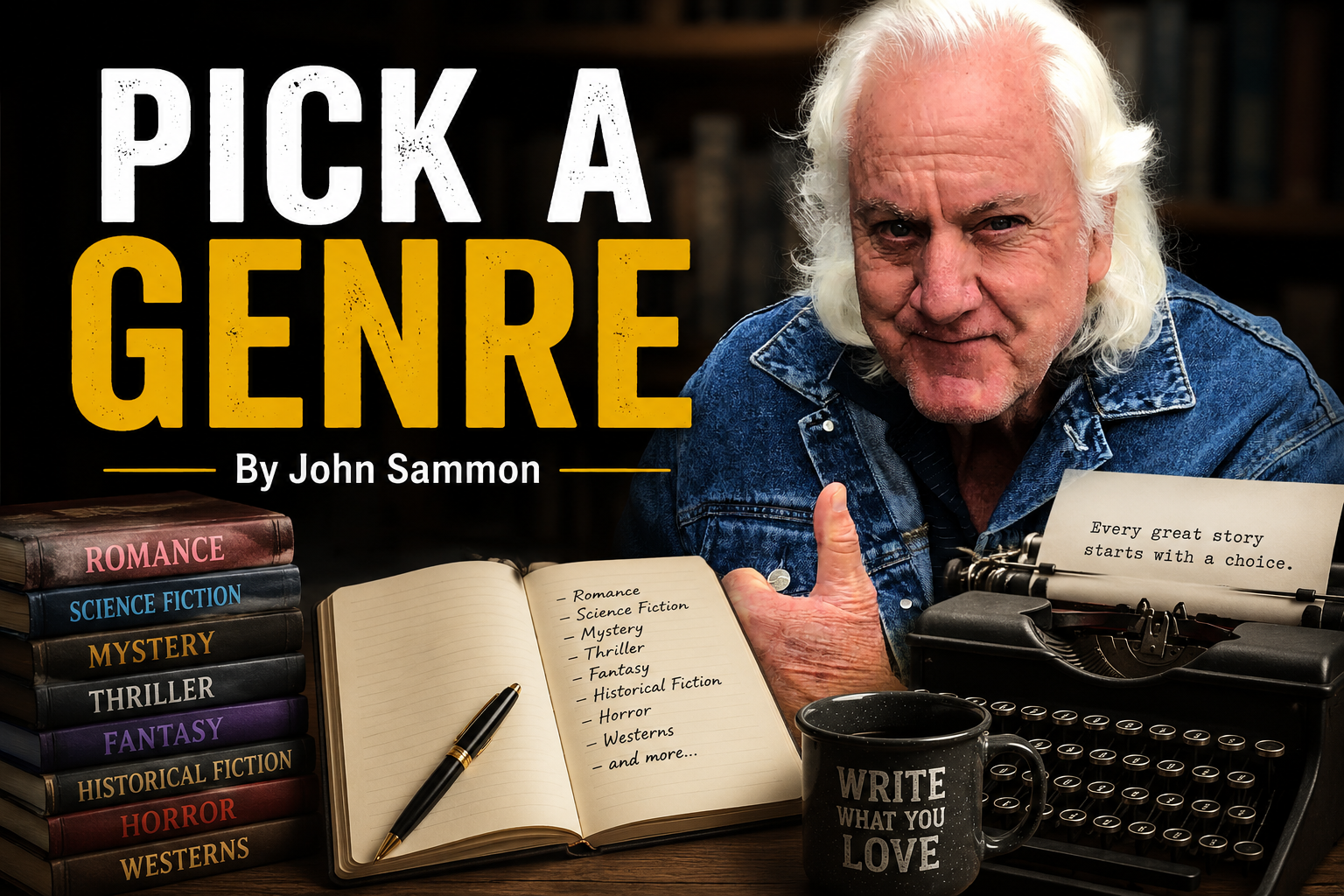
In novel writing the principal genres include science fiction, fantasy, romance, mystery, thriller, literary fiction, monster, horror, historical fiction and westerns.
There are others.
When you decide to write a novel it’s usually best that the genre you pick is the kind of book you yourself like to read. Based on the theory that if you’re a fan of the kind of book you’ll be writing, you’ll be more familiar with the subject matter and style of such a book.
But don’t let this preclude you from writing in a genre that is new to you there are ways to become authoritative with it. You can study the work of other successful writers in that genre and gain knowledge (style and subject matter). You can also use AI (Artificial Intelligence) to gain mastery of a genre.
As an author I have never felt threatened by AI, but have found it to be just another tool to use like spellcheck.
I know of a person who was fascinated by the Middle Ages and wanted to write about it (a book series). They found a successful author of books about that time period and copied his style and approach (this is not advocating you copy or plagiarize someone else’s work, but there is nothing wrong with writing in a similar style).
This new author became successful and even posed for photos on the back of book covers wearing a full suit of armor.
I’ll say it right up front.
Romance writing is the most popular genre worldwide of all of them and generates the most income, an estimated $1.4 billion yearly accounting for roughly 30 percent of all fiction sales.
Though historically women make up about 80 percent of the readers of romance fiction, men readers are rapidly expanding.
I’ve said this before I’ll say it again. Do not pick a genre solely based on (imagined) income. Pick one based on what you like to read and/or what you have knowledge of or can learn. If you can make a fortune writing go for it I’m happy for you. But I have found that it’s usually best not to become too mercenary. The disappointment becomes less if it doesn’t work out.
You should enjoy writing a great book rather than doing it just for the money. Most authors make less than $5,000 per year while 10 percent support themselves full time as writers.
To be successful at romance fiction, relationships are the key. You have interesting and flawed characters, but sympathetic people that a reader can root for. Will the young woman win the heart of the handsome hunk whose faults she must contend with? Deep emotions are portrayed and the author has a strong sense of human nature.
Almost all romance books end with a happy ending.
The science fiction writer often portrays futuristic scenarios with a wild imagination that shows the reader, “What if the future happened this way?” New technology can be portrayed and how this “new world building” will perhaps change current social values, ethics and human nature.
To be authoritative in this genre it is generally recommended that you have some knowledge of current or possible (real) technology. In any writing you must speak with a voice that tells the reader that you know what you are talking about.
But like all writing, the reader must care about the characters in the book and what happens to them, called a “character driven narrative.” Or in other words like an old song once said, “It’s still the same old story, a fight for love and glory.”
In a science fiction novel science and technology should never overwhelm and make irrelevant basic human emotions that remain unchangeable.
Mystery writing can entail building suspense in a “whodunit” in which the reader is allowed to guess or figure out who the culprit in a crime story is, before knowing for sure. The true identity of the criminal is withheld until the end of the book.
Thus the reader becomes like the detective in the book and is given clues along the way, kind of like putting together a puzzle.
Mystery writers rarely have a detective hero or heroine who is infallible (and thus boring). Even Sherlock Holmes in the original books made some mistakes. Often enough investigators in mystery books have their own personal demons or even unflattering traits. Peter Falk in the TV show Columbo which ran for 20 years became famous for driving a junk car looking unkempt and badgering mostly rich and arrogant culprits with nagging questions until they were found out.
In mystery novels the culprit is often portrayed not as an obvious suspicious looking person, but as a supposedly harmless and masquerading individual who is blending in among the characters and hiding out in plain sight of the investigator.
Thus, in detective fiction, we have the old cliché line, “The butler did it.”
More on genres next week…..