
Two Tulelake-area growers highlighted in CDFA’s Earth Month feature on sustainable farming across California
A pair of Siskiyou County-area farmers working within the Klamath Reclamation Project were spotlighted last week in a California Department of Food and Agriculture blog post recognizing sustainable agriculture practices across the state.
The CDFA’s “Planting Seeds” blog, published April 29, highlighted Scott Seus and Marc Staunton — both farming in the Tulelake Basin — as examples of how growers in Far Northern California are working with, rather than against, the region’s unique landscape.
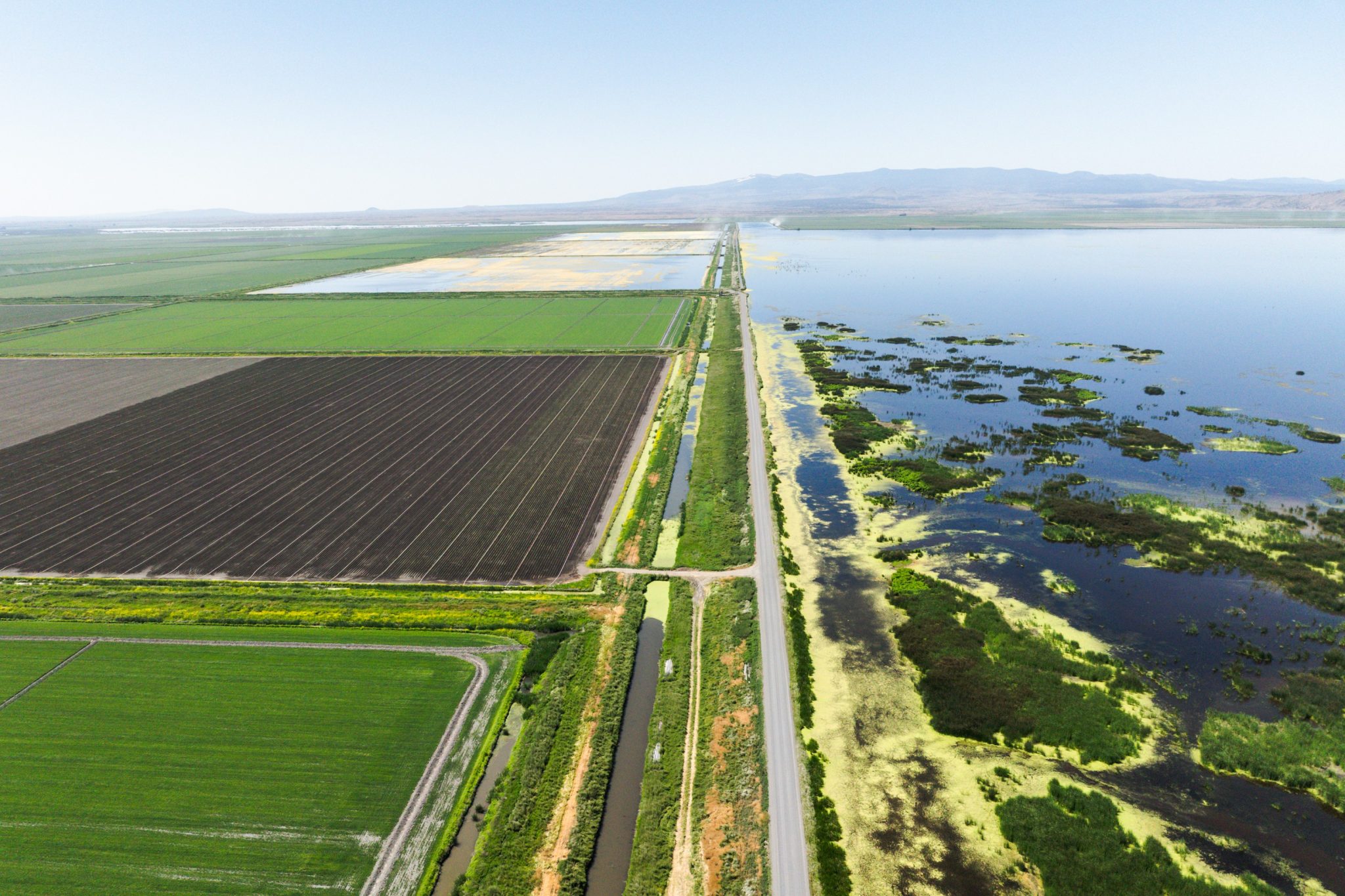
Seus, who grows horseradish and mint on land that falls within one of the state’s few wildlife refuges still open to agriculture, described the Klamath Reclamation Project’s water system as a cascading, reuse-based network. Water applied to fields north of his operation drains into a series of ditches and is then pumped back up for the next farmer downstream. “The land is actually part of our sponge and part of our water supply here,” Seus said. “By flood irrigating and moving those crops around, we’re actually sustaining the floor of our valley.”
The approach may seem counterintuitive — flood irrigation has often been criticized as wasteful — but Seus explained it is a practical necessity in the basin. Because the farmland sits atop an ancient lake bed, deficit irrigation causes the soil to crack, damaging roads and infrastructure. Flood irrigation maintains soil stability while feeding the recirculating water supply.
Wildlife coexistence is also part of daily operations on the Seus farm. Deer, antelope and elk share the land and occasionally graze on crops. Rather than treating them as pests, the operation accounts for them as part of the working environment.
Neighbor Marc Staunton, a potato grower, uses what he describes as a wetlands rotation system: farming fields for four years, then intentionally flooding them for two years to restore wetland conditions. The results, he said, speak for themselves. “There’s a dramatic reduction in disease pressure, weed pressures go way down, soil nutrients go way up,” Staunton said. “It’s like virgin soil that’s never been farmed.”
The Tulelake Basin is part of the broader Klamath Basin watershed, a region that has been at the center of ongoing debates over water allocation among irrigators, tribal interests, and fish populations. The CDFA’s recognition of local growers’ water management practices comes as the basin continues to navigate those pressures following the removal of four Klamath River dams, completed in 2024.
The state agriculture department’s feature noted that more than 98 percent of California farms are family-owned, and framed sustainable agriculture around three principles: environmental soundness, social equity, and economic viability.
Source: CDFA Planting Seeds Blog, April 29, 2026. Farmer quotes courtesy of California Grown.