
SISKIYOU COUNTY — While the California Department of Fish and Wildlife touts distributing $3.52 million to ranchers hurt by the return of gray wolves, livestock producers in Siskiyou County. Who’ve absorbed more than $2 million of that total saying the program is little more than a Band-Aid on a hemorrhage that is accelerating into 2026.
The numbers tell a stark story: Siskiyou County has received the largest slice of the state’s Wolf-Livestock Compensation Program, accounting for over half the statewide distributions. Yet local officials maintain that even that substantial sum doesn’t scratch the surface of the economic carnage being wrought by a predator that enjoys dual endangered species protections and new data shows intensifying.
According to CDFW data released this month, the agency has distributed approximately $3.52 million through its three-pronged compensation framework covering direct livestock losses, “pay for presence” payments when wolves are confirmed in an area, and funding for non-lethal deterrents. The money has flowed primarily to Northern California counties where wolf packs have established territories in Siskiyou, Lassen, Modoc, Plumas, Shasta, Sierra, and Tulare.
But the bleeding hasn’t stopped.
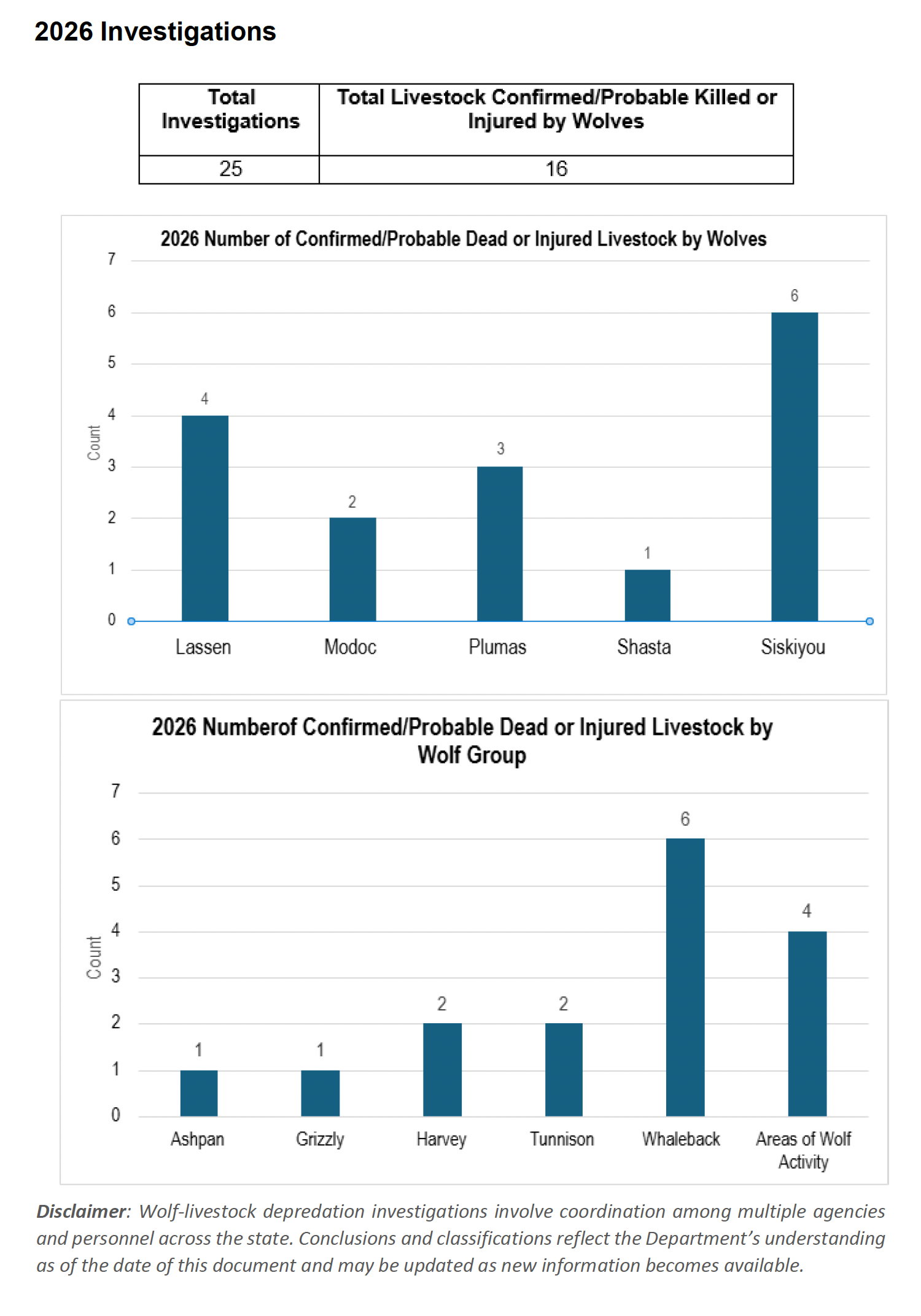
Statewide depredation data through March 2, 2026, shows 25 investigations have already been conducted this year, with 16 confirmed or probable livestock losses and Siskiyou County once again leads the state with 6 confirmed kills in just the first two months of the year, all attributed to the Whaleback Pack.
“We’re not talking about a few missing calves,” said Shasta Valley Rancher. “We’re talking about operations hemorrhaging breeding stock while the state hands out pennies, the wolves are hitting us harder than ever.”
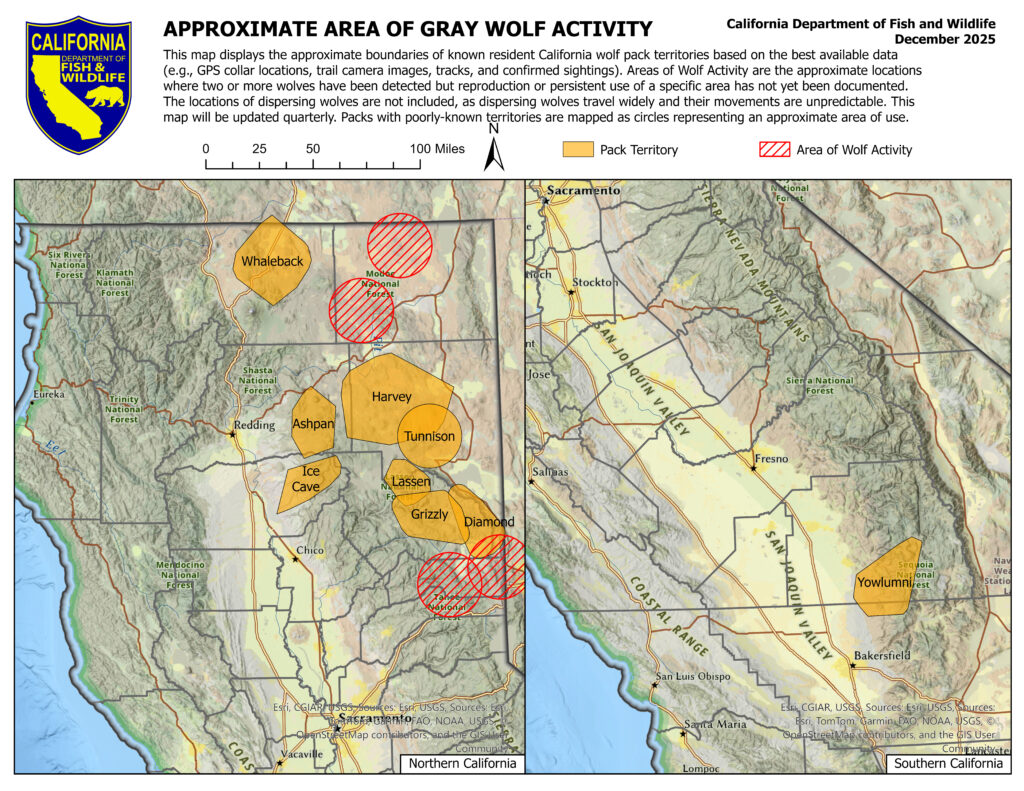
The Whaleback Pack, which produced a litter of ten pups in 2025 and roams eastern Siskiyou County, was responsible for three confirmed depredations in late 2025 alone, according to CDFW’s Q4 2025 management update. The pack’s collared breeding male, OR85, had his GPS collar drop off due to low battery in late December 2025, though biologists confirmed he remained active in the territory.
The program’s generosity has limits. The original $3 million pilot program, launched in June 2023, ran dry by March 8, 2024—exhausting 109 grants across just four counties before the fiscal year ended. A subsequent $600,000 appropriation in 2024 restricted funding to direct losses only, cutting off the spigot for preventative measures like range riders and fencing.
The funding drought hit hardest in Siskiyou, where the Board of Supervisors documented over 78 confirmed livestock kills and 9 probable kills since 2021—a toll that now includes 25 confirmed losses in 2025 alone, with six more added in early 2026. Local estimates suggest the actual death toll could be eight times higher than documented, as wolves strike in dense brush where carcasses disappear or decompose before investigators arrive. One Shasta Valley ranch alone has reported more than 40 confirmed depredations.
Compounding the financial bleeding is a legal straitjacket. Gray wolves in California currently hold endangered status under both state law (since 2014) and federal law—a protection reinstated by a U.S. District Court ruling on February 10, 2022. That decision, which vacated a Trump-era delisting that took effect January 4, 2021, returned wolves to the Endangered Species List across the lower 48 states except Minnesota, where they are listed as Threatened. As of March 2026, those protections remain firmly in place despite continued political pressure.
The federal designation means ranchers face strict limitations on lethal take of problem wolves, leaving compensation as the primary remedy, a remedy Siskiyou officials say is grossly underfunded.
In a formal letter to CDFW Director Charlton Bonham, the Siskiyou County Board of Supervisors demanded the state establish a dedicated compensation fund of $10 million annually—nearly triple the total amount distributed statewide since the program’s inception.
“This must be a dedicated program to compensate livestock owners who suffer losses due to wolf predation,” the supervisors wrote. “It must be allocated a minimum of $10 million annually, covering not only the replacement value of the livestock but also the potential future earnings that are lost when breeding animals are killed.”
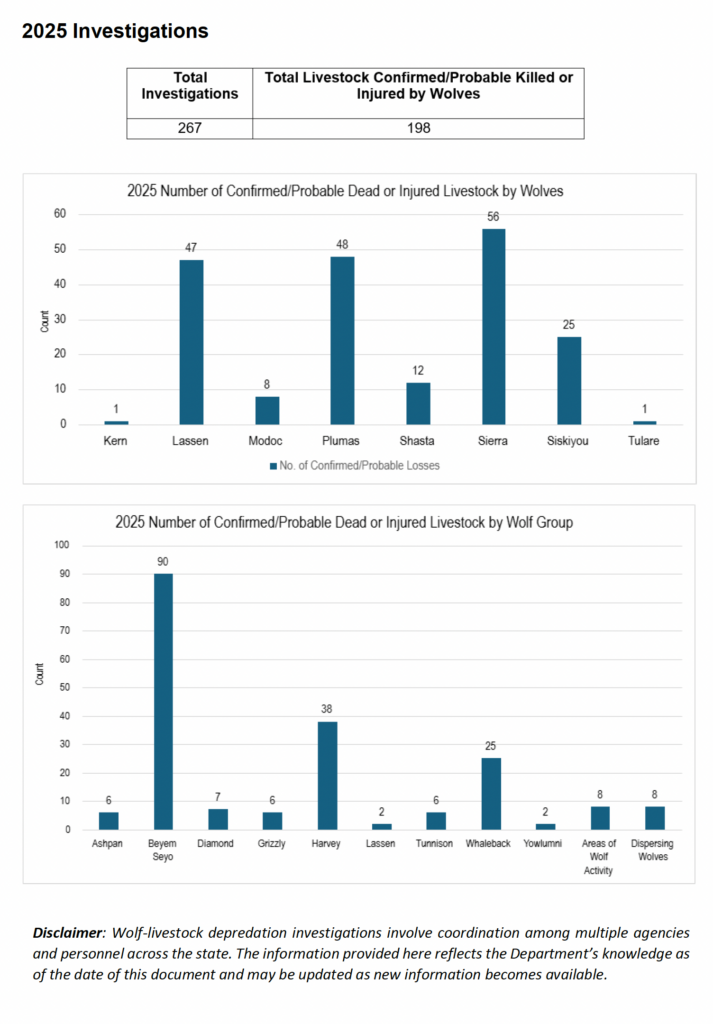
The county argues that California’s wolf population is preying on livestock at “much higher rates than in other states” because the region lacks sufficient wild ungulate populations to support the predators, forcing them to target cattle and sheep as primary food sources. The data appears to support this: statewide, 2025 saw 196 confirmed or probable livestock losses, with packs like the Beyem Seyo (90 losses) and Harvey (38 losses) driving the toll. Siskiyou’s Whaleback Pack accounted for 25 of the county’s losses in 2025.
State wildlife officials counter that they secured $2 million in the 2025 budget to continue compensation efforts, and that CDFW is “prioritizing direct loss compensation” while funds remain limited. The agency is currently accepting applications for losses occurring on or after July 1, 2024.
The department maintains it will continue working with eligible producers to distribute available funds. Information on grant eligibility is available through CDFW’s wolf compensation portal.
Timeline: Wolf Protection Status
- January 4, 2021: USFWS removes gray wolves from Endangered Species List nationwide
- February 10, 2022: U.S. District Court reinstates protections; wolves return to Endangered status in California and most lower 48 states
- June 2023: California launches $3M Wolf-Livestock Compensation Pilot Program
- March 8, 2024: Pilot program funds exhausted
- 2025: Legislature appropriates $2M for continued compensation; Beyem Seyo Pack lethally removed after unprecedented depredations in Sierra Valley
- January-March 2026: 16 confirmed/probable livestock losses statewide, with Siskiyou County leading at 6 losses