
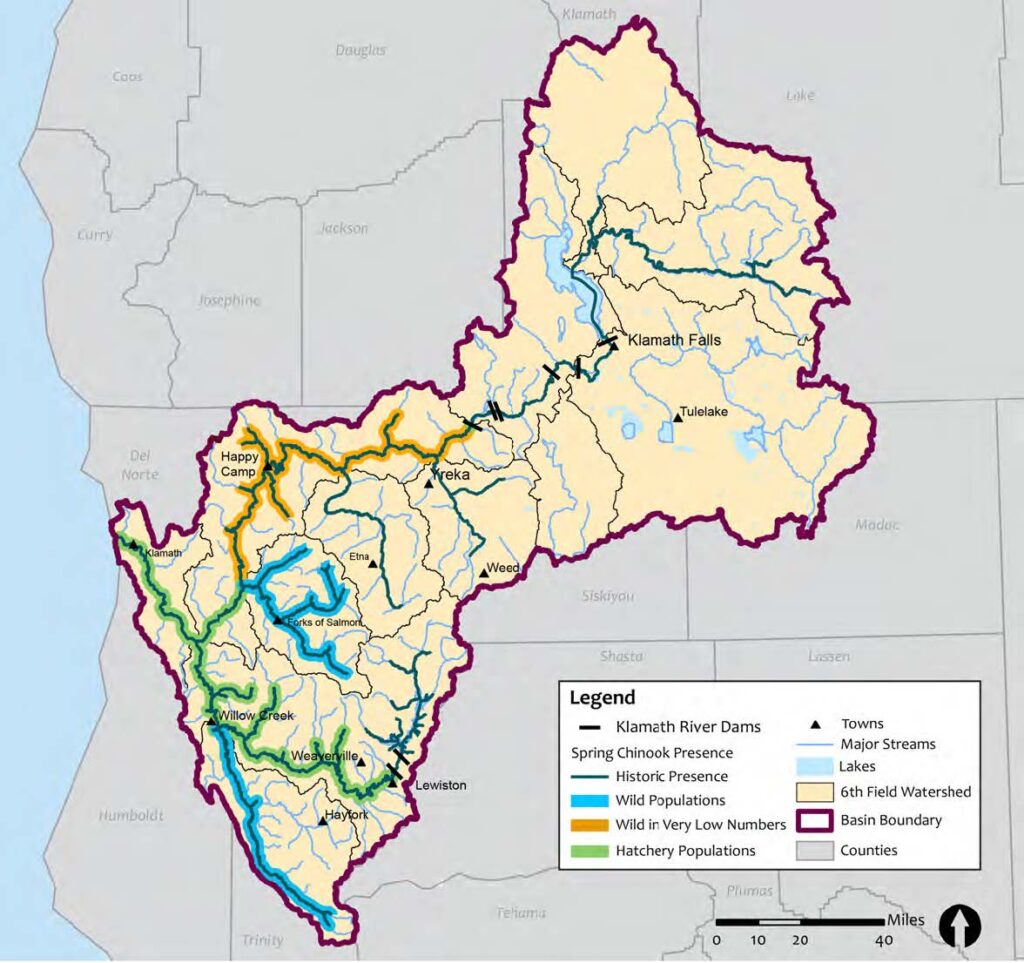
Imagine standing on the mist-shrouded banks of the Salmon River at dawn, where the North and South Forks converge in a thunderous embrace just upstream from the tiny outpost of Forks of Salmon. The water, cold and clear as melted glacier, rushes past ancient cedars, carrying whispers of a forgotten world. Here, in California’s wild Klamath Basin, generations of spring-run Chinook salmon—dubbed “snow salmon” by the late visionary Petey Brucker—once surged upstream like silver arrows, leaping barriers forged by nature herself. But on November 15, 2025, in the creaky wooden town hall at Forks of Salmon, a packed room of weathered locals, indigenous elders with stories etched in their faces, and wide-eyed scientists gathered around a flickering projector. As the documentary Spring Run played, casting shadows on the walls, the air thickened with urgency: these iconic fish, symbols of resilience and renewal, are vanishing. And new science is pulling back the curtain on why—demanding we share this tale far beyond the river’s roar to awaken the world to the fragile dance of life in our watersheds.
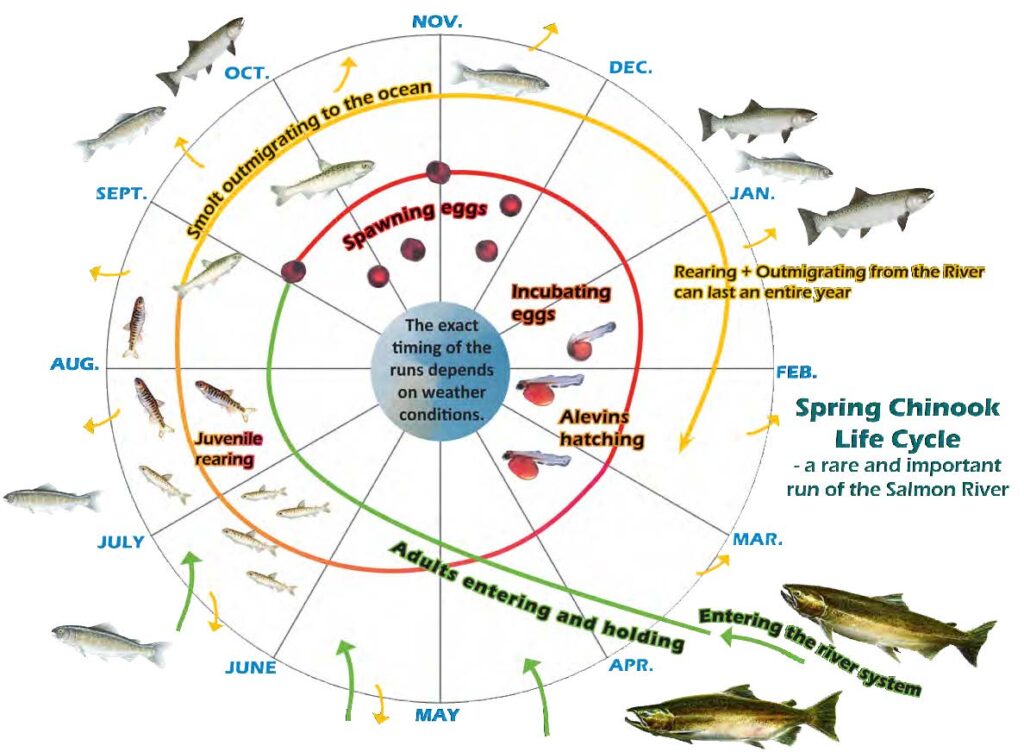
Petey Brucker, the gentle giant of river advocacy who co-founded the Salmon River Restoration Council (SRRC) in 1992 with Jim Villeponteaux, wasn’t just a fighter; he was a storyteller. Scribbling “snow salmon” on a napkin during a heated community meeting, he evoked the fish’s ethereal journey: born from snowmelt-fed springs, these lean warriors ride the furious floods of April, vaulting rocky chokepoints to reach hidden sanctuaries. There, in deep, crisp, emerald pools shaded by towering firs, they hold vigil through scorching summers, their bodies shimmering like buried treasure as gametes ripen. Come fall, they spawn in gravel beds, their fry lingering in streams for a year or more before venturing to the sea—a “stream-type” life history mirroring coho salmon, allowing them to thrive in steep, inaccessible tributaries where bulkier fall-run cousins could never follow.
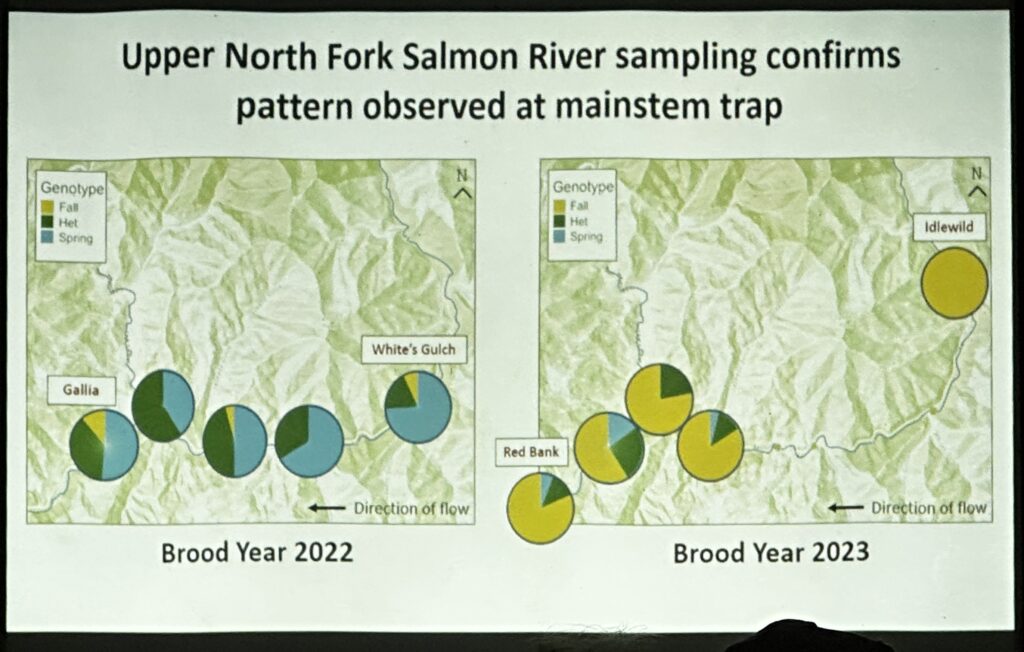
But Brucker’s napkin sketch now feels like a fading map to a lost paradise. At the town hall, UC Davis geneticist Mike Miller, his voice steady but laced with gravity, unveiled the DNA code that makes these migrations magical. In a 2017 Science Advances breakthrough, Miller’s team pinpointed a single genetic locus, GREB1L, orchestrating “premature migration” in Chinook and steelhead alike. Analyzing 148 steelhead samples from coastal strongholds like the Eel and Scott rivers, they confirmed this rare allele’s consistency across populations and species—enabling survival in hostile lows by reaching cool refuges early. It’s a evolutionary masterpiece, one that ferries marine nutrients deep into watersheds, sustains tribal traditions with feasts of fat-rich flesh, and stretches fishing seasons for bears padding through riparian shadows and orcas slicing ocean waves.
Yet, this genetic jewel is slipping away, eroded by tales of hubris. Picture the Trinity River Hatchery: well-meaning biologists, blind to the DNA divide, crossed fall-run sperm with spring-run eggs, and vice versa, birthing hybrid “super swimmers” that blended brute size with blistering speed. These lab-born invaders were trucked to the upper Klamath and Sprague River, celebrated as tribal triumphs—until Miller’s genomics revealed the cost: irreversible dilution of the spring-run allele. “Once lost, it’s gone forever,” Miller warned the crowd, his words hanging like fog over the river. Ancient bones from village sites, dated back 5,000 years, echo this: only spring-run DNA until 1860’s mining scars invited fall-run intruders.
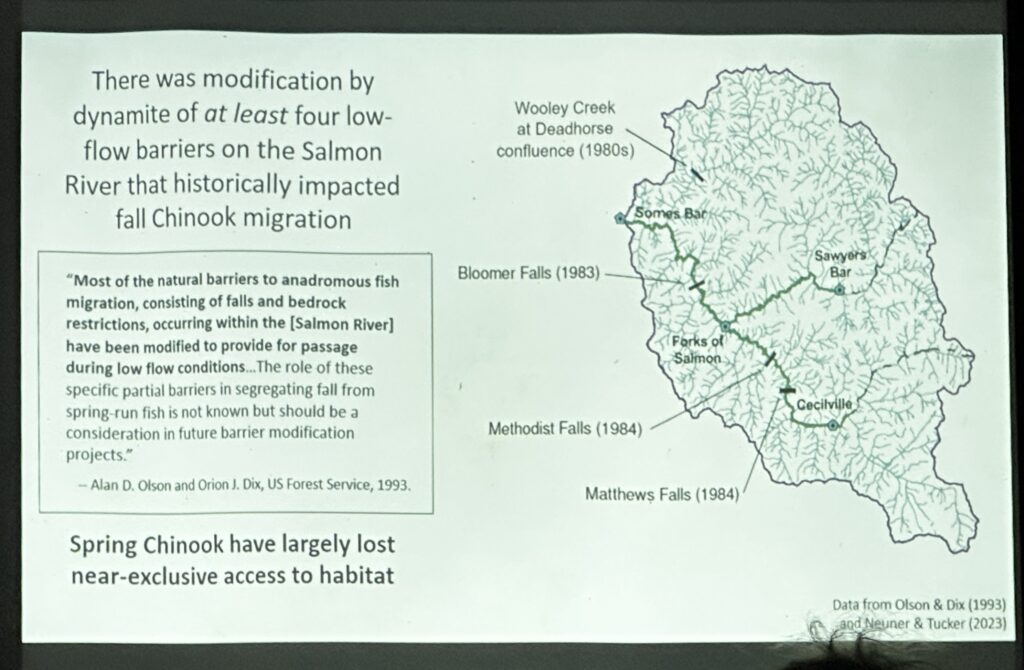
The drama deepened with barrier blasts: In the 1980s, Forest Service crews, chasing rafter thrills and fleeing lawsuits, dynamited Salmon River chokepoints like Bloomer Falls, shattering nature’s gatekeepers. What was once a fortress for snow salmon became an open highway for fall-run hordes, their eggs blanketing springer nests. Wildfires, roaring like infernos from hell, add a modern twist, choking pools with sediment and stealing thermal havens. As researcher Amy Fingerle shared flow data, her charts painting a picture of disrupted lifecycles, an elder rose: “These fish are our ancestors’ gift— we’ve tampered too long.”
But amid the shadows, glimmers of revival stir. The 2024 dam demolitions have unleashed a salmon renaissance: In 2025, over 7,700 Chinook stormed upper reaches, tagged wanderers exploring Oregon haunts for the first time in generations. “Salmon everywhere,” one fisherman beamed, as natural flows cool and collaborations bloom. SRRC-UC Davis-CalTrout and tribal partnerships now wield Genetic Stock Identification (GSI) like a scalpel: Harvest hybrids, spare wild snow salmon.
This isn’t abstract lab lore—it’s a riveting saga of loss and potential rebirth, begging to be shared. We must amplify it through podcasts echoing Brucker’s voice, viral videos capturing salmon leaps, school curricula weaving indigenous tales with DNA diagrams. Only then can the public grasp the stakes: not mere fish, but threads in nature’s tapestry, unraveling from our “know-best” meddling. Join the chorus—volunteer, donate, attend December’s deep-dive. Demand barrier restorations, hatchery overhauls, fire defenses. As Brucker’s spirit lingers in the riffles, let’s turn knowledge into action, ensuring snow salmon surge once more. The river’s epic saga is waiting for its next chapter—will you be the author of this new chapter?